
India’s private space sector is moving from experimentation toward commercial deployment. As of February 2026, more than 400 space startups were registered in the country — compare that to just one back in 2014, according to Government of India figures.
The sector now touches nearly every layer of the space economy, from rockets and satellites to propulsion, Earth observation, orbital intelligence, and in-space servicing.
India’s space startup ecosystem is growing alongside broader opportunities for entrepreneurs, and founders exploring these sectors can also learn from 20 Profitable Startup Ideas for India in 2026, especially when evaluating emerging technology-driven business models.
For this list, the focus is on 10 Indian space startups making real noise in 2026 — whether that’s through notable technology, funding, missions, or general commercial momentum. Worth noting: this is an editorial ranking, not an official government one.
Key Takeaways
- India had crossed 400 registered space startups by February 2026, a pretty striking sign of how fast the sector’s expanded
- Skyroot Aerospace made history in July 2026 with India’s first successful private orbital rocket launch from Indian soil
- Pixxel, Dhruva Space, and SatSure are building out major Earth-observation capabilities, including work on a national EO constellation
- Agnikul Cosmos and Bellatrix Aerospace are developing propulsion and launch technologies for the growing commercial space market
- Government-backed capital is playing a bigger role too — India’s ₹1,600 crore Antariksh Venture Capital Fund made its first investment in Dhruva Space in July 2026
How we selected these 10: We evaluated Indian space startups based on technical milestones, funding momentum, commercial activity, government/industry partnerships, deployed or tested hardware, and relevance to emerging space-economy segments. The ranking is editorial and does not represent investment advice.
1. Skyroot Aerospace
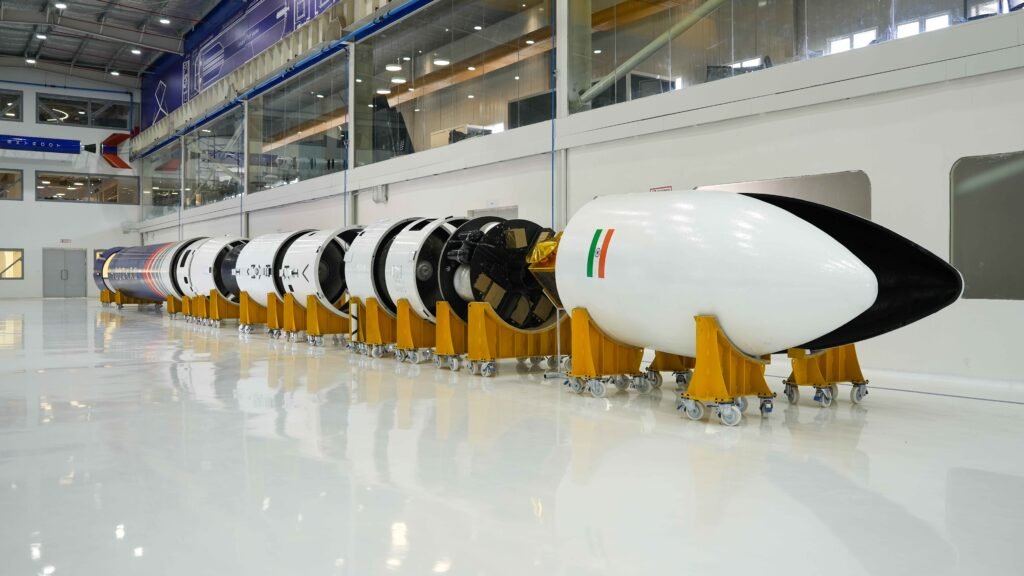
Skyroot Aerospace is one of India’s leading private launch-vehicle companies, developing the Vikram family of rockets for commercial satellite launches.
Founder: Pawan Kumar Chandana and Naga Bharath Daka
Founded: 2018
Location: Hyderabad, Telangana
Total funding figures reported: Approximately $155 million+
Skyroot achieved a landmark in July 2026 when its Vikram-1 became India’s first privately developed orbital-class launch vehicle to successfully reach orbit from Indian soil
Skyroot was founded by former ISRO engineers and has become one of India’s best-known private space companies. Its Vikram-1 as capable of carrying up to 350 kg to low Earth orbit, depending on mission configuration.
The company raised approximately $60 million in its May 2026 funding round, taking its reported cumulative funding to more than $155 million
Skyroot’s journey also highlights how important funding is for capital-intensive startups. For a broader look at how Indian startups raise capital, founders can explore our guide to Early Stage VC Funds in India.
2. Agnikul Cosmos
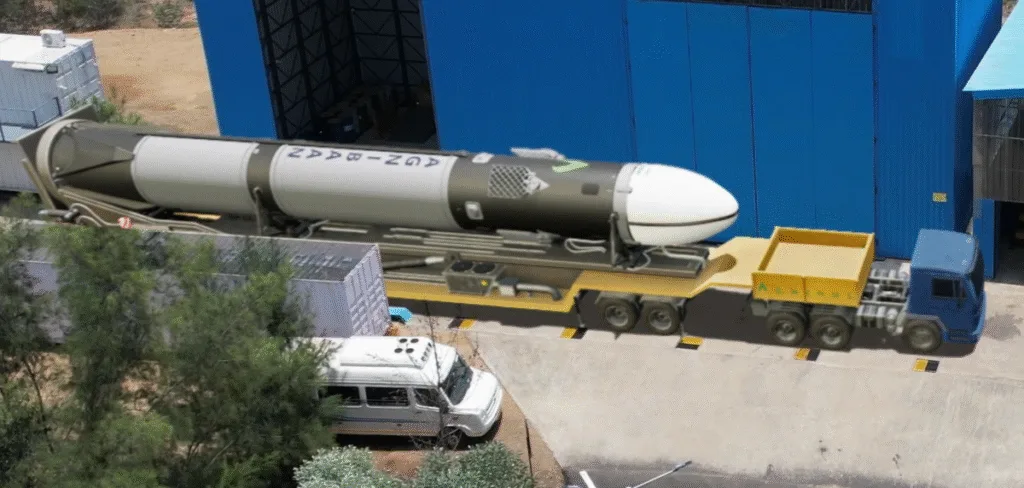
Agnikul Cosmos is building customizable orbital rockets powered by advanced semi-cryogenic propulsion and 3D-printed engine technology.
Founders: Moin SPM, Srinath Ravichandran and Satyanarayanan Chakravarthy
Founded: 2017
Location: Chennai, Tamil Nadu
Total funding figures reported: Approximately $78.2 million+ (source: inc42 media)
The Chennai-based startup, incubated at IIT Madras, is working on Agnibaan — a configurable launch vehicle built for small satellite missions.
The government’s been backing Agnikul too, with support from the Technology Development Board going toward developing and commercializing its launch technology.
According to the company, its Agnibaan SOrTeD variant can carry payloads of up to 30 kg for sub-orbital missions.
Why watch it: Its modular rocket architecture could make small-satellite launches a lot more flexible going forward.
3. Pixxel
Pixxel’s whole bet is on hyperspectral imaging — building a constellation of Earth-observation satellites meant to turn raw pictures from space into something people can actually use, not just look at.

Founders: Awais Ahmed and Kshitij Khandelwal
Founded: 2019
Location: Bengaluru, Karnataka
Total funding figures reported: Approximately $98 million+
The company didn’t start out this broad, though. Hyperspectral imaging was the original focus, and things grew from there into what’s now a much wider Earth-intelligence business. On the funding side, The company has raised capital across multiple rounds, including a $36 million Series B in 2023 and a further $24 million Series B extension in 2024, according to Inc42. (source: Inc42 media)
Pixxel’s participation is significant because the programme involves building India’s first fully indigenous private Earth-observation satellite network
Why watch it: Pixxel is moving from satellite development toward a much broader planetary-intelligence business.
4. Dhruva Space
Dhruva Space is building a full-stack space business covering satellite platforms, ground stations and launch services.
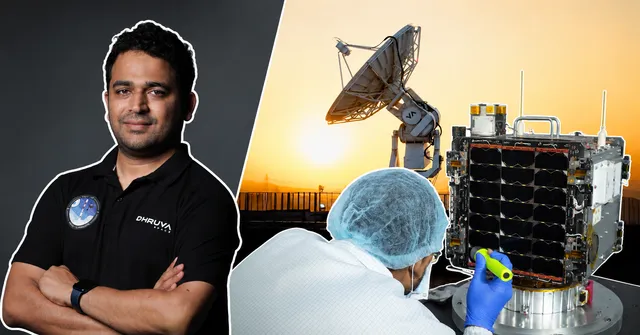
Founder: Sanjay Nekkanti, with co-founders including Krishna Teja Penamakuru, Chaitanya Dora Surapureddy and Abhay Egoor
Founded: 2012
Location: Hyderabad, Telangana
Total funding figures reported: Approximately $30 million+ in Inc42’s funding database; other databases report higher totals depending on debt and government support included.
In May 2026, Dhruva received ₹105 crore of support under the Government’s RDI initiative for Project Garud, a 500 kg-class communications satellite platform.
Even more significantly, the ₹1,600 crore Antariksh Venture Capital Fund made its inaugural ₹60 crore investment in Dhruva Space in July 2026.
Why watch it: Dhruva is positioning itself as both a spacecraft manufacturer and space-infrastructure company.
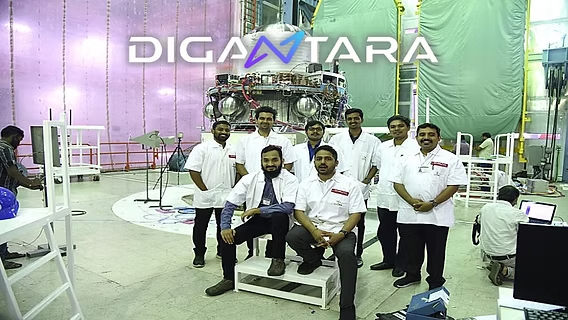
5. Digantara
Space is getting crowded, and that’s basically Digantara’s whole reason for existing. The company works on space situational awareness — keeping track of what’s actually going on around satellites once they’re up in orbit.
Founders: Anirudh Sharma, Rahul Rawat and Tanmay Sinha
Founded: 2018
Location: Bengaluru, Karnataka
Total funding figures reported: Approximately $50 million+
Based in Bengaluru, the startup’s building out tech for orbital intelligence, surveillance, and the data infrastructure behind all of it. And as more satellite constellations go up and orbital traffic gets tighter, that kind of work only becomes more necessary.
Per its own newsroom, Digantara pulled in $50 million in 2025 to push its space-based capabilities further.
Why watch it: More satellites up there means more need for accurate orbital intelligence — and someone keeping an eye on collision risk.
6. Bellatrix Aerospace
Here’s a niche worth paying attention to: in-space mobility. That’s Bellatrix Aerospace’s target, and they’re going after it through advanced satellite propulsion systems.
Founders: Rohan M. Ganapathy and Yashas Karanam
Founded: 2015
Location: Bengaluru, Karnataka
Total funding figures reported: Approximately $31.1 million+
Back in March 2026, Bellatrix closed a $20 million Pre-Series B round led by Cactus Partners. The money’s earmarked for scaling up manufacturing, mostly to keep pace with growing demand from satellite constellations both in India and abroad.
Their tech portfolio spans electric and green propulsion systems, built for different kinds of spacecraft applications depending on what’s needed.
FounderPin view: Bellatrix’s propulsion focus could offer a more defensible niche than competing directly in launch services.
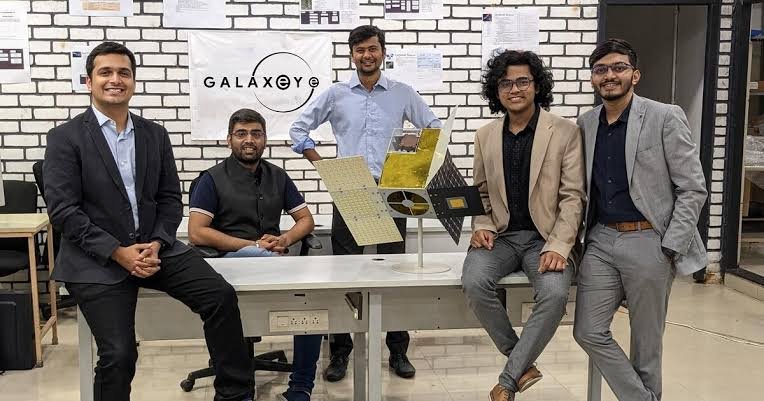
7. GalaxEye
GalaxEye is developing multi-sensor Earth-observation technology designed to combine different forms of satellite imaging.
Founders: Denil Chawda, Kishan Thakkar, Pranit Mehta, Rakshit Bhatt, Satyanarayanan Chakravarthy and Suyash Singh
Founded: 2021
Location: Bengaluru, Karnataka
Total funding figures reported: Approximately $26.9 million+ ( source: inc42 media )
The Bengaluru startup emerged from IIT Madras and has focused on combining sensors to produce all-weather Earth intelligence.
GalaxEye’s Drishti programme has involved multi-sensor imaging, including synthetic aperture radar capabilities. Its company history records successful sensor development and a 2024 space-tech demonstration on ISRO’s POEM mission.
In March 2026, GalaxEye raised an additional $4.8 million in its ongoing Series A round.
Why watch it: Multi-sensor satellite imaging could provide valuable data for defence, infrastructure and environmental monitoring.
8. Manastu Space
Manastu Space is tackling two increasingly important problems: satellite propulsion and orbital sustainability.
Founders: Ashtesh Kumar and Tushar Jadhav
Founded: 2017
Location: Mumbai, Maharashtra
Total funding figures reported: Approximately $9 million+ ( source: inc42 media )
The Mumbai-based company develops green propulsion systems and technologies for debris collision avoidance.
Its portfolio includes propulsion systems designed for satellites weighing from around 100 kg to 500 kg, alongside systems for orbital manoeuvring and collision avoidance.
The startup has also raised funding to accelerate its green-propulsion and debris-management technology.
Why watch it: Space sustainability will become more important as satellite numbers continue to rise.
9. SatSure
SatSure combines satellite Earth-observation data with AI and analytics to create decision intelligence for industries on Earth.

Founders: Prateep Basu, Rashmit Singh Sukhmani and Abhishek Raju
Founded: 2017
Location: Bengaluru, Karnataka
Total funding figures reported: Approximately $20 million+
Its applications span agriculture, banking, insurance, infrastructure, forestry and other sectors.
SpaceTech is increasingly overlapping with artificial intelligence, data and automation. FounderPin’s guide to Top Indian AI Companies in 2026 provides a broader view of how India’s AI ecosystem is developing alongside sectors such as space technology.
In June 2026, SatSure received a ₹24.6 crore IN-SPACe Technology Adoption Fund grant for Dhaarini, an Earth-intelligence platform using large Earth-observation models and India-specific AI capabilities.
SatSure is also part of the consortium selected for India’s private Earth-observation satellite network.
Why watch it: SatSure shows how space data can become a software and AI business rather than remaining purely a satellite product.
10. OrbitAID Aerospace
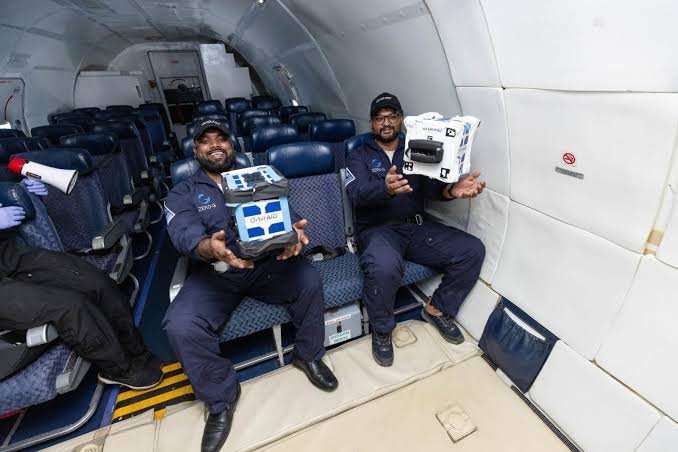
OrbitAID is working on one of the most futuristic areas in India’s space ecosystem: in-orbit servicing and refuelling.
Founders: Mano Balaji K., Nikhil Balasubramanian and Sakthikumar R.
Founded: 2021
Location: Bengaluru, Karnataka
Total funding figures reported: Approximately $2.04 million+ ( source: inc42 media )
The Chennai startup is developing standardized docking and refuelling technologies designed to extend satellite lifetimes.
Its AyulSAT programme was designed to demonstrate fuel, power and data transfer technologies in orbit. After a setback on the PSLV-C62 mission, OrbitAID said it plans another docking demonstration by the end of 2026.
The long-term vision is straightforward: satellites could eventually be serviced, refuelled and upgraded instead of simply abandoned.
Why watch it: If in-space servicing becomes commercially viable, it could create an entirely new layer of the space economy.