
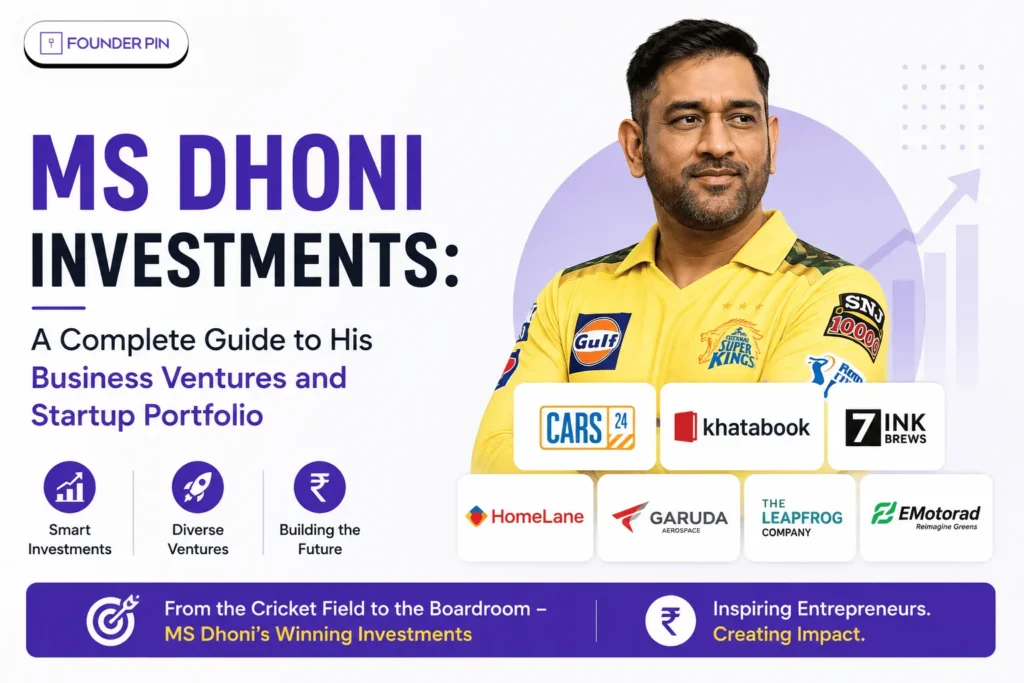
This list focuses on publicly reported startup and strategic investments, rather than treating every brand endorsement as an investment.
1. CARS24: Why Did MS Dhoni Invest in AutoTech?

CARS24 was one of Dhoni’s early startup bets, dating back to 2019. The company operates in the used-car marketplace, a sector where technology has changed how consumers buy and sell vehicles.
Dhoni entered into a strategic partnership with CARS24 in 2019 and became an investor and brand ambassador. The amount of his investment was not publicly disclosed.
Key details
- Sector: Used cars / AutoTech
- Dhoni’s role: Investor and brand partner
- Investment: Undisclosed
- Reported entry: 2019
Why did this business attract him?
- Large consumer market: Used cars represent a major, recurring consumer category in India.
- Technology-led model: CARS24 uses technology to simplify buying and selling used vehicles.
- Strong brand fit: Dhoni has long had a strong association with automobiles, making the category commercially relevant to his personal brand.
- Consumer reach: The platform allowed Dhoni to participate in a business serving everyday customers rather than a niche market.
Founder lesson: A large consumer market can create significant opportunities when technology removes friction from an existing process.
2. Khatabook: Dhoni’s Bet on India’s Small Businesses
Khatabook brought Dhoni into India’s fintech and MSME ecosystem. The platform helps small merchants manage digital ledgers and business transactions.
Dhoni invested in Khatabook around 2020 and also became its brand ambassador. The investment amount was not publicly disclosed.
Key details
- Sector: Fintech / MSME technology
- Dhoni’s role: Investor and ambassador
- Investment: Undisclosed
- Target market: Small businesses and merchants
Why did this business attract him?
- Huge MSME opportunity: Millions of Indian businesses still rely on simple methods to manage accounts and transactions.
- Digital transformation: Khatabook brought traditional bookkeeping into a digital environment.
- Everyday use case: The product addresses a practical business problem rather than a purely discretionary purchase.
- Scalability: Software can potentially serve large numbers of merchants without requiring a physical branch network.
Founder lesson: Dhoni’s portfolio isn’t limited to glamorous consumer brands. He has also backed businesses solving everyday problems for India’s massive small-business economy.
3. 7Ink Brews: Turning the Dhoni Brand Into a Consumer Business
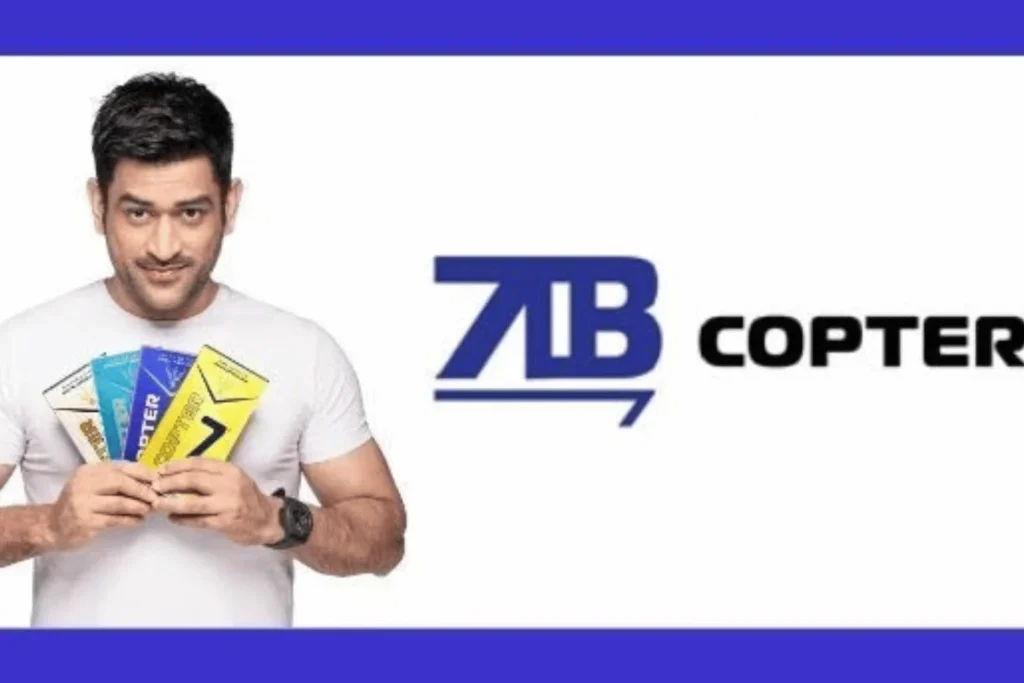
7Ink Brews is particularly interesting because Dhoni’s connection goes beyond a traditional endorsement. The Mumbai-based food and beverage company launched products under the Copter7 brand, drawing directly from Dhoni’s iconic helicopter shot and jersey number.
Key details
- Sector: Food & beverage
- Brand: Copter7
- Dhoni’s involvement: Investor/co-founder
- Investment: Undisclosed
The company has worked across beverages and artisanal chocolates.
Why did this business attract him?
- Strong personal connection: The Copter7 brand references Dhoni’s famous helicopter shot and jersey number.
- Consumer market: Food and beverages offer frequent purchase opportunities.
- Brand-building potential: Dhoni’s personal brand could help a new consumer product gain visibility.
- Direct-to-consumer potential: The business model allows brands to build a direct relationship with consumers.
Founder lesson: Personal branding can become a commercial asset when it connects naturally with the product rather than simply appearing in an advertisement.
4. HomeLane: Why Did Dhoni Enter Home Interiors?
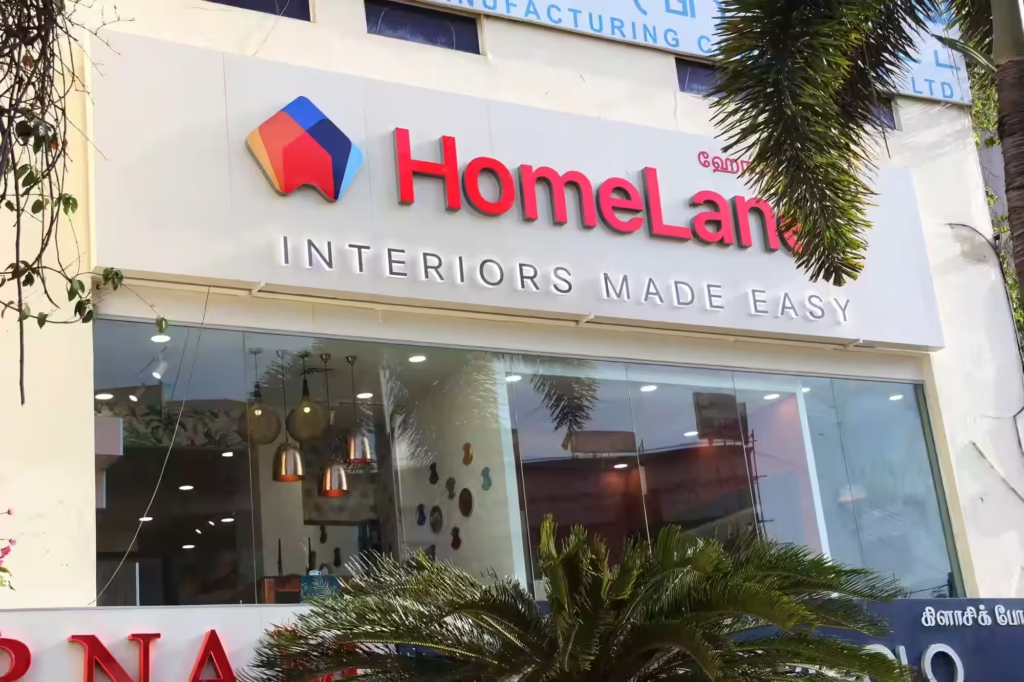
HomeLane gave Dhoni exposure to India’s organised home-interiors market. In 2021, he became an equity partner and brand ambassador through a three-year strategic partnership.
The company did not disclose the value of his investment.
Key details
- Sector: Home interiors
- Dhoni’s role: Equity partner and brand ambassador
- Investment: Undisclosed
- Reported entry: 2021
Why did this business attract him?
- Growing consumer category: More Indian households are spending on professionally designed interiors.
- Technology angle: HomeLane combines interior design with technology to streamline the customer experience.
- Brand alignment: Dhoni’s trusted public image can help a home-related consumer brand build credibility.
- Tier-II and Tier-III opportunity: The company has historically focused on expanding beyond India’s largest cities.
At the time, HomeLane was expanding beyond its existing markets and targeting additional Tier-II and Tier-III cities.
Founder lesson: Strategic investors can contribute more than money. Distribution, credibility and customer awareness can be valuable assets.
5. Garuda Aerospace: One of His Most Notable Tech Investments
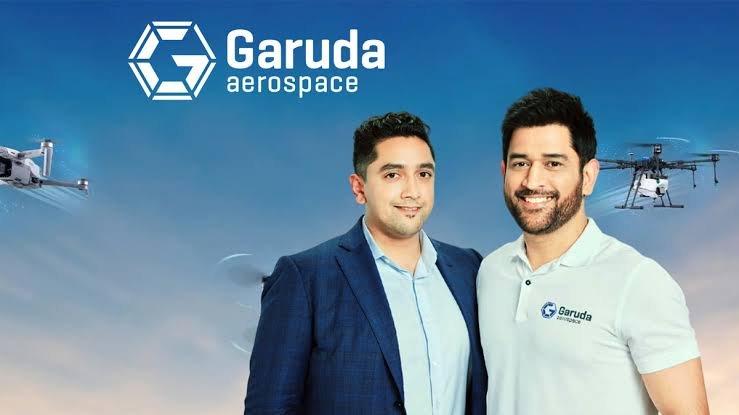
Garuda Aerospace stands out because it combines drones, agriculture, defence and industrial technology. Dhoni became an investor and brand ambassador in 2022, and later increased his stake.
Business Standard reported that Dhoni holds a 1.1% stake, while Entrepreneur India reported a fresh ₹4 crore investment linked to the increase in his stake.
Key details
- Sector: Drone technology
- Founder: Agnishwar Jayaprakash
- Location: Chennai
- Dhoni’s role: Investor and brand ambassador
- Reported stake: 1.1%
- Additional investment reported: ₹4 crore
Why did this business attract him?
- Emerging technology: Drones have applications across agriculture, infrastructure, surveillance and other industries.
- Large addressable markets: Agriculture alone creates significant potential use cases for drone technology.
- Indian technology: The company is building drone products and services from India.
- Strategic brand value: Dhoni’s association can increase public awareness of a relatively technical category.
Garuda’s own annual report confirms a celebrity endorsement agreement with Dhoni dating to May 2022.
Founder lesson: Strategic capital becomes especially valuable when an investor can help a technology company build credibility and reach new customers. For founders raising capital, this is also why choosing the right investor matters beyond simply comparing cheque sizes.
6. Shaka Harry: Dhoni’s Plant-Based Food Bet
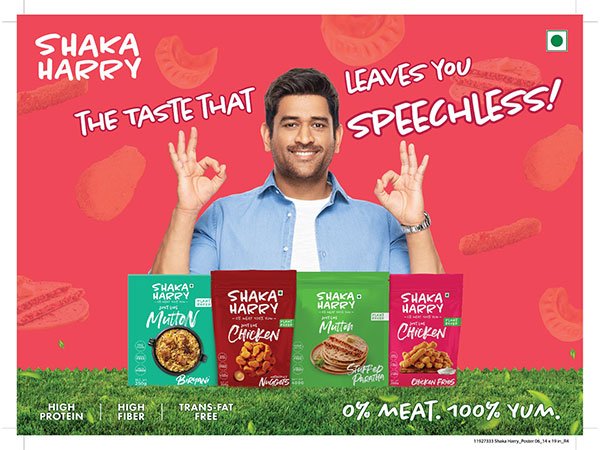
Dhoni also entered the alternative-protein market through Shaka Harry. The startup focuses on plant-based protein and meat alternatives.
Dhoni’s investment was reported in October 2022, although the specific amount he invested was not publicly disclosed.
Key details
- Sector: Plant-based food
- Dhoni’s role: Investor
- Investment: Undisclosed
- Reported entry: 2022
Why did this business attract him?
- Emerging consumer category: Plant-based meat remains an evolving segment in India’s food market.
- Changing consumer preferences: Consumers increasingly have more choices around protein and meat alternatives.
- Scalable consumer product: Packaged food can potentially expand across cities and distribution channels.
- Diversification: The investment added a different category to Dhoni’s growing consumer portfolio.
Founder lesson: Consumer behaviour can create opportunities in emerging categories long before they become mainstream.
7. Rigi: Investing in the Creator Economy

Rigi represents Dhoni’s exposure to India’s growing creator economy. The Bengaluru-based platform helps creators monetise communities through courses, paid webinars and digital communities.
In January 2023, Rigi raised ₹100 crore ($12.3 million) in a round led by Elevation Capital, with Dhoni joining as an angel investor. His individual cheque was not disclosed.
Key details
- Sector: Creator economy / technology
- Founders: Swapnil Saurav and Ananya Singhal
- Dhoni’s role: Angel investor
- Investment amount: Undisclosed
- Company funding round: ₹100 crore
Why did this business attract him?
- Creator economy growth: More individuals are turning expertise, entertainment and communities into businesses.
- Monetisation opportunity: Rigi gives creators tools to sell courses, memberships, workshops and other paid offerings.
- Technology-led model: The platform can serve creators across multiple categories.
- International potential: Rigi’s founders discussed taking the model into Southeast Asian markets.
Founder lesson: Look beyond today’s business model. Creator monetisation has become an entire technology category. For entrepreneurs exploring new digital opportunities, understanding broader Indian startup and technology trends can help identify where demand is moving next.
8. Tagda Raho: A Fitness Startup Close to Dhoni’s Interests

Tagda Raho combines traditional Indian strength-training equipment with modern fitness programmes. That makes it a particularly natural fit for Dhoni, whose career has always been closely associated with physical fitness.
Dhoni invested in the Bengaluru-based startup in 2023. The company did not disclose the investment amount.
Key details
- Sector: Fitness and wellness
- Founder: Rishabh Malhotra
- Location: Bengaluru
- Dhoni’s role: Investor
- Investment: Undisclosed
Why did this business attract him?
- Personal relevance: Fitness is closely connected to Dhoni’s professional background.
- Growing wellness market: Consumers are increasingly spending on fitness and health.
- Indian positioning: The company focuses on traditional Indian strength-training concepts alongside modern fitness.
- Brand authenticity: Dhoni’s own fitness credentials make his involvement more credible than a generic celebrity endorsement.
Founder lesson: Dhoni has said he looks for startups and homegrown brands that he can help grow at the grassroots level.
9. EMotorad: Why Is Dhoni Betting on Electric Mobility?

EMotorad brought Dhoni into India’s electric-cycle and clean-mobility market. In April 2024, he invested an undisclosed amount and received equity in the company.
Dhoni also became a brand endorser for the Pune-based startup.
Key details
- Sector: Electric mobility
- Product: Electric cycles
- Founder & CEO: Kunal Gupta
- Location: Pune
- Dhoni’s role: Equity investor and brand endorser
- Investment: Undisclosed
Why did this business attract him?
- Electric mobility trend: India’s transportation ecosystem is gradually moving toward electrification.
- Consumer product: E-bikes provide a more accessible entry point into electric mobility than cars.
- International potential: Electric bicycles have applications across multiple global markets.
- Brand opportunity: Dhoni’s involvement can help introduce a relatively new product category to mainstream consumers.
Founder lesson: Emerging sectors such as electric mobility can offer long-term growth, but investors still need to assess execution, unit economics and customer adoption.
10. ACKO: Dhoni’s Strategic Insurance Investment
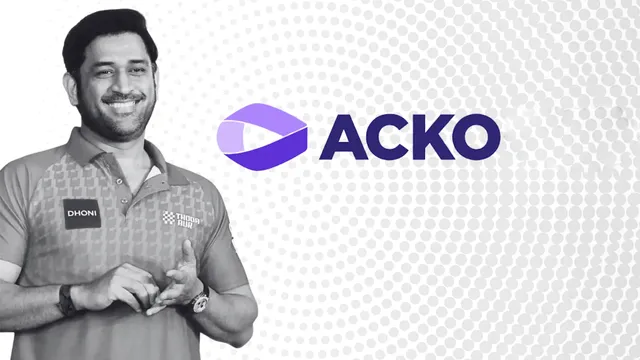
ACKO is one of the more recent additions to the MS Dhoni investment portfolio. In July 2025, Dhoni joined ACKO as both a strategic investor and brand ambassador through his family office, Midas Deals.
ACKO’s official announcement confirms that Dhoni made the investment through Midas Deals, although the financial terms were not disclosed.
Key details
- Sector: Insurtech
- Founder: Varun Dua
- Dhoni’s role: Investor and brand ambassador
- Investment: Undisclosed
- Investment vehicle: Midas Deals
Why did this business attract him?
Dhoni specifically highlighted ACKO’s tech-first and customer-centric approach and said that insurance had often felt unnecessarily complicated to him as an automobile enthusiast.
The investment therefore appears to have a strong connection with:
- Technology-led insurance
- Simplifying a complicated product
- Customer experience
- Automobile insurance
- A strong connection with Dhoni’s interest in automobiles
Dhoni cited ACKO’s technology-led and customer-focused approach as a reason for backing the company.
Founder lesson: Complex industries can create strong startup opportunities when technology makes the customer experience simpler.
11. BluSmart — A Cautionary Chapter
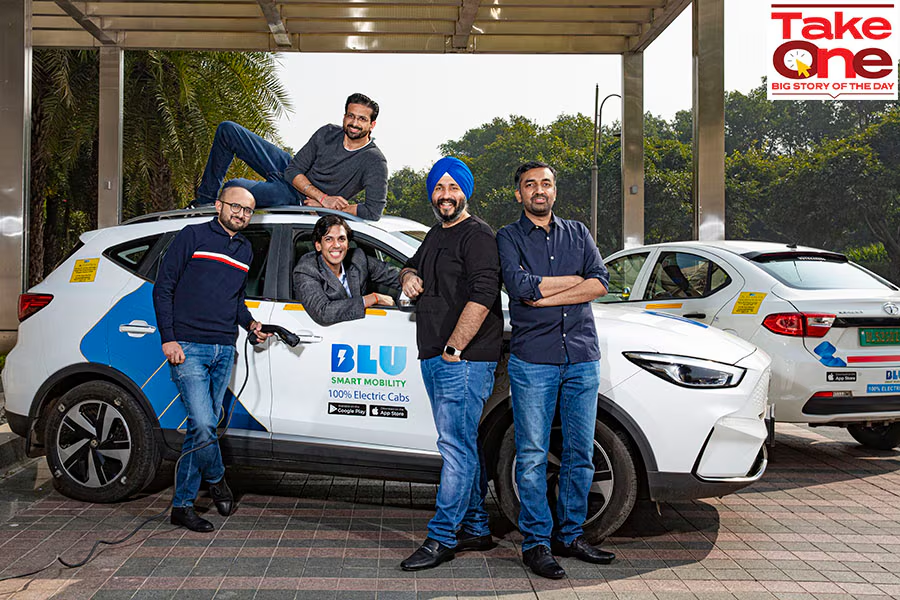
Not every bet plays out smoothly, and Dhoni’s portfolio includes an honest example of that. Dhoni, via his family office, joined BluSmart’s ₹420 crore Series B round in 2024, when the company operated a fleet of over 8,000 electric vehicles. The company later faced regulatory turbulence in April 2025 due to mismanagement findings and a service suspension.
It’s worth including precisely because a complete portfolio picture shouldn’t only showcase wins.
MS Dhoni Family Office — Recent, Institutional-Style Bets
Beyond personal angel deals, Dhoni’s family office has taken a more structured investing approach lately. As of mid-2026, the family office has invested in Superhealth, SILA, and Centricity, spanning business services, real estate, healthcare, and fintech. Its most recent move was a $4.43 million Seed round in Superhealth in August 2025.
This shift — from one-off celebrity endorsement deals toward a family-office structure — mirrors how many high-net-worth Indian sportspeople are now managing wealth more like institutional investors.
What Pattern Can Founders See Across MS Dhoni’s Investments?
Looking across these businesses, a few patterns become clear.
Dhoni isn’t investing randomly across unrelated companies. His publicly reported portfolio repeatedly touches large consumer markets, emerging technology and businesses where his personal credibility can create additional value.
Common themes include:
- Large addressable markets
- Technology-led business models
- Strong consumer potential
- Emerging categories
- Personal relevance
- Brand-building opportunities
- Potential for strategic involvement
Dhoni has also described investing as similar to sport, emphasising adaptability and the importance of focusing on the process rather than only the result.
What Can Entrepreneurs Learn From MS Dhoni’s Investment Strategy?
Dhoni’s business journey offers several useful lessons for founders—even if they never become celebrity investors.
1. Build trust before scaling
Dhoni spent years building credibility in cricket before turning that reputation into a business asset.
2. Don’t depend on one industry
His portfolio covers technology, mobility, food, finance, fitness and insurance.
3. Strategic value matters
Several investments combine capital with Dhoni’s role as a brand ambassador.
4. Invest in emerging categories
Drones, electric mobility, creator monetisation and digital insurance all represent markets shaped by changing consumer behaviour.
5. Understand the product
His comments around Tagda Raho and ACKO suggest that personal interest and product-market fit matter alongside financial potential.
Final Takeaway: What Makes MS Dhoni Investments Interesting?
MS Dhoni Investments are not simply a collection of celebrity endorsements. His portfolio demonstrates how a high-profile individual can combine capital, credibility and strategic brand value.
From Garuda Aerospace and EMotorad to Khatabook, Rigi and ACKO, his investments cover several of India’s emerging growth categories.
For aspiring entrepreneurs, the bigger lesson is simple: build something people need, understand your market deeply and choose investors who can contribute more than money.
Dhoni’s own transition from athlete to entrepreneur and investor shows that a strong personal brand can open doors—but sustainable businesses still need products, customers and execution to stay open.
FounderPin Perspective: We believe the most useful way to study celebrity investors is not to copy where they put their money. Instead, founders should study what problem the startup solves, why the investor entered, what strategic value they bring and whether the underlying business has durable economics.
If you’re building a startup and need help with business strategy, funding, positioning or investor readiness, contact FounderPin for a consultation.
Frequently Asked Questions About MS Dhoni Investments
1. What are the major companies in MS Dhoni’s investment portfolio?
MS Dhoni’s publicly reported investment portfolio spans CARS24, Khatabook, Garuda Aerospace, HomeLane, Rigi, Shaka Harry, 7Ink Brews, Tagda Raho and EMotorad, among others. His investments cover fintech, AutoTech, drones, fitness, food, home interiors and electric mobility.
2. Why does MS Dhoni invest in startups?
Dhoni appears to favour businesses operating in emerging or large consumer markets where his experience and brand can add strategic value. His portfolio includes technology-led businesses in areas such as drones, electric mobility, fintech and creator monetisation, alongside consumer brands.
However, founders should distinguish between Dhoni’s publicly stated investment rationale and outside analysis. The investment thesis isn’t publicly documented for every company.
3. How much money has MS Dhoni invested in startups?
There is no single officially disclosed figure covering all of MS Dhoni’s startup investments. Many individual investment amounts remain undisclosed.
For example, reports have disclosed a ₹4 crore investment for a 1.1% stake in Garuda Aerospace, while his individual investment amounts in companies such as Khatabook, Rigi and EMotorad have not been publicly disclosed.
Therefore, claims about his “total startup investment” should be treated cautiously unless supported by company filings or credible reporting.
4. Which startup did MS Dhoni invest in first?
CARS24 is among the earliest publicly reported startup investments associated with Dhoni, dating to 2019. He invested in the used-car marketplace and also became associated with the company as a brand ambassador.
His portfolio subsequently expanded into areas including fintech, food, home interiors, drones, fitness, creator technology and electric mobility.
5. What can entrepreneurs learn from MS Dhoni’s investment strategy?
The biggest lesson is that strategic value can matter as much as capital. Dhoni often combines his investment with brand visibility, credibility or an ambassador role, giving startups access to an asset that traditional investors may not provide.
For founders, the takeaway is simple: when raising funding, don’t ask only “How much money can this investor provide?” Also ask “What expertise, network, distribution or credibility can this investor bring?”