
In the high-stakes arena of Shark Tank India Season 5, many pitches are remembered for their drama, but few are remembered for sheer, clinical dominance. The appearance of Bonkers Corner was one of those rare moments of Bonkers Shark Tank. It wasn’t just a pitch; it was a masterclass in how a “12th-pass” founder turned family bankruptcy into a ₹300 crore streetwear empire.
If you missed the episode or want to dive deep into the mechanics of why this deal was truly “bonkers,” you’ve come to the right place. At Founderpin.com, we analyze the DNA of successful startups, and the story of Shubham Gupta is a blueprint for the next generation of D2C founders.
The Origin Story: From Bankruptcy to “Bonkers” the story of Bonkers Shark Tank Deal
Every great startup has a “trial by fire.” For Shubham Gupta, that fire started in 2011. When his father’s textile business collapsed, the family faced total bankruptcy—they lost their home and their stability.
Bonkers Shark Tank Deal CEO Background: CEO Shubham, admitted, had little interest in traditional academics and had barely cleared his Class 12 exams, was thrust into the workforce at a salary of just ₹10,000. Instead of seeing this as a dead end, he used the streets of Mumbai as his MBA classroom.
The White-Label Secret
Before Bonkers Corner became a household name, Shubham operated behind the scenes as a white-label manufacturer. He produced high-quality apparel for other famous D2C brands. This “invisible” phase was crucial because it taught him:
-
Sourcing & Fabric Quality: How to tell the difference between a high-margin blend and a cheap substitute.
-
Operational Discipline: Managing a production line that could eventually scale to 3 lakh units per month.
-
Market Gaps: He realized that while he was making the clothes, other brands were capturing the “cool” factor—and the profits.
In 2020, amidst the global pandemic, Bonkers Corner was officially born. It wasn’t just another clothing brand; it was a response to the “moral rot” of bankruptcy, fueled by a desire to build something permanent.
The “Bonkers” Pitch: Breaking the Shark Tank Format
When Shubham walked into the Tank in Season 5, Episode 19, he didn’t look like a nervous founder. He looked like a CEO who had already won.
The Numbers That Silenced the Sharks
Most fashion brands on Shark Tank struggle with inventory debt or low margins. Bonkers Corner brought a different set of data to the table:
-
FY 2024–25 Revenue: ₹125 Crore (up from ₹99 Crore the previous year).
-
FY 2026 Projection: ₹180 Crore.
-
EBITDA Margins: 11% (projected to hit 20% by the end of the year).
-
Retention Rate: A staggering 45% customer retention, proving that people don’t just buy a Bonkers tee once; they come back for the entire collection.
Bonkers Shark Tank Deal – The Ask:
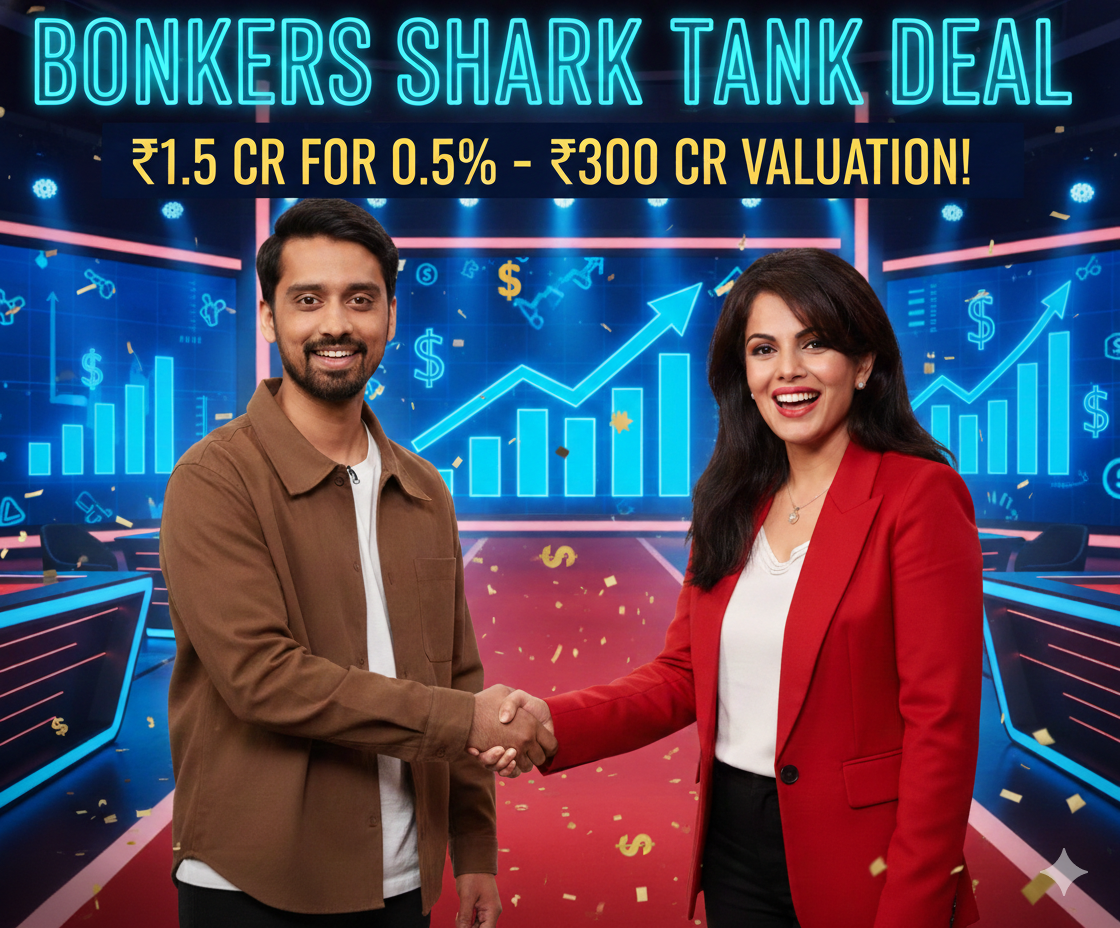
Shubham asked for ₹1.5 Crore for 0.5% equity, valuing the company at ₹300 Crore.
Initially, the Sharks balked at the valuation. Anupam Mittal even questioned why he was there at all, famously asking: “Why do you want to raise money? Earning ₹30 crores [EBITDA] in one year is no small feat!”
The Deal: The “Namita Thapar” Masterstroke
What happened next was a “first” in the history of Shark Tank India. Bonkers Shark Tank
Namita Thapar, recognizing a founder who had “been through hell and back” and built a profitable, scalable machine, immediately matched the ask: ₹1.5 Crore for 0.5% equity. Usually, founders wait to hear every Shark’s offer to spark a bidding war. But Shubham is a different breed. He looked at Namita, recognized the value of her mentorship in logistics and scaling, and accepted the offer instantly.
Aman Gupta, who was preparing a counter-offer, was left speechless. Namita’s reasoning was simple: “I’m giving him what he is asking for. I want to make him a deal so good, he can’t refuse.”
Founder Tip: Sometimes, the best negotiation is knowing when to say “Yes.” By accepting Namita’s offer immediately, Shubham secured a powerful partner without diluting his equity further or wasting time on theatrics.
Bonkers Shark Tank: Why Is Bonkers Corner Winning?
It’s not just about the Shark Tank fame. Bonkers Corner has built a moat that most D2C brands ignore.
1. In-House Manufacturing
Unlike competitors who outsource production (and lose control over quality and costs), Bonkers Corner manufactures everything in-house. This allows them to sell a high-quality hoodie for ₹1,200 that other brands might charge ₹3,000 for.
2. Licensing Power
They don’t just sell “streetwear.” They sell identity. By securing official licenses from Disney and Marvel, they’ve tapped into the fan-culture that drives Gen-Z purchasing decisions.
3. Omni-channel Strategy
While 55% of their sales come from their website, they are rapidly expanding offline. With 19+ physical stores, they understand that the “touch and feel” of fabric is still a major conversion tool in the Indian market.
4. Digital-First Community
They don’t just run ads; they build a vibe. Their marketing strategy focuses on social media trends and “fast fashion” cycles that move at the speed of a TikTok scroll.
What’s Next: The Future of Bonkers Corner
Post-deal, the focus has shifted from “survival” to “global dominance.” Namita Thapar has already highlighted that her primary goals for the brand are:
-
IT & Tech Scaling: Optimizing the backend to handle the massive surge in traffic.
-
Offline Expansion: Building a “cluster” of retail stores across India.
-
Founder Health: In a touching post-show update, Namita mentioned that Shubham’s intense work routine had taken a toll on his health (his weight had dropped to 47kg). Her goal is to support him as a mentor in every sense—not just financially.
Bonkers Shark Tank Deal – Key Lessons by Founder Pin for Aspiring Founders
The Bonkers Shark Tank deal is more than just a success story; it’s a lesson in resilience.
-
Degrees aren’t everything: A 12th-pass student with street smarts can out-pitch a PhD if the numbers and the “hustle” are real.
-
Profit is the ultimate validator: If you are profitable and growing, you hold the power in the negotiation room.
-
Know your “Why”: Shubham didn’t need the money; he needed the “Shark” to help him scale the parts of the business he hadn’t mastered yet—IT and logistics.
Are you willing to start a new company? Check out our guide on how to register a startup in-India full guide or read about other Shark Tank Success Stories on our blog.
What is Founder Pin?
Bonkers Corner Shark Tank India Pitch
This video provides a first-hand look at the high-stakes pitch and the historic moment where Shubham Gupta accepted Namita Thapar’s offer on the spot.