
Founder Pin

Author name: Karan

A futuristic 2026 office setting showing a digital "Investor Pitch Deck Best Practices 2026" presentation on a curved glass screen, featuring agentic workflow metrics, revenue growth charts, and the Founder Pin logo.
Funding, Pitch Deck, Startup Guide, Startup Insights & Ecosystem, VC

Investor Pitch Deck Best Practices 2026

Investor Pitch Deck Best Practices 2026: The Founder’s Guide to Winning the Round Investor Pitch Deck Best Practices 2026: The venture capital landscape of 2026 has officially moved past the “growth-at-all-costs” era and the “AI-experimentation” phase. Today, the market is defined by execution, agency, and efficiency. According to recent 2026 venture outlooks, capital is concentrating in fewer deals, but with higher intensity. Investors are no longer looking for “cool tools”—they are looking for category winners that can operate autonomously at scale. If your pitch deck still looks like it belongs in 2024, you’re not just outdated; you’re invisible. Here is the definitive guide to investor pitch deck best practices in 2026. 1. The 2026 “Visual Handshake”: Mobile-First or Fail In 2026, the first time an investor sees your deck won’t be in a boardroom. It will be on an iPhone 17 or a foldable tablet while they are in an Uber or between meetings. Responsive Design is Non-Negotiable: Your deck must be legible on a 6-inch screen. This means a minimum of 24pt to 30pt font for body copy. If an investor has to “pinch and zoom” to see your traction, you’ve already lost. The “Reading” vs. “Presenting” Deck: You need two versions. A Visual Deck (minimal text, heavy impact) for live calls, and a Reading Deck (self-explanatory, link-based) for the “leave-behind.” Move Beyond the PDF: High-growth founders are increasingly using web-based, scrollable formats (like Pitchwise or interactive Canva links). These allow you to track slide-level analytics: you can see exactly which slide an investor spent 2 minutes on and where they dropped off. 2. The “Agentic” Shift: Defining the New Value Prop In 2024, it was enough to say “We use AI.” In 2026, investors assume AI is like oxygen—it’s table stakes. The new differentiator is Agency. The “Execution Layer” Slide Investors want to see how your product moves from suggesting actions to executing them. Your solution slide must address: Autonomy: Can your AI agents handle workflows (like financial reconciliation or security remediation) without human prompts? Orchestration: How does your system manage multiple agents working together? Governance: In an AI-first world, trust is the moat. Include a slide on Operational Resilience and how you handle AI-driven risks and data privacy. 3. The 10-Slide Blueprint for 2026 While the narrative remains king, the “standard” order has evolved to prioritize proof over speculation. Slide 2026 Focus The “Hook” 1. Purpose Your “One-Sentence Handshake.” “We are the agentic operating system for [Industry].” 2. The Problem The “Operational Bottleneck.” Show the human/cost lag that only autonomous systems can fix. 3. Solution The “Agent-Native” approach. Show the product acting, not just thinking. 4. Why Now? The “Regulatory/Tech Window.” Why 2026? (e.g., New AI protocols, GPU cost drops). 5. Market Size “Winner-Takes-Most” potential. Focus on the Serviceable Obtainable Market (SOM) you can dominate. 6. Competition The “2×2 Matrix” of Moats. Be transparent. Show why legacy SaaS is too slow to adapt. 7. Product/Demo The “Live Logic.” High-quality video or interactive mockups of the agent workflow. 8. Business Model “Agentic ROI.” Move from “per seat” to “per outcome” or “usage-based” pricing. 9. The Team “Technical Founders.” Investors in 2026 prioritize CEOs who can build, not just sell. 10. The Ask The “Milestone Roadmap.” “We are raising $Xm to reach [Specific Metric/Series A Benchmark].” 4. Radical Transparency: The “Ugly Slide” 2026 investors have seen the “hockey stick” graph a thousand times. They are now hunting for durability. One of the most effective trends this year is including a Risk & Mitigation slide. By identifying your own bottlenecks—be it GPU supply chains, regulatory hurdles in the EU, or high initial CAC—you signal that you are a “sober” operator. It builds instant rapport and cuts through the “hype fatigue” that many VCs feel. 5. Investor Pitch Deck Best Practices 2026: Modern Aesthetics: Minimalism & Depth Design trends have shifted toward a “Futuristic Minimalist” look. Bento Box Layouts: Use grid-based “Bento” layouts to group related data points (like Team bios or Feature sets) cleanly. Dynamic Typography: Use bold, oversized headers to guide the eye. If the investor only reads the headers, they should still get 80% of the story. Gradients & Depth: Subtle 3D elements and gradient backgrounds are “in,” but only if they don’t distract from the data. 6. Metrics that Matter in 2026: Investor Pitch Deck Best Practices 2026 Forget “Total Users.” In the “Golden Era” of venture capital, investors care about efficiency. LTV/CAC Ratio: Aim for >3x. Net Revenue Retention (NRR): In 2026, 120%+ is the gold standard for B2B. Burn Multiple: How much are you spending to generate each new dollar of ARR? (The 2026 target is <1.5 for Seed/Series A). Agentic Efficiency: The percentage of tasks completed by AI without human intervention. Investor Pitch Deck Best Practices 2026: Conclusion: Lead with Evidence The overarching theme of 2026 is Evidence over Energy. A charismatic founder with a beautiful deck but no data will lose to a quiet founder with a simple, data-backed “Reading Deck” every single time. Your pitch deck is no longer just a presentation—it is a proxy for your execution. If your deck is clear, responsive, and grounded in the realities of the agentic era, you aren’t just asking for money; you’re offering an invitation to a category winner. This blog is brought to you by Founder Pin Check latest other blogs: Your-first-10-customers-in-india-a-field-guide How-to-create-a-winning-pitch-deck-in-2026
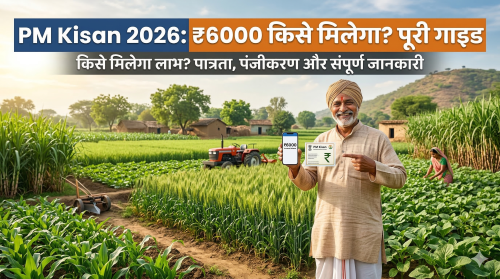
A happy Indian farmer showing PM Kisan 2026 beneficiary status on a mobile phone in a green wheat field with a tractor in the background.
Agriculture India, Farming News, Government Schemes, govt scheme

PM Kisan 2026: ₹6000 किसे मिलेगा? पूरी गाइड

PM Kisan 2026: ₹6000 किसे मिलेगा? पूरी गाइड अगर आप खेती करते हैं, या आपके घर में कोई किसान है, तो ये स्कीम आपने जरूर सुनी होगी. PM Kisan Samman Nidhi Yojana. नाम लंबा है, काम सीधा है. सरकार हर साल ₹6000 देती है, तीन किस्तों में. लेकिन असली खेल यहां है. 2026 में भी पैसा मिलेगा, पर सबको नहीं. कुछ लोगों की किस्त रुकती है क्योंकि eKYC नहीं हुआ, जमीन का रिकॉर्ड मैच नहीं हुआ, बैंक अकाउंट में छोटी सी गलती रह गई, या फिर eligibility में ही दिक्कत है. Founder Pin पर हम चीजों को वैसे ही बताते हैं जैसे वो ग्राउंड पर होती हैं. फार्म भरते समय जो छोटे छोटे पेंच आते हैं, वही असल में पैसे रोक देते हैं. इस गाइड में वही सब है, साफ भाषा में. नोट: यह जानकारी जागरूकता के लिए है. Official अपडेट के लिए हमेशा PM Kisan की साइट और राज्य के कृषि विभाग के पोर्टल पर चेक करें. PM Kisan 2026 में ₹6000 क्या है, और कैसे मिलता है? PM Kisan योजना में पात्र किसानों को साल में कुल ₹6000 मिलते हैं. ये आम तौर पर ₹2000 की 3 किस्तों में आते हैं. किस्त 1: अप्रैल से जुलाई के आसपास किस्त 2: अगस्त से नवंबर के आसपास किस्त 3: दिसंबर से मार्च के आसपास डेट हर साल थोड़ा बदल सकती है. इसलिए “मेरी किस्त कब आएगी” का सबसे सही जवाब है, अपना PM Kisan स्टेटस चेक करो और official घोषणा देखो. External link (Official): PM Kisan Portal: https://pmkisan.gov.in/ ₹6000 किसे मिलेगा? (Eligibility 2026) सीधा नियम. आप किसान होने चाहिए और eligible होने चाहिए. लेकिन “किसान” का मतलब यहां जमीन से जुड़ा है. आमतौर पर 2026 में भी लाभ उन्हीं को मिलेगा जो: भारत के नागरिक हैं कृषि योग्य भूमि (agricultural land) उनके नाम या परिवार के eligible सदस्य के नाम पर है eKYC complete है Aadhaar और बैंक खाता सही तरीके से linked है Land seeding / land verification (जहां लागू हो) में रिकॉर्ड मैच करता है अब असली सवाल. क्या बटाईदार, किरायेदार किसान को मिलेगा? ज्यादातर मामलों में PM Kisan भूमिधर (landholder) किसानों के लिए है. यानी जिनके नाम जमीन है. किरायेदार या sharecropper को सीधे लाभ मिलना मुश्किल होता है, क्योंकि रिकॉर्ड में जमीन उनके नाम नहीं होती. कुछ राज्य अलग सपोर्ट स्कीम रखते हैं, पर PM Kisan में सामान्य नियम यही है. Joint land (साझा जमीन) में किसे मिलेगा? अगर जमीन joint है, तो भी लाभ मिल सकता है, लेकिन owner details, Aadhaar, eKYC और रिकॉर्ड match होना जरूरी है. कई बार इसी में mismatch हो जाता है और किस्त रुक जाती है. किसे नहीं मिलेगा? (Ineligibility और Common Rejection) यह हिस्सा ध्यान से पढ़िए, यहीं से 70% confusion खत्म हो जाता है. PM Kisan में कुछ categories को exclude किया गया है. आम तौर पर ये लोग लाभ के पात्र नहीं होते: Income tax payers (पिछले नियमों के हिसाब से) सरकारी कर्मचारी (कुछ exceptions छोड़कर, नियम समय के साथ बदलते हैं) Constitutional post holders Doctors/Engineers/Lawyers/CA जैसे कुछ professional categories, अगर वे institutional criteria में आते हैं जिनके नाम कृषि भूमि ही नहीं है (या रिकॉर्ड सही नहीं है) Fake/duplicate entries, एक ही Aadhaar पर multiple registrations eKYC incomplete Bank account invalid / dormant / wrong IFSC / नाम mismatch Official guideline के लिए best source: External link: https://pmkisan.gov.in/ (Menu में “Guidelines” और “FAQ” देखें) PM Kisan 2026 के लिए जरूरी दस्तावेज (Documents) बहुत भारी लिस्ट नहीं है, पर जो चाहिए वो सही होना चाहिए. Aadhaar card Bank account details (Account number, IFSC, bank name) Mobile number (OTP और updates के लिए) Land record details (खसरा, खतौनी, पट्टा, etc. राज्य के हिसाब से) eKYC status verified एक छोटी सलाह. बैंक खाते में नाम और Aadhaar में नाम थोड़ा भी अलग है, तो correction पहले कराएं. कई बार “Ramesh Kumar” बनाम “Ramesh Kr.” यही mismatch payment रोक देता है. eKYC 2026: सबसे जरूरी step (यहीं किस्त अटकती है) 2026 में भी eKYC strict रहने वाली है. अगर eKYC नहीं, तो किस्त नहीं. बस. eKYC कैसे करें? आपके पास आम तौर पर 2 रास्ते हैं: PM Kisan portal पर OTP based eKYC CSC (Common Service Center) पर biometric eKYC अगर OTP नहीं आता, या मोबाइल नंबर Aadhaar से link नहीं है, तो CSC वाला option तेज और practical है. PM Kisan 2026 में आवेदन कैसे करें? (New Registration) अगर आप नए beneficiary हैं, तो registration सही तरीके से करना जरूरी है. Step by step (साधारण भाषा में) PM Kisan portal खोलें: https://pmkisan.gov.in/ Farmers Corner में जाएं New Farmer Registration चुनें Aadhaar number डालें, state select करें Land details और bank details भरें Submit करके acknowledgement number सेव करें eKYC complete करें (बहुत जरूरी) इसके बाद verification का phase आता है. कई बार राज्य के revenue records से match होने में समय लगता है. Union Budget 2026: Startup and MSME Opportunities जैसे ही हम PM Kisan योजना के तहत अपने आवेदन को आगे बढ़ाते हैं, हमें यह ध्यान रखना चाहिए कि Union Budget 2026 में startup और MSME के लिए कई अवसर प्रदान किए जा रहे हैं। यह अवसर न केवल किसानों के लिए बल्कि छोटे और मध्यम उद्यमों के लिए भी फायदेमंद हो सकते हैं। स्टेटस कैसे चेक करें? (Beneficiary Status) आपको दो चीजें चेक करनी हैं: Beneficiary Status Beneficiary List (गांव/ब्लॉक level पर) Status check PM Kisan portal पर जाएं: https://pmkisan.gov.in/ Farmers Corner -> Beneficiary Status Aadhaar / Account / Mobile से check अगर status में “Payment pending”, “Rejected”, “eKYC not done”, “Land seeding pending” जैसा दिखे, तो वहीं से direction मिल जाती है कि next step क्या है. किस्त नहीं आई तो क्या करें? (Most common fixes) ये real world checklist है. Founder Pin style में, सीधा. 1) eKYC नहीं हुआ सबसे पहले eKYC. फिर दोबारा status check. 2) Bank account issue IFSC गलत Account number गलत Bank account बंद या inactive Name mismatch Fix: PM Kisan profile में bank details update करें (जहां option मिले) या संबंधित office/CSC से correction करवाएं. 3) Aadhaar seeding / NPCI mapping issue कई बार पैसा इसलिए नहीं जाता क्योंकि DBT के लिए mapping issue रहता है. Fix: बैंक में

Pricing a SaaS in India The Simple Math Most Skip
Uncategorized

Pricing SaaS in India: The Simple Math Most Skip

Pricing a SaaS in India: The Simple Math Most Skip Most SaaS pricing advice sounds like it was Pricing SaaS: Most SaaS pricing advice sounds like it was written in a nice air conditioned room in SF. Charge based on value. Run A B tests. Do a freemium. Add annual plans. Raise prices every quarter. And sure. Some of that works. But in India, I keep seeing the same thing happen. Founders ship a decent product, get a few customers, feel the dopamine hit. Then the pricing is… basically vibes. 999 per month because it feels affordable. Or 49 dollars because “global SaaS”. Or 499 because competitors do it. Or free because nobody is buying. And then, 6 months later, they’re working insane hours, growing signups, and still somehow broke. The fix is not a new pricing page design. It’s not another bundle name like Starter Growth Scale. It’s one chunk of math. Not complicated. Just uncomfortable. The math most people skip. The common trap: pricing for the buyer, not for the business In India, founders tend to price like this: Start with what you personally would pay Compare with one competitor Shave it down because India is “price sensitive” Add a discount because you feel awkward asking for money Now you have a plan that customers might buy. But your SaaS doesn’t survive on “might buy”. It survives on contribution margin and payback. And if you don’t compute those, you can hit 10k users and still be in trouble. Because support costs. Refunds. Payment fees. Sales commissions. Cloud bills. The human cost of onboarding. The founder’s time. All of that is real, even if it’s not on your Stripe screenshot. The simple math: your price has to fit your acquisition channel Here’s the sentence to tattoo on your brain: Price is not decided by what customers want. Price is constrained by how you acquire customers. If you acquire customers through: content SEO WhatsApp communities founder led outbound partnerships paid ads inside sales field sales channel resellers Each one has a different cost structure. Which means the same price can be profitable in one channel and suicidal in another. So the math starts here: LTV must be bigger than CAC, and payback must be fast enough that you don’t run out of cash. That’s it. That’s the core. But we need to define it properly because people throw these terms around like buzzwords. Step 1: calculate gross margin first (yes, before CAC) A lot of SaaS founders say “our margins are like 90%”. Sometimes true. Often not. In India, especially for SMB SaaS, your real “COGS” includes: hosting and APIs (servers, email, SMS, WhatsApp, AI tokens) payment gateway fees (and GST complexity sometimes) customer support time onboarding calls account management third party tools you use per customer (Intercom, analytics, etc.) If you’re selling to Indian SMBs, onboarding and support is often the hidden killer. You might be doing 2 Zoom calls and 18 WhatsApp messages for a 999 plan. That’s not SaaS anymore, that’s a service with a login. So do this: Gross Margin = (Revenue – COGS) / Revenue If you don’t know COGS per customer, estimate: infra cost per active user per month average support hours per customer per month x your internal cost per hour onboarding hours x cost per hour, spread over expected lifetime Even rough numbers are better than pretending it’s 90%. Rule of thumb: if you’re doing high touch onboarding for low price plans, your gross margin can quietly drop to 50 to 70%. And then your whole pricing model breaks. Step 2: calculate CAC the boring way, not the “ad spend” way CAC is not just “we spent 50k on ads”. CAC includes: ad spend sales salaries and commissions founder time (yes, include it) tools: Apollo, Lemlist, CRM, calling, etc. agency fees events and sponsorships discounts given to close deals (that is acquisition cost too) The easiest working formula: CAC = (Total sales + marketing cost in a month) / (New customers acquired in that month) Do this separately by channel if you can. Because blended CAC hides problems. In India, I often see this situation: content and referrals bring some customers cheaply outbound brings a few expensive customers blended CAC looks fine founder keeps scaling outbound because “it works” cash starts bleeding So. Track it by channel. Step 3: pick a payback period you can actually afford Payback period is the number of months it takes to recover CAC from gross profit. Payback (months) = CAC / Monthly Gross Profit Where: Monthly Gross Profit = MRR per customer x Gross Margin Most founders skip gross margin and use revenue. Bad move. Because if you have onboarding and support costs, revenue lies. Now the key question: What payback should an Indian SaaS target? Depends on your cash position and growth speed. But generally: Bootstrapped, low cash buffer: under 3 months is ideal, 6 months max Venture backed, high conviction, scaling: 6 to 12 months can work If your payback is 18 months and you’re not swimming in capital, you are basically betting your company on hope India specific twist. Churn can be higher in SMB. Payment failures. Business shutdowns. People ghosting. And “annual upfront” is harder unless you’re selling a must have product. So shorter payback is safer. A real example (simple numbers, but this is the whole point) Let’s say you’re pricing at ₹999/month. Assume: gross margin 80% (after support, infra, onboarding blended) monthly gross profit per customer = 999 x 0.8 = ₹799 Now suppose your CAC via outbound + founder demos is ₹6,000 per customer. Payback = 6,000 / 799 = 7.5 months That might be okay. Might. But now add Indian reality: customer churns in month 4 because they “paused for now” payment fails and they don’t respond they ask for a refund after onboarding Your payback assumptions collapse. So the pricing problem isn’t “is 999 a nice psychological price”. It’s: can you acquire customers profitably at that

Startup Guide

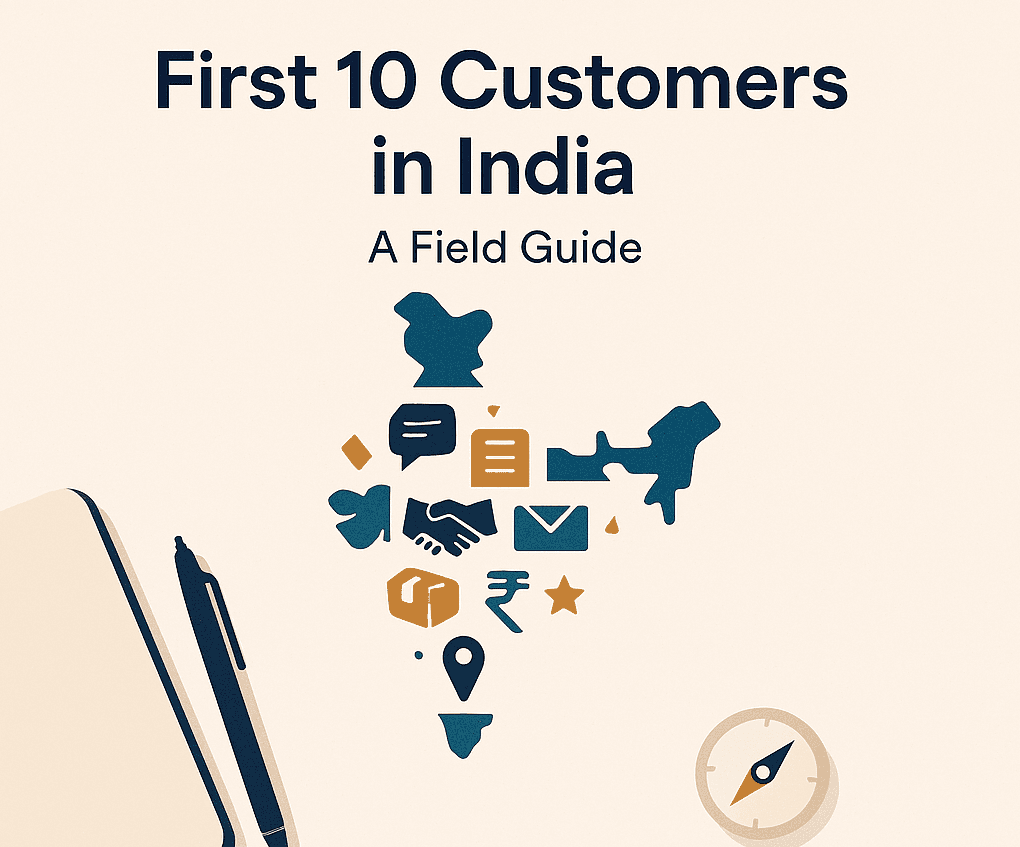
Your First 10 Customers in India: A Field Guide

Your First 10 Customers in India: A Field Guide Getting your first 10 customers in India is   Your First 10 Customers in India: Getting your first 10 customers in India is weirdly hard. Not because India lacks customers. It is the opposite. There are too many. Too many segments, too many price points, too many languages, too many “bhaiya ek call pe aao” moments. And early on, your product is usually not even the main issue. It is distribution. Trust. Proof. And you, as a founder, learning how to sell without sounding like you are selling. This is a field guide. Not theory. Not “growth hacks”. Just the stuff that actually gets you to the first 10. The scrappy, slightly uncomfortable, very real stuff. Before we start, one mindset shift. Your first 10 customers are not a “small version” of your future company. They are a research lab that pays you. Treat them like that. 1. Your First 10 Customers in India: Pick one narrow customer. One. Not “everyone in India”. If you are selling to “SMEs” or “students” or “D2C brands”, you are basically selling to nobody. India forces clarity. Pick a tiny slice like: CA firms with 5 to 20 staff in Tier 1 cities Instagram store owners doing 2 to 10 lakhs a month Independent gyms in Mumbai suburbs College placement cells in private engineering colleges Clinics with one doctor and one receptionist Say it out loud. If it sounds too specific, good. A useful filter: can you list 50 of them from memory or with a little Googling? If yes, you have a target. Also read: A-pre-launch-checklist-for-indian-startups-no-fluff 2. Your First 10 Customers in India: Decide your “first 10 offer”. It is not your final pricing. Most founders price like they are already a brand. You are not. Yet. In India, early customers are taking social risk. They are betting on you. They need to feel like the bet is worth it. So create a first 10 offer: Pilot pricing for 30 days Founding customer plan with extra support Pay after results for a fixed outcome Setup fee waived if they give a testimonial Annual plan at monthly price if they commit early Keep it simple. One page. One WhatsApp message. One line they can forward. Your First 10 Customers in India: A good first 10 offer has 3 parts: The promise (what changes for them) The proof you will create together (case study, numbers, testimonial) The safety (cancel anytime, refund, no lock in) 3. Build a list of 100 leads manually. Yes, manually. You cannot automate trust. Your first 100 leads should come from places where Indian businesses already hang out: Where to find leads fast Google Maps (search “dentist”, “interior designer”, “tuition centre”) Justdial and IndiaMART (old school, still works) LinkedIn (filter by city, title, company size) Instagram (search by location and hashtags) Facebook groups (local business groups are chaotic but alive) WhatsApp groups (if you are in, you are in) Make a simple sheet: Name Business name City Phone/WhatsApp Why they are a fit Status (contacted, replied, call booked, closed) It feels slow. Then suddenly it compounds. 4. Use the “India friendly” outreach script (short, specific, non cringe) Long cold emails are dead here. People will not read your origin story. In India, founders win with short, respectful, direct messages. WhatsApp first message template Hi {Name}, I saw {business name} on Google. Quick one. We help {similar businesses} get {outcome} in {timeframe}. Can I ask 2 questions to see if this is even relevant for you? No sales pitch. If they say yes, send the two questions. Do not jump to demo. Example questions: “How are you doing {process} today?” “What is the biggest headache with it?” “If you could fix one thing this month, what would it be?” This works because it feels human. And it gives them control. Indians hate being trapped in a sales call. 5. Do calls like a doctor. Diagnose first. Prescription later. Your first 10 calls are not demos. They are discovery sessions. A simple call flow that works: Context: “Tell me about your business. How do you get customers today?” Current process: “How do you handle {the thing} right now?” Pain: “What breaks, what wastes time, what costs money?” Impact: “If this stays the same for 6 months, what happens?” Desire: “In an ideal world, what would this look like?” Permission: “Want me to show you how we’re solving it?” Then only show the relevant part of the product. Not everything. If you do a full product tour, you will lose them. Too much info, too little relevance. 6. You need one wedge. One strong entry point. A wedge is a small use case that gets you inside the customer’s workflow. In India, wedges win because people don’t want to change everything at once. Examples: For a marketing tool: start with WhatsApp follow ups, not full funnel automation For a finance product: start with invoice reminders, not full accounting migration For B2B SaaS: start with one department, not company wide rollout For services: start with one campaign, one month, one outcome Your wedge should be: easy to start low risk fast visible value If your time to value is 30 days, your first 10 will be slow. Try to get it to 7 days. Even 48 hours. 7. Take money earlier than you feel comfortable This is going to annoy some people but it is true. If they do not pay, you do not have a customer. You have a user. Or worse, a fan. India has a lot of “interested” people. They will happily take free work. They will also disappear without guilt. So ask for payment once you have clarity. A clean line: If we can deliver {outcome} in {time}, the fee is ₹{amount}. We start with ₹{small amount} to kick off, rest after {milestone}. Even ₹999 matters. It changes the relationship. 8. Use “trust stacking”. India runs on proof. In India, people

Pre Launch Checklist for Indian Startups
Uncategorized

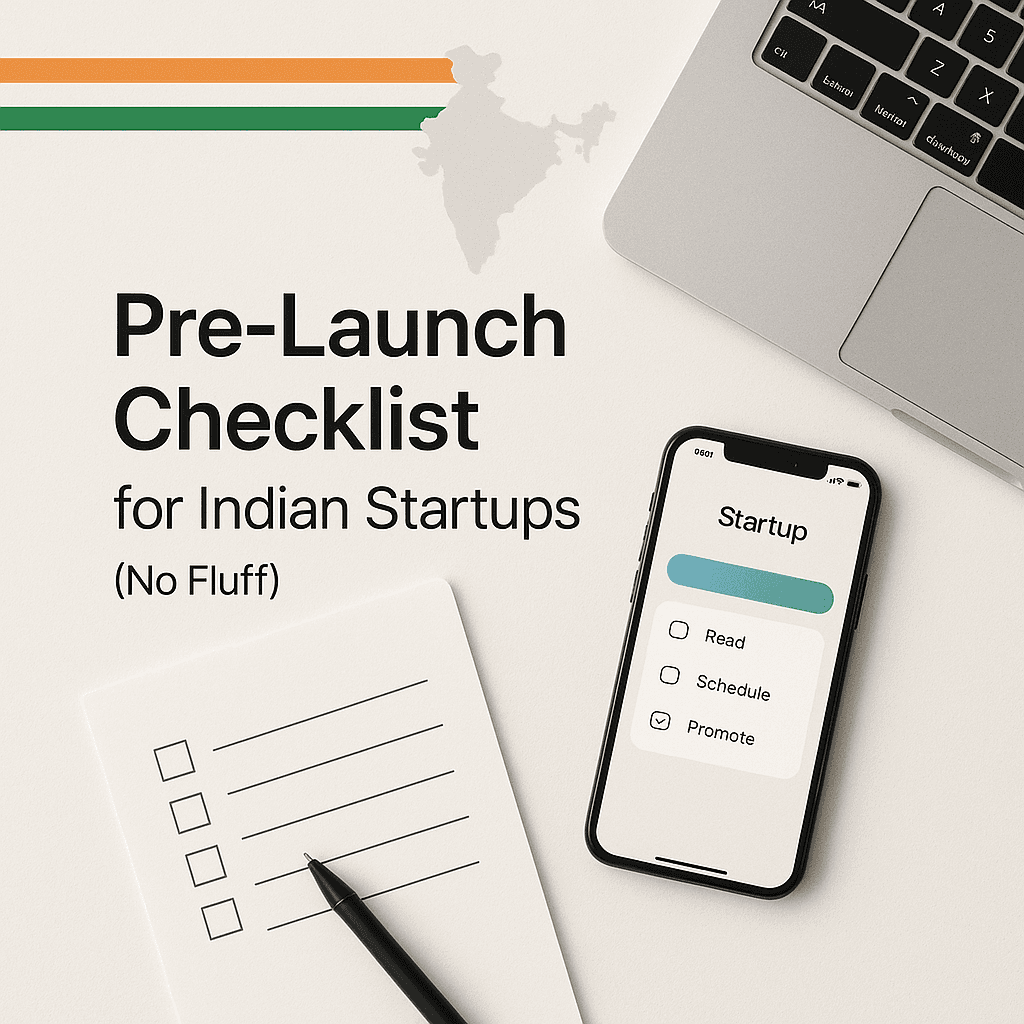
A Pre-Launch Checklist for Indian Startups (No Fluff)

A Pre-Launch Checklist for Indian Startups (No Fluff) Most startup advice sounds like this: build an MVP, talk to users, raise money, scale. This is a complete guide on Pre-Launch Checklist for Indian Startups Right before launch, the real problems are usually boring. GST. payment failure rates. a WhatsApp number that nobody replies to. one missing clause in your Terms that gets you in trouble later. a landing page that loads in 8 seconds on Jio. So here’s a pre launch checklist for Indian startups that is actually usable. Not perfect. Just practical. [Pre-Launch Checklist for Indian Startups] 1) Pre-Launch Checklist for Indian Startups: Define what “launch” even means for you If you don’t define it, you’ll keep “preparing” forever. Or you will ship too early and call it a launch because you posted on LinkedIn. Pick one: Private beta launch: 20 to 200 users, invite only, goal is feedback and retention. Public launch: anyone can sign up, goal is acquisition and conversion. Paid launch: payment enabled from day one, goal is revenue and proof. Pilot launch (B2B): 1 to 5 companies, goal is a case study and renewal. Write it down in one line: “We are launching a paid public version for freelancers in India with UPI, aiming for 100 paid users in 30 days.” That line decides everything else below. 2) Pre-Launch Checklist for Indian Startups : Confirm your ICP and the first use case (don’t keep it broad) Indian founders love saying “we’re building for SMBs”. That is not an ICP. That’s like saying you’re building for “humans”. Before launch, tighten it: Who exactly is the buyer and who is the user? What is the first job they hire you for? What are they doing today instead of using you? Excel, WhatsApp, Tally, Google Sheets, Notion, “my cousin manages it”. Quick test: if your onboarding can’t mention a specific persona, it’s too broad. Example: Not “business owners” Instead: “D2C founders doing 10 to 30 lakhs per month who need daily cash visibility and inventory signals without hiring a finance person.” 3) Your MVP must have one killer workflow end to end (Pre-Launch Checklist for Indian Startups) A Pre-Launch Checklist for Indian Startups : A lot of Indian SaaS products ship with 50 half features. Because it feels safer. But the first 100 users don’t care about your roadmap. They care if the one thing works, fully. Checklist: One primary workflow from start to finish. No dead ends. No “contact sales” unless you’re truly enterprise. No “coming soon” buttons in the core flow. It kills trust. If you have to remove 5 features to make 1 workflow solid, do it. It’s annoying. But it works. 4) Payments and pricing (India edition) This is where a surprising number of launches break. Especially consumer and prosumer products. Pre-Launch Checklist for Indian Startups: Decide your payment rails UPI (mandatory for a lot of segments) Cards (still important, especially for higher ticket and B2B) Netbanking is optional, but helpful for some profiles If you’re using a payment gateway, test the basics: Payment success rate on mobile UPI collect vs UPI intent behavior Webhook reliability Refund flow (customers will ask, even if you think they won’t) Invoice generation, if B2B Pre-Launch Checklist for Indian Startups: Pricing sanity checks Does your pricing look “Indian”? Or copied from US SaaS. Do you have a monthly plan? Indian users like monthly. Do you have an annual plan with a real incentive? Some will take it if trust is high. Is there a simple first paid plan? Not 9 tiers. Also. write your pricing page like a human. Nobody wants “Starter, Growth, Scale”. 5) Legal and compliance basics (just cover the obvious stuff) Not legal advice. But you need baseline hygiene before you go public. Company and tax Incorporation done (usually Pvt Ltd for venture scale, LLP for some cases) PAN, TAN if needed GST registration if applicable (many B2B scenarios expect it) Current account opened, payment collections mapped properly Contracts and policies Website Terms of Service – this is crucial as it sets the ground rules for using your service. A well-drafted Terms of Use can protect your interests. Privacy Policy Refund policy (if you take payments) If you handle sensitive data, be extra careful about consent and data storage. If you’re B2B: a simple MSA template NDA template (only when needed, not for every call) Pre-Launch Checklist for Indian Startups: Founder Pin has a lot of founder resources and services around startup compliance and grant readiness. If you’re trying to avoid running around for basics, it’s worth checking their ecosystem once you’re close to going live. 6) Product instrumentation before launch (or you will fly blind) You don’t need a fancy data team. But you do need to answer: Where do users drop off? What do retained users do differently? Which acquisition channel brings better users? Minimum instrumentation checklist: Install event tracking (PostHog, Mixpanel, Amplitude, GA4, whatever you can manage) Events to track: signup started signup completed activation event (your one key action) first value delivered (moment of wow) payment started and payment success (if paid) churn signal (subscription cancelled, inactivity) Also add: error logging (Sentry) uptime monitoring (UptimeRobot etc.) This is not “nice to have”. It saves you weeks. 7) Onboarding and support: set it up like you’re already busy Because after launch, you will be. Checklist: A welcome email (simple, clear) A 3 step onboarding inside the product Set up contact methods that actually work: WhatsApp business number or support chat support email in app help link Decide response time expectations: If you can’t do 24×7, don’t pretend you can. Say “we reply within 24 hours” and actually do it. Create a basic help doc with: “How to get started” “Common issues” “How refunds work” “How to contact support” Boring. But launches fail when users get stuck and nobody helps. 8) Infrastructure and performance (India networks are not forgiving) Your product must work on: mid range Android phones slower networks weird browser

Galgotias University Controversy Professional woman in a red saree presenting a robotic dog at the India AI Impact Summit 2026 with "Developed by Galgotias University" holographic text, symbolizing a branding failure.
Uncategorized

Galgotias University Controversy: Branding Mistakes & Lessons

Galgotias University Controversy: Branding Mistakes & Lessons   Galgotias University Controversy: In the fast-paced world of digital branding, a single viral moment can either build a legacy or break a reputation. Recently, Galgotias University found itself at the center of a PR firestorm during the India AI Impact Summit 2026. For the Founder Pin community of entrepreneurs and startups, what was meant to be a showcase of academic innovation has quickly morphed into a masterclass on the dangers of performative branding. Galgotias University Controversy: The Incident: “Orion” vs. Reality:  Galgotias University Controversy: The controversy began at the university’s stall at Bharat Mandapam, where a robotic dog named “Orion” was showcased. A video went viral showing a faculty member claiming the robot was “developed by the Centre of Excellence at Galgotias University” as part of a ₹350 crore AI investment. However, tech-savvy netizens quickly identified “Orion” as the Unitree Go2, a commercially available product manufactured in China. The fallout was swift: the university was asked to vacate its stall, and social media exploded with “Ctrl-C Ctrl-V” memes. For brands, this incident highlights a critical shift: in 2026, transparency is your only defense. Here are 10 branding mistakes to avoid, inspired by the Galgotias fiasco. 1. Over-Claiming Innovation (The “White-Label” Trap) Galgotias University Controversy: The biggest hit to Galgotias’ credibility was the claim of “developing” an off-the-shelf product. The Lesson: Be transparent about your tech stack. If you’re building an AI startup, differentiate between what you built and what you’re leveraging. As Harvard Business Review notes, consumers today judge authenticity as much as they judge quality. 2. Lack of Spokesperson Training The university later blamed the controversy on an “ill-informed” professor. The Lesson: Never let a representative speak on a national platform without a rigorous briefing. According to Forbes’ 2026 Crisis Playbook, the “Golden Hour” of PR is now a “Golden Moment” of just 15 minutes. One wrong word can go viral before you can correct it. 3. Galgotias University Controversy: The “Scapegoat” Strategy Publicly throwing an employee under the bus—as the university did—often backfires. The Lesson: Take collective responsibility. As we’ve seen in other startup case studies on Founder Pin, internal culture is your external brand. 4. Inconsistent Crisis Communication Galgotias issued multiple statements: first calling the backlash “propaganda,” then a “misinterpretation,” and finally an “apology.” The Lesson: Before hitting ‘send,’ ensure your story is solid. PRLab’s 2026 trends suggest that AI search engines will summarize your brand’s failure for months if your initial response is messy. 5. Ignoring the Power of Fact-Checkers The university’s defense was publicly dismantled by X Community Notes. The Lesson: Assume your audience is highly informed. In an era where even the Story of YourStory shows the power of citizen journalism, you cannot “spin” a video that millions have already seen. 6. Misalignment with the “Occasion” Showcasing a Chinese-made robot at a summit focused on “Viksit Bharat” (Indigenous India) created a glaring ideological clash. The Lesson: Read the room. For founders looking at how to register a startup in India, aligning your brand with national narratives requires genuine local contribution, not just a label. 7. Defensive “Propaganda” Claims Labeling legitimate public criticism as “propaganda” often triggers the Streisand Effect, making the controversy even bigger. The Lesson: Distinguish between trolls and critics. A humble, fact-based technical defense is more effective than an emotional counter-attack. 8. Neglecting Internal Alignment The incident suggested that the PR team and the faculty weren’t on the same page. The Lesson: Internal branding is key. Whether you’re learning how to start an AI company or running a university, your team must know the “True North” of your brand. 9. Using “Jargon” to Obfuscate The university tried to explain the controversy as a “jumble of the words develop and development.” The Lesson: Clarity beats cleverness. If you didn’t build it, don’t say you “developed” it. Ethical branding research proves that integrity yields higher long-term equity than short-term hype. 10. Galgotias University Controversy: Failing to Build Substance Before Display The most sustainable branding is built on actual output—patents, research papers, and original prototypes. The Lesson: Don’t let your storytelling get too far ahead of your story. As highlighted in the Rajpal Yadav legal explainers, when the “hype” falls away, only the legal and factual reality remains. Galgotias University Controversy: Conclusion Branding is a marathon, not a sprint. While Galgotias University’s intent may have been to showcase technology, the execution lacked the transparency required in a digital-first world. For every founder, the takeaway is simple: Be real, or be ready to be called out. Would you like me to help you draft a PR checklist to ensure your next product launch avoids these common branding traps? Galgotias University Robo-Dog Controversy Explained This video captures the specific viral moment and the subsequent attempt at clarification that sparked the national branding debate.

Infographic showing how to start a business with zero investment in India 2026 featuring AI and Micro-SaaS icons by Founderpin.
Uncategorized

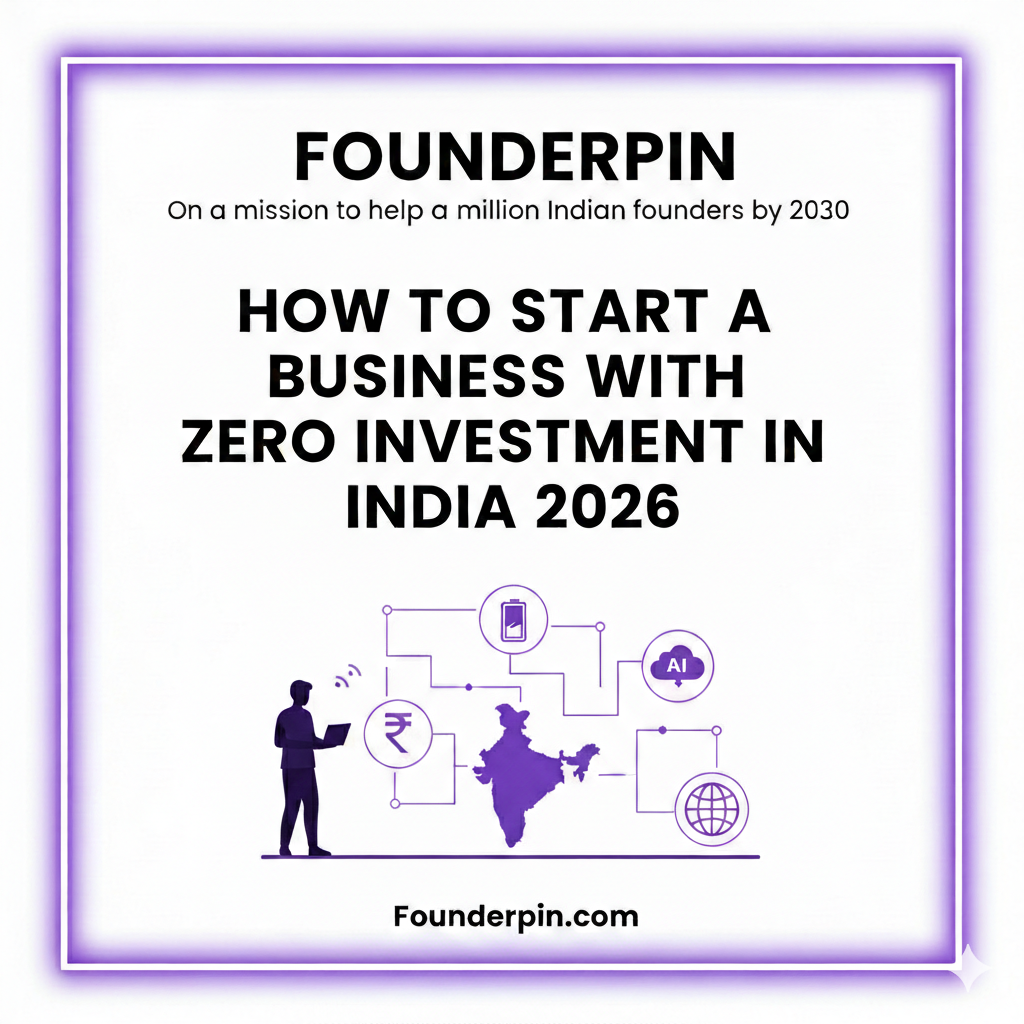
Start a Business with Zero Investment in India

How to Start a Business with Zero Investment in India 2026 This blog is a complete guide on “How to Start a Business with Zero Investment in India 2026.” This is an updated blog! Happy Reading and ALL THE BEST for your future venture. Founder Pin truly wishes you a great growth. Starting a business with no money might sound like a fairy tale, but in the Indian economy of 2026, it is a calculated reality. With the digital infrastructure of the India Stack reaching every corner of the country and AI tools becoming the “digital co-founder” for solo entrepreneurs, the barriers to entry have never been lower. At Founderpin, we are on a mission to help 1 million Indian founders by 2030. We believe that capital should never be the bottleneck for a great idea. This guide is designed to take you from a “zero-rupee” starting point to a sustainable, scalable venture. 1. The Mindset Shift: Service First, Product Later. This midset will help you to Start a Business with Zero Investment in India 2026 In 2026, the most successful “zero investment” businesses follow the Service-to-SaaS (or Service-to-Product) model. Phase 1: Sell your time and skills (Zero cost). Phase 2: Use the revenue to automate and hire. Phase 3: Productize your knowledge into a course, app, or physical product.  In 2026, “zero investment” doesn’t mean “zero resources” it means leveraging the massive digital leverage available to every Indian with a smartphone and an internet connection. Here is an expanded, deep-dive exploration into the three most potent business models for the current year. 2. High-Demand “Zero Investment” Business Ideas for 2026 The landscape of Indian entrepreneurship has shifted. Traditional retail and manufacturing require heavy CapEx (Capital Expenditure). However, the Knowledge and Automation Economy allows you to trade your “Applied Intelligence” for high-margin revenue. A. AI Prompt Engineering & Automation Consulting As of 2026, AI is no longer a “luxury” for big tech firms in Bengaluru or Gurgaon; it is a necessity for the 63 million MSMEs (Micro, Small, and Medium Enterprises) across India. These business owners—from a textile wholesaler in Surat to a spice exporter in Kochi—know they need AI, but they don’t know how to use it. The Opportunity Gap How to Start a Business with Zero Investment in India 2026? – The real gap: Most AI tools are built with a Western bias. There is a massive “implementation gap” in India. Business owners are struggling with: Prompt Fatigue: They get generic or useless answers from AI because they don’t know how to “talk” to the machine. Workflow Friction: They have AI tools but don’t know how to connect them to their WhatsApp, Email, or Inventory systems. The Service: The “AI-First” Business Makeover You aren’t just selling “prompts”; you are selling time. Automated Customer Support: Use tools like Intercom or Yellow.ai to build WhatsApp chatbots for local clinics or showrooms. Internal Knowledge Bases: Use Notion AI to digitize a traditional business’s SOPs (Standard Operating Procedures) so new employees can “ask the manual” questions instead of bothering the owner. Custom Prompt Libraries: Create a bespoke “Prompt Vault” for a marketing agency or real estate firm that allows them to generate high-quality listings or ads in seconds. Your Zero-Investment Roadmap Month 1: Master one LLM (like GPT-4o or Claude) and one Indian LLM (like Krutrim). Learn “Chain of Thought” and “Few-Shot” prompting techniques. Month 2: Offer a “Free AI Audit” to 5 local businesses. Identify one manual task they hate and automate it using a free-tier tool like Zapier or Make.com. Month 3: Productize your service. Charge a setup fee (₹20,000) and a monthly maintenance fee (₹5,000) to keep their AI “tuned.” Revenue Potential: A solo consultant managing 10 small clients can easily generate ₹50,000 to ₹2,00,000 per month with zero overhead. B. Vernacular Content Creation & Strategy In 2026, the English-speaking internet in India is saturated. The real growth—the “Next Billion Users”—is happening in the “Bharat” markets. These users consume content in Hindi, Tamil, Telugu, Marathi, Bengali, and Kannada. The Shift to “Bharat-First” Marketing Global brands and Indian D2C (Direct-to-Consumer) startups are desperate to speak the language of Tier 2 and Tier 3 cities. If you can bridge the gap between “Corporate English” and “Local Vernacular,” you are holding a golden ticket. The Service: Regional Growth Partner You are more than a translator; you are a cultural consultant. Vernacular SEO & Blogging: Optimize websites for local search terms. A farmer in Punjab isn’t searching for “Organic Fertilizer”; they are searching for “जैविक खाद” (Jaivik Khaad). Short-Form Video Scripts (Reels/Shorts): Writing scripts that resonate with the local sensibilities of a specific region. Bhashini Implementation: Use the Government’s Bhashini Platform to help companies translate their apps and websites in real-time, ensuring the nuances of the language are preserved. Why This is Zero Investment? Your only tools are your brain, your smartphone, and free platforms. Step 1: Pick one language you are fluent in (other than English). Step 2: Start a “Faceless” YouTube channel or Instagram page in that language focused on a niche (e.g., Financial Literacy in Marathi). Step 3: Use your page as a portfolio to show brands: “I grew this Marathi audience to 10k followers without ads. I can do the same for you.” Revenue Potential: Retainers for vernacular strategy range from ₹30,000 to ₹1,50,000 per client, depending on the complexity of the campaign. C. Digital Micro-SaaS for Local Problems “Software as a Service” (SaaS) used to require a team of developers and millions in VC funding. In 2026, “No-Code” has democratized software. If you can solve a specific, “small” problem for a specific group of people, you can build a Micro-SaaS. Solving the “Hyper-Local” Problem Indian problems are unique. A global software like Salesforce is too complex for a local kirana delivery network or a neighborhood coaching center. The Service: Bespoke No-Code Solutions The “Society Manager” Lite: A simple app for a specific housing society to manage guest entries and water tanker bookings. Micro-Influencer CRM: A tool for

Shubham Gupta of Bonkers Corner and Namita Thapar shaking hands on Shark Tank India Season 5 for a 300 crore valuation deal
Shark Tank

Bonkers Shark Tank Deal: Everything you need to know

Bonkers Shark Tank Deal: Everything you need to know! In the high-stakes arena of Shark Tank India Season 5, many pitches are remembered for their drama, but few are remembered for sheer, clinical dominance. The appearance of Bonkers Corner was one of those rare moments of Bonkers Shark Tank. It wasn’t just a pitch; it was a masterclass in how a “12th-pass” founder turned family bankruptcy into a ₹300 crore streetwear empire. If you missed the episode or want to dive deep into the mechanics of why this deal was truly “bonkers,” you’ve come to the right place. At Founderpin.com, we analyze the DNA of successful startups, and the story of Shubham Gupta is a blueprint for the next generation of D2C founders. The Origin Story: From Bankruptcy to “Bonkers” the story of Bonkers Shark Tank Deal Every great startup has a “trial by fire.” For Shubham Gupta, that fire started in 2011. When his father’s textile business collapsed, the family faced total bankruptcy—they lost their home and their stability. Bonkers Shark Tank Deal CEO Background: CEO Shubham, admitted, had little interest in traditional academics and had barely cleared his Class 12 exams, was thrust into the workforce at a salary of just ₹10,000. Instead of seeing this as a dead end, he used the streets of Mumbai as his MBA classroom. The White-Label Secret Before Bonkers Corner became a household name, Shubham operated behind the scenes as a white-label manufacturer. He produced high-quality apparel for other famous D2C brands. This “invisible” phase was crucial because it taught him: Sourcing & Fabric Quality: How to tell the difference between a high-margin blend and a cheap substitute. Operational Discipline: Managing a production line that could eventually scale to 3 lakh units per month. Market Gaps: He realized that while he was making the clothes, other brands were capturing the “cool” factor—and the profits. In 2020, amidst the global pandemic, Bonkers Corner was officially born. It wasn’t just another clothing brand; it was a response to the “moral rot” of bankruptcy, fueled by a desire to build something permanent. The “Bonkers” Pitch: Breaking the Shark Tank Format When Shubham walked into the Tank in Season 5, Episode 19, he didn’t look like a nervous founder. He looked like a CEO who had already won. The Numbers That Silenced the Sharks Most fashion brands on Shark Tank struggle with inventory debt or low margins. Bonkers Corner brought a different set of data to the table: FY 2024–25 Revenue: ₹125 Crore (up from ₹99 Crore the previous year). FY 2026 Projection: ₹180 Crore. EBITDA Margins: 11% (projected to hit 20% by the end of the year). Retention Rate: A staggering 45% customer retention, proving that people don’t just buy a Bonkers tee once; they come back for the entire collection. Bonkers Shark Tank Deal – The Ask: Shubham asked for ₹1.5 Crore for 0.5% equity, valuing the company at ₹300 Crore. Initially, the Sharks balked at the valuation. Anupam Mittal even questioned why he was there at all, famously asking: “Why do you want to raise money? Earning ₹30 crores [EBITDA] in one year is no small feat!” The Deal: The “Namita Thapar” Masterstroke What happened next was a “first” in the history of Shark Tank India. Bonkers Shark Tank Namita Thapar, recognizing a founder who had “been through hell and back” and built a profitable, scalable machine, immediately matched the ask: ₹1.5 Crore for 0.5% equity. Usually, founders wait to hear every Shark’s offer to spark a bidding war. But Shubham is a different breed. He looked at Namita, recognized the value of her mentorship in logistics and scaling, and accepted the offer instantly. Aman Gupta, who was preparing a counter-offer, was left speechless. Namita’s reasoning was simple: “I’m giving him what he is asking for. I want to make him a deal so good, he can’t refuse.” Founder Tip: Sometimes, the best negotiation is knowing when to say “Yes.” By accepting Namita’s offer immediately, Shubham secured a powerful partner without diluting his equity further or wasting time on theatrics. Bonkers Shark Tank: Why Is Bonkers Corner Winning? It’s not just about the Shark Tank fame. Bonkers Corner has built a moat that most D2C brands ignore. 1. In-House Manufacturing Unlike competitors who outsource production (and lose control over quality and costs), Bonkers Corner manufactures everything in-house. This allows them to sell a high-quality hoodie for ₹1,200 that other brands might charge ₹3,000 for. 2. Licensing Power They don’t just sell “streetwear.” They sell identity. By securing official licenses from Disney and Marvel, they’ve tapped into the fan-culture that drives Gen-Z purchasing decisions. 3. Omni-channel Strategy While 55% of their sales come from their website, they are rapidly expanding offline. With 19+ physical stores, they understand that the “touch and feel” of fabric is still a major conversion tool in the Indian market. 4. Digital-First Community They don’t just run ads; they build a vibe. Their marketing strategy focuses on social media trends and “fast fashion” cycles that move at the speed of a TikTok scroll. What’s Next: The Future of Bonkers Corner Post-deal, the focus has shifted from “survival” to “global dominance.” Namita Thapar has already highlighted that her primary goals for the brand are: IT & Tech Scaling: Optimizing the backend to handle the massive surge in traffic. Offline Expansion: Building a “cluster” of retail stores across India. Founder Health: In a touching post-show update, Namita mentioned that Shubham’s intense work routine had taken a toll on his health (his weight had dropped to 47kg). Her goal is to support him as a mentor in every sense—not just financially. Bonkers Shark Tank Deal – Key Lessons by Founder Pin for Aspiring Founders The Bonkers Shark Tank deal is more than just a success story; it’s a lesson in resilience. Degrees aren’t everything: A 12th-pass student with street smarts can out-pitch a PhD if the numbers and the “hustle” are real. Profit is the ultimate validator: If you are profitable and

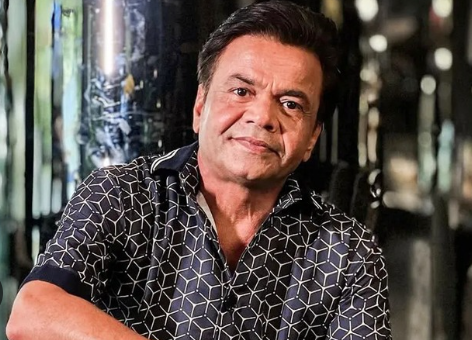
Rajpal Yadav outside Delhi High Court during his ₹9 crore debt case hearing in February 2026.
Uncategorized

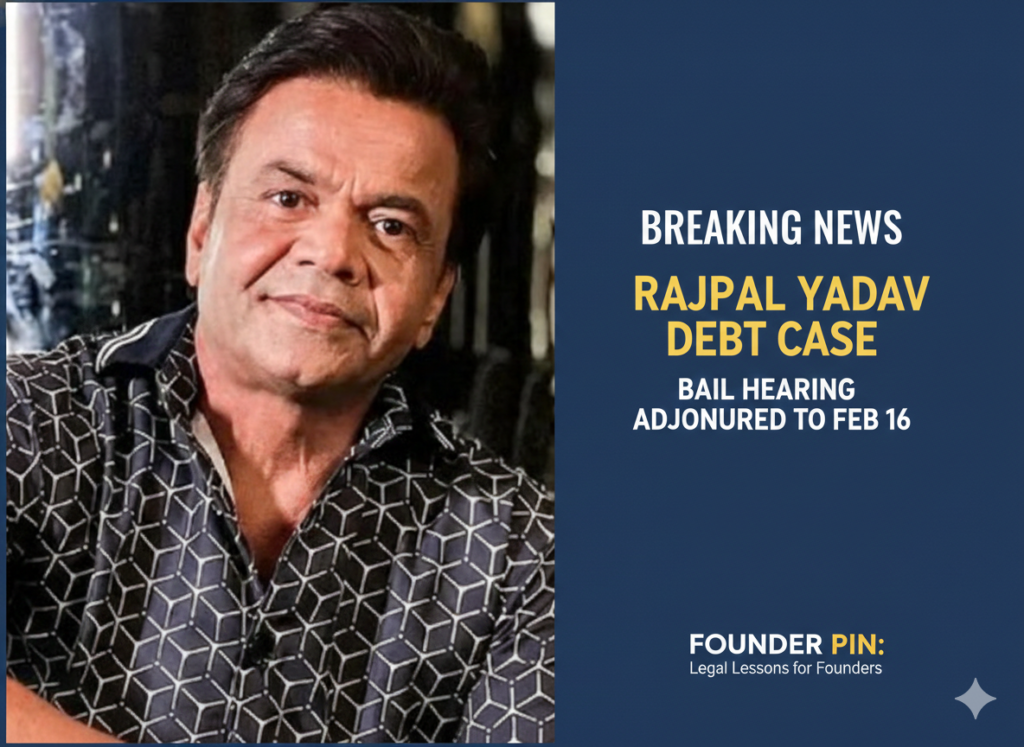
Rajpal Yadav Debt Case Latest Update: No Bail

Rajpal Yadav Debt Case Latest Update: No Bail for Actor; Delhi High Court Adjourns Hearing to Feb 16 Last Updated for Rajpal Yadav Debt Case Latest Update: February 12, 2026 | 16:36 IST Rajpal Yadav Debt Case Latest Update: In a significant blow to Bollywood’s beloved comedian, the Delhi High Court has adjourned Rajpal Yadav’s bail hearing to Monday, February 16, 2026. Despite a massive wave of support from the film fraternity, including Salman Khan and Sonu Sood, the actor will remain in Tihar Jail for the coming weekend. This latest development comes as a reality check for the actor, who has been entangled in a ₹9 crore debt and cheque-bounce crisis for over a decade. Rajpal Yadav Debt Case Latest Update – What Happened in Court Today (Feb 12, 2026)? The hearing before Justice Swarana Kanta Sharma saw the court taking a stern stance. The judge pulled up the actor’s legal team, noting that Rajpal Yadav had failed to honor his commitment to repay the debt on over two dozen occasions. Rajpal Yadav Debt Case Latest Update: Key highlights from the IST 15:40 court update: No Immediate Relief: The court refused to grant bail today, directing the complainant (Murli Projects Pvt Ltd) to file a reply to the bail application by Monday. Unkept Promises: Justice Sharma remarked, “You have gone to jail because you didn’t honor your own commitment,” highlighting that the legal system’s leniency had been exhausted. The Marriage Plea: Yadav’s counsel requested a suspension of the sentence, citing a wedding in the family and stating that roughly ₹2 crore remains to be settled. However, the court remained unmoved. The ₹9 Crore Debt: How Did We Get Here? The roots of this legal battle date back to 2010. Rajpal Yadav borrowed ₹5 crore from Delhi-based Murali Projects Pvt Ltd to fund his directorial debut, Ata Pata Laapata. When the film failed at the box office, the actor was unable to repay the loan. Over 15 years, due to compounding interest and legal penalties, the amount swelled to nearly ₹9 crore. For a detailed breakdown of how the original loan turned into a criminal conviction, read our Rajpal Yadav News: The ₹9 Crore Debt Legal Case Explained. Bollywood Rallies: Salman Khan, Sonu Sood, and More Step In While the courts are firm, the industry is standing by Rajpal. According to recent reports by The Times of India, several A-list stars have pledged financial support: Sonu Sood: Offered a role in an upcoming film and provided a signing bonus to help settle dues. Salman Khan & Ajay Devgn: Reported to have stepped in with financial contributions. Tej Pratap Yadav: The politician announced a financial aid of ₹11 lakh for the actor’s family. Is Property Sealing Adding to the Trouble? Rumors and reports have also surfaced regarding the actor’s ancestral property. In late 2024, the Central Bank of India reportedly sealed his property in Shahjahanpur, Uttar Pradesh, over a separate ₹11 crore loan default. This indicates that the actor’s financial woes extend beyond the current cheque-bounce case. What’s Next for Rajpal Yadav? The eyes of the industry and fans are now on Monday, February 16. If his legal team manages to deposit the remaining amount or presents a concrete settlement plan, the High Court may consider a temporary suspension of his six-month sentence. For founders and entrepreneurs, Rajpal Yadav’s case serves as a grim reminder of the importance of financial management and the legal risks of personal guarantees in business loans. Stay tuned to Founder Pin for live updates on this story.

Rajpal Yadav arriving at Delhi High Court for the 9 crore debt and cheque bounce legal case.
Uncategorized

Rajpal Yadav News: The ₹9 Crore Debt & Legal Case Explained

Rajpal Yadav News: The ₹9 Crore Debt & Legal Case Explained February 11, 2026 — In a stunning development for the Indian film industry, veteran comedian Rajpal Yadav has surrendered at Delhi’s Tihar Jail. Known for his legendary comic timing in films like Hungama and Phir Hera Pheri, the actor’s real-life situation has taken a somber turn as he begins serving a six-month sentence. The Delhi High Court’s refusal to grant further leniency has ended a decade-long legal battle, marking a finality to the actor’s long-standing attempts to settle a massive debt. The Origins: A Directorial Dream Gone Wrong The roots of this legal crisis date back to 2010. Rajpal Yadav, at the peak of his acting career, decided to venture into filmmaking with his directorial debut, Ata Pata Laapata. To fund the project, Yadav borrowed ₹5 crore from a Delhi-based company, M/s Murali Projects Pvt Ltd. Unfortunately, the film—an ambitious musical satire—failed to perform at the box office. This commercial failure left the actor in a massive financial hole, unable to repay the principal amount. How ₹5 Crore Became ₹9 Crore Over the last 15 years, the debt ballooned significantly due to accumulated interest and legal penalties. While the original loan was ₹5 crore, the outstanding liability eventually reached approximately ₹9 crore. The case eventually turned criminal under Section 138 of the Negotiable Instruments Act when cheques issued for repayment were dishonored. Why the Court Refused More Time Justice Swarana Kanta Sharma took a stern view of Yadav’s conduct, noting that he had breached nearly 20 separate undertakings to the court. Despite depositing ₹75 lakh in late 2025, a massive balance remained. On February 4, 2026, the court rejected his final plea for a one-week extension, stating that the law cannot create special circumstances based on professional background. Yadav surrendered the following day to begin his six-month term. This follows a pattern of legal struggles for the actor, including a brief jail term in 2013 for filing a false affidavit. Sonu Sood, others help Rajpal Yadav While actor rRajpal Yadav faces extreme financial strain, many top names like actors Sonu Sood, Gurmeet Choudhary, and politician Tej Pratap Yadav on Tuesday offered help. Tej Pratap Yadav, Jan Shakti Janata Dal president and the elder son of politician Lalu Yadav, announced the financial assistance of ₹11 lakh to Yadav and his family. “I just received information about the pain of the family of the honorable Rajpal Yadav ji through the post of my elder brother Rao Inderjeet Yadav ji. In this extremely difficult time, I and my entire JJD (Jan Shakti Janata Dal) family stand in complete empathy and solidarity with their grieving family,” Tej Pratap said in a post on X. Actor Sonu Sood also stepped in to help and offered Yadav a film along with a “small signing amount”. He has stressed that the move is not charity, but a gesture of professional support. Sonu took to X, formerly known as Twitter, and Instagram Stories, to offer him a film and a signing amount to assist him financially. He also appealed to members of the film industry to step forward and stand by Rajpal so that he knows that he is not alone in this difficult time. “Rajpal Yadav is a gifted actor who has given years of unforgettable work to our industry. Sometimes life turns unfair, not because of talent, but because timing can be brutal. He will be part of my film, and I believe this is the moment for all of us..producers, directors, colleagues to stand together. A small signing amount, adjustable against future work, is not charity, it’s dignity,” Sood wrote. Business Lessons: Debt, Finance, and Entrepreneurship At Founder Pin, we believe every failure is a blueprint for future success. Rajpal Yadav’s journey from a superstar to Tihar Jail offers critical “hard-truth” lessons for every Indian founder: 1. The Danger of Over-Leveraging Yadav’s mistake wasn’t dreaming big; it was failing to manage his Debt-to-Equity ratio. When you borrow capital for a high-risk venture (like a film or a pre-revenue startup), you must have a “Plan B” for repayment that doesn’t rely solely on the success of that one project. Personal guarantees on business loans can bridge the gap between business failure and personal ruin. For more on managing startup capital, see our guide on fundraising  2. Financial Literacy is a Survival Skill Many creative founders delegate “the numbers” to others. However, understanding the legal implications of Section 138 (Cheque Bounce) and the compounding nature of interest is non-negotiable. A ₹5 crore problem became a ₹9 crore catastrophe because the financial structure was not managed with professional discipline from day one. You can read more about the Negotiable Instruments Act on India Code. 3. Protecting the Founder’s Integrity In the eyes of the court, the issue wasn’t just the money, it was the broken promises. For a founder/businessman, your word is your equity. Repeatedly failing to honor court undertakings damaged his credibility more than the debt itself. In business, if you cannot pay, transparent communication and realistic restructuring are always better than over-promising and under-delivering. Check out our founder’s checklist for financial health to stay on track. Founder Pin: Mission 1 Million This article is brought to you by Founder Pin, a platform dedicated to explaining complex business mechanics and helping founders win. We are on a relentless mission to empower 1 million founders by 2030. We believe that entrepreneurship is the backbone of the New India. While the legal system must take its course, we send our full support to Rajpal Yadav during this difficult time. He has given us decades of laughter; now, the industry and the nation should hope for his resilient comeback. Support has already begun to pour in, with Sonu Sood pledging to support Yadav’s return to the screen. Our philosophy is simple: No Indian business should ever fail due to a lack of guidance. We are here to ensure that the next generation of Indian founders has the tools, the knowledge, and

Three young Indian founders on a Bengaluru rooftop looking at a futuristic digital map of India with AI mission data overlays.
Uncategorized

How to start AI company in India in 2026: Ultimate Guide

Ultimate Guide: How to start an AI company in India in 2026 Building an AI startup in India isn’t just about writing code; it’s about navigating one of the most dynamic, high-stakes tech gold rushes in history. As of 2026, India has solidified its position as a global AI powerhouse, driven by a unique “sovereign AI” philosophy and a massive domestic market hungry for automation. If you’re looking to build the next Sarvam AI or Krutrim, this guide will walk you through the roadmap from legal hurdles and the IndiaAI Mission to securing funding from the local VC elite. 1. Finding Your Niche to start AI company in India: The “India-First” AI Strategy. In the early days of generative AI, many startups were simply “wrappers” around foreign models. In 2026, the market has matured. Success now lies in building sector-specific, customized AI models that solve local problems. High-Impact Sectors for 2026 Agriculture: AI for crop health monitoring and weather prediction (integrating with Kisan e-Mitra). Healthcare: Early disease detection in rural areas using computer vision. Vernacular AI: Using the Bhashini platform to build tools that work in 22+ Indian languages. Fintech: AI-driven credit scoring for the 490 million informal workers highlighted in the recent NITI Aayog reports. 2. Choosing the Right Legal Structure for AI company in India India doesn’t recognize “AI” as a separate legal category yet. Your company will likely fall under the Ministry of Corporate Affairs (MCA) guidelines. Also, If you wish to know more about how to register a startup in India in general, you can read about it here Which structure should you choose? Entity Type Best For Key Advantage Private Limited Startups seeking VC funding Limited liability; easy to issue ESOPs. LLP Small teams/Consultancies Lower compliance costs; no audit if turnover is low. One Person Company Solo founders Complete control with corporate status. Pro Tip: Most institutional investors (like Peak XV or Accel) require you to be a Private Limited Company. You can register via the SPICe+ form on the MCA portal, which handles your PAN, TAN, and DIN in one go. 3. Registering with Startup India (The “Secret Sauce”) To truly thrive, you must get DPIIT Recognition through the Startup India portal. This isn’t just a badge; it’s a financial lifeline. The Benefits of DPIIT Recognition for new age AI company in India: Tax Holidays: Apply for the 80-IAC exemption to get a 3-year tax holiday. IPR Support: 80% rebate on patent filings and 50% on trademark filings. Self-Certification: Compliance under 9 labor and 3 environmental laws becomes much easier. Public Procurement: Access to government tenders without the “prior experience” or “turnover” requirements. 4. Navigating the AI Infrastructure: Compute & Data One of the biggest hurdles in India used to be the “GPU crunch.” In 2026, the IndiaAI Mission has changed the game with an outlay of over ₹10,300 crore. Leverage These Resources: IndiaAI Compute Capacity: The government is providing subsidized access to high-end GPUs (like NVIDIA H100s) for recognized startups. AIKosh: This is India’s national dataset platform. As of 2026, it hosts over 7,500 datasets across 20 sectors. Use this to train your models on high-quality, localized data. Sovereign Cloud: Consider providers like Yotta’s Shakti Cloud to ensure your data stays within Indian jurisdiction, a growing requirement for government contracts. 5. Funding Your AI Dream The Indian VC landscape for AI has become highly specialized. Investors are no longer just looking for “AI”; they are looking for “Deep Tech.” Top AI Investors in India (2026) Inflection Point Ventures: The most active AI investor currently. 3one4 Capital: Heavy focus on SaaS and Deep Tech. pi Ventures: The go-to for early-stage applied AI and hardware. Peak XV Partners: For massive scale and Series A/B rounds. SenseAI Ventures: Specifically focused on the AI ecosystem. Government Grants & Challenges for AI company in India Don’t ignore the IndiaAI Innovation Challenge. Winners can secure work contracts up to ₹1 Crore for deploying solutions in public health (AYUSH) or MSME governance. 6. Intellectual Property (IP) and Ethics for AI company in India In India, you cannot patent an algorithm per se, but you can patent the specific application of that algorithm. Essential Compliance Checklist: Data Privacy: Align with the Digital Personal Data Protection (DPDP) Act. Ethical AI: Follow the NITI Aayog’s Responsible AI for All guidelines to avoid bias in your models. Trademarking: Register your brand under Class 9 (software) and Class 42 (SaaS). 7. Where to Set Up Your Office for your AI company in India While remote work is popular, being in a hub helps with hiring and networking. Bengaluru: Still the “Silicon Valley.” Best for AI talent and R&D. Hyderabad: Massive growth in IT infrastructure; great for enterprise AI. Delhi NCR: Proximity to government bodies and a booming fintech scene. Pune: Emerging as a hub for automotive and industrial AI. Final Thoughts: The Road Ahead At Founder Pin our mission is to empower 1 Million founders by 2030. And empowering you and making you aware on Indian AI Mission is a key pillar for it. Starting an AI company in India in 2026 is a marathon, not a sprint. The “Late Mover Advantage” allows you to avoid the costly mistakes of early global models and focus on building lean, efficient, and culturally relevant solutions. The government is essentially acting as your co-founder through the IndiaAI Mission. The datasets are there, the compute is coming online, and the capital is ready. The only thing missing is your vision.

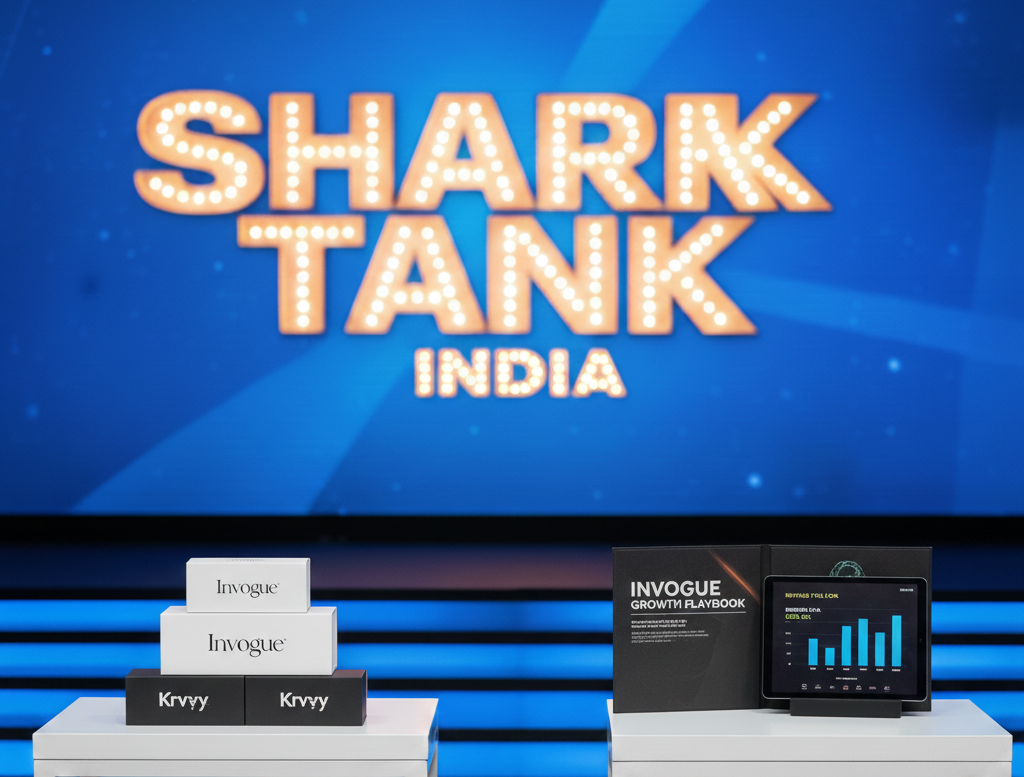
Invouge Shark tank image highlight
Uncategorized

How Invogue Won Aman Gupta’s Shark Tank 2-cr Deal

How Invogue Won Aman Gupta’s Shark Tank 2-Cr Deal – Invogue shark tank Deal.   The Tank is heating up, and Season 5 has already delivered one of the most high-stakes “face-offs” in the history of Shark Tank India. When two shapewear giants, Invogue and Krvvy, walked into the tank, it wasn’t just a pitch—it was a battle for the soul of the Indian intimate wear market. But while the Sharks were debating stitching and silhouettes, one brand stood out for its raw grit and “underdog” energy. Invogue Fashion, founded by the life partner turned business partner duo Maadhav and Ragini Saxena, walked away with a massive ₹2 Crore deal from Aman Gupta. At Founder Pin, we spend our days helping Indian founders navigate the treacherous waters of scaling. Seeing a 25-year-old founder like Maadhav negotiate a ₹13.33 Crore valuation while maintaining a 22% EBITDA margin is exactly why we do what we do. Let’s break down the Invogue Shark Tank story and the “Growth Playbook” that made Aman Gupta say, “I’m in.” The Pitch: More Than Just “Body Shapers” Invogue didn’t just come to sell a product; they came to solve a deep-seated cultural discomfort. For years, shapewear in India was seen as restrictive, uncomfortable, and frankly, a bit of a secret. Maadhav and Ragini’s brand, operating under the tagline “Own Your Inner Bold,” flipped the script. They presented shapewear designed for 8–9 hours of daily wear—a game-changer for the modern Indian woman balancing work, weddings, and everything in between. The Numbers That Silenced the Room While some Sharks like Namita Thapar were skeptical about the “finishing,” the financials told a different story. In an era of “burn-to-earn,” Invogue is a rare breed: FY24 Revenue: ₹5 Crores EBITDA Margin: A staggering 22% D2C Prowess: 96% of sales come directly from their own website. Efficiency: ₹55 Lakh in inventory with 0% dead stock. Founder Pin Insight: This is the “Efficiency First” model we preach. High marketing spend (Invogue spends 39%) is only sustainable if your unit economics are rock solid. The Malaika Arora Factor: Relatable or Risky? One of the most talked-about moments of the episode was the reveal of Malaika Arora as Invogue’s brand ambassador. This sparked a heated debate between Vineeta Singh and Kanika Tekriwal. The Critique: Is Malaika “too perfect” to be relatable for a shapewear brand? The Strategy: Maadhav defended the move, aiming to capture the 18–34 demographic and elevate the brand from a functional utility to a “fashion-first” essential. Whether you agree with the choice or not, the move worked. It signaled that Invogue wasn’t just another small-scale D2C brand; they were playing for the ₹100 Crore club. Why Aman Gupta Bet ₹2 Crore on the “Underdogs” Despite a “complicated cap table” and initial “mistakes” pointed out by the Sharks, Aman Gupta saw something familiar in Maadhav: Grit. Aman, the king of D2C branding in India, knows that at the early stage, you don’t just invest in a product—you invest in the founder’s ability to pivot and persevere. He offered ₹2 Crore for 15% equity, effectively valuing the company at ₹13.33 Crore. “I like you guys. You’ve achieved so much at 25. When I was that age, I didn’t know what to do.” — Aman Gupta 3 Growth Lessons from Invogue shark Tank Deal for Indian Founders from Invogue’s Journey As a platform dedicated to fundraising mastery, here is what every aspiring entrepreneur can learn from the Saxena siblings: 1. Build for Your Customer’s Clock Invogue didn’t just make shapewear; they made shapewear you can live in for 9 hours. In the D2C world, the “usage occasion” is everything. If your product only solves a problem for 30 minutes, your market is small. If it solves a problem for the whole day, you have a business. 2. Profitability is the Best Pitch Deck Anupam Mittal might have questioned the Amazon ratings (3.6–3.8), but he couldn’t ignore the 22% EBITDA. In today’s funding winter, Profit is the new Growth. If you can show a Shark (or any VC) that you can make money while you scale, you’re already in the top 1% of startups. 3. Don’t Fear the “Face-Off” Going head-to-head with a rival like Krvvy on national TV is terrifying. But Invogue leaned into their “underdog” status. They were honest about their mistakes and firm on their vision. In the startup ecosystem, competition isn’t your enemy; it’s the validation that the market is worth fighting for. The Road to ₹100 Crores With Aman Gupta’s mentorship and the “Shark Tank Effect” in full swing, Invogue is now looking to expand into new categories and build an omnichannel presence. They are transitioning from a bootstrapped Delhi startup to a national foundation-fashion powerhouse. Are you the next Invogue? At Founder Pin, we provide the tools, the mentorship, and the community to help you go from a “pitch” to a “powerhouse.” Whether you’re struggling with your cap table or trying to nail your D2C strategy, we’ve got your back. What do you think of Invogue’s deal? Was 15% too much equity to give away, or is Aman Gupta’s mentorship worth every penny? Let us know in the comments! Want to scale your startup like the Sharks? Join the Founder Pin community today and get access to India’s top growth playbooks. Invogue and Krvvy Face-off Highlights This teaser showcases the intense “face-off” between the two shapewear rivals as seen on the show. We at Founder Pin Congratulate Invouge Founder’s Maadhav Saxena, Ragini Saxena, and entire team Invouge.

Startup registration process in India Full guide
Uncategorized

How to Register a Startup in India: Full Guide

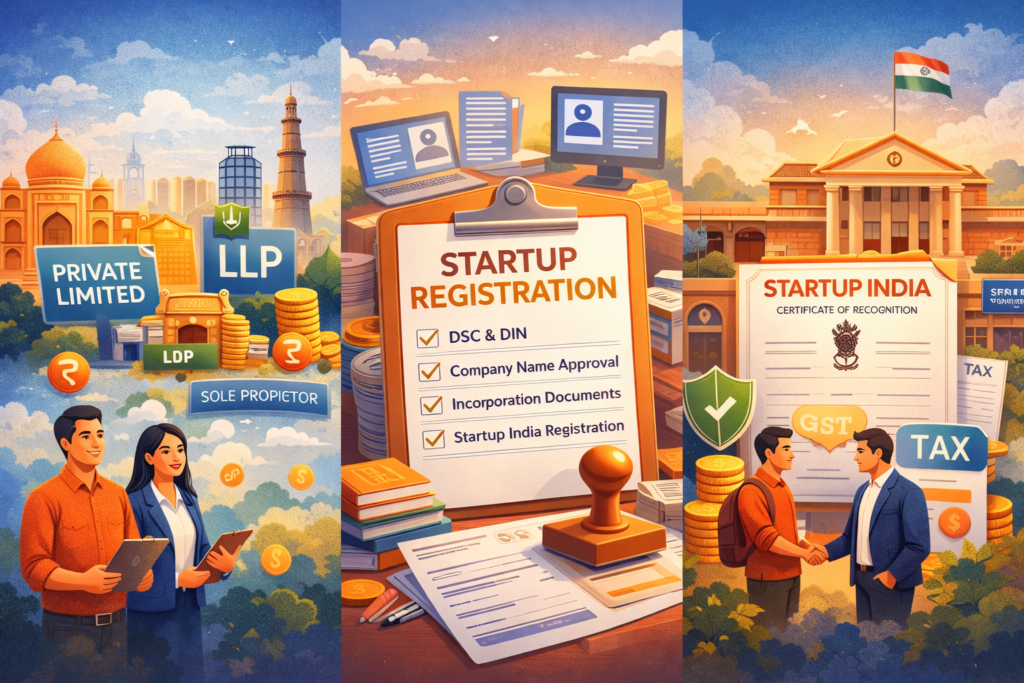
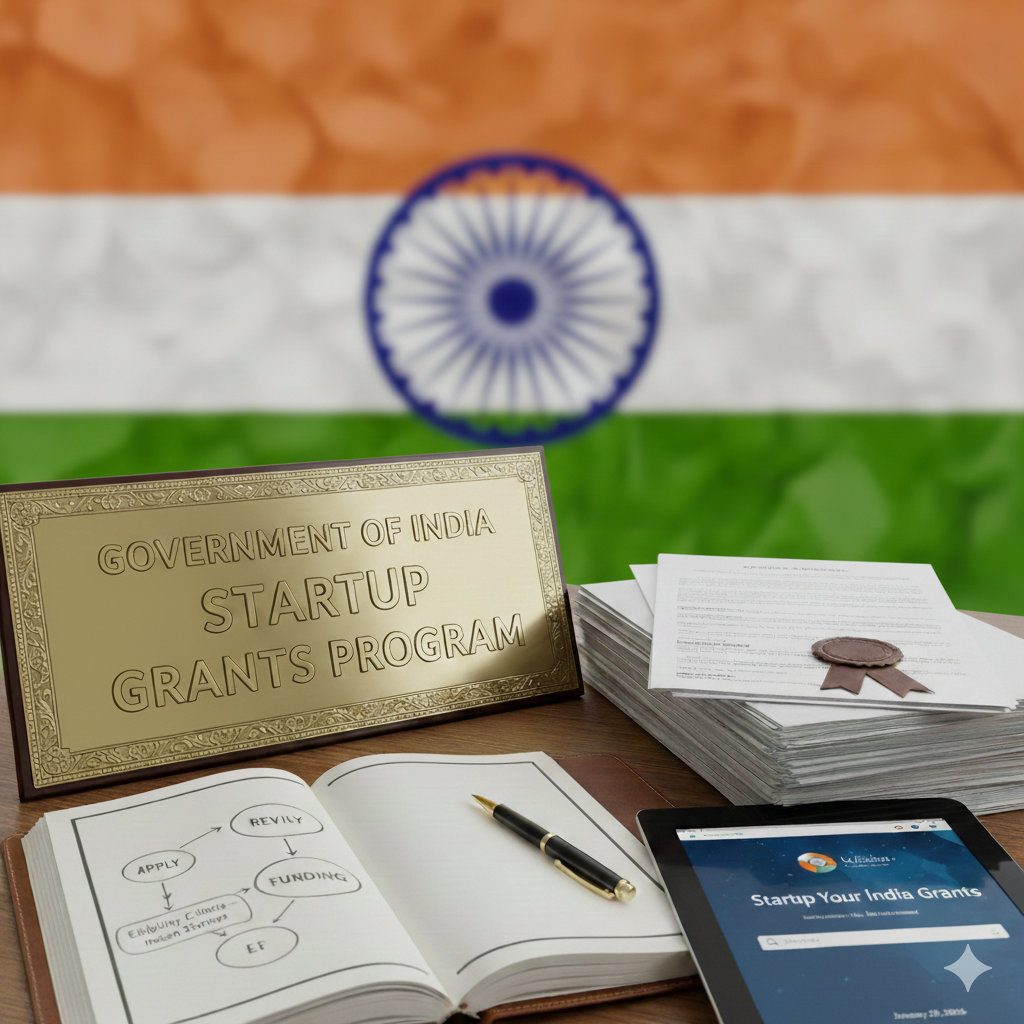
How to Register a Startup in India: Step-by-Step Guide for First-Time Founders. Startup registration process in India and Starting a company in India has never been more accessible but for first-time founders, the registration process can still feel confusing. Questions like “Should I register as Pvt Ltd or LLP?” or “What is Startup India registration?” are extremely common. If you are searching for: • Startup registration process in India • How to register a startup in India • Startup registration process step by step • How to register a company in India for a startup This guide will walk you through everything in simple language. Step 1: Decide the Right Business Structure Before you register, you need to choose your company type. Most startups in India choose one of these: Private Limited Company Best for startups planning to raise funding. Investors prefer this structure because it allows easy equity allocation. LLP (Limited Liability Partnership) Good for service-based startups or small teams that want limited compliance but still need legal protection. Sole Proprietorship Simplest form but not ideal if you want to raise funding or scale significantly. For tech startups or those planning to approach investors, Private Limited Company is usually the best option. Step 2: Get Digital Signature Certificate (DSC) All directors must have a Digital Signature Certificate. This is required to file documents online with the Ministry of Corporate Affairs. Most CAs or company registration services help you obtain DSC easily. Step 3: Apply for Director Identification Number (DIN) Every director in the company needs a DIN. This is a unique number issued by the government and is part of the company incorporation process. Step 4: Choose and Reserve Your Company Name Choosing a startup name is exciting but also regulated. Your name must: • Be unique • Not resemble an existing company • Not violate trademarks You apply for name approval through the MCA portal. It’s wise to keep 2–3 name options ready in case your first choice is rejected. Step 5: File Incorporation Documents This step includes submitting: • Memorandum of Association (MOA) • Articles of Association (AOA) • Director details • Registered office proof Once approved, you receive a Certificate of Incorporation your company is now officially registered. Step 6: Get PAN, TAN and Bank Account After incorporation: • PAN and TAN are issued automatically • You can open a current bank account in your company’s name This allows you to receive payments and run business transactions legally. Step 7: Register Under Startup India (Optional but Important) Many founders confuse company registration with Startup India registration. They are different. Once your company is registered, you can apply for Startup India recognition through the Startup India portal. Benefits include: • Tax exemptions (in some cases) • Easier access to government grants • Eligibility for certain funding schemes Step 8: GST Registration (If Applicable) GST registration is required if: • Your turnover exceeds the threshold • You provide interstate services • You run an e-commerce business Even if not mandatory, many startups register early for credibility. Common Mistakes First-Time Founders Make during the Startup registration process in India Choosing the wrong structure Many founders start as sole proprietors and later struggle while raising funding. Ignoring compliance After registration, you must file annual returns and maintain basic compliance. Delaying Startup India registration This can affect eligibility for government grants later. How Long Does Startup Registration Take in India? If documents are ready: • Company incorporation: 7–10 working days • Startup India recognition: 2–5 days Delays usually happen due to document issues or name rejections. What Is the Cost of Registering a Startup in India? Typical costs include: • Government fees • Professional fees (CA/consultant) • Digital signatures On average, startup registration costs range between ₹8,000 to ₹15,000 depending on the structure and service provider. Why Proper Registration Matters A properly registered startup can: • Open a company bank account • Raise funding • Apply for government grants • Enter into contracts • Build credibility with customers Without proper registration, scaling becomes very difficult. Final Thoughts Registering a startup in India may seem like paperwork, but it’s the foundation of your entrepreneurial journey. Once done, it opens doors to funding, grants, partnerships, and long-term growth. If you are serious about building a scalable business, taking the time to register properly is one of the smartest early decisions you can make. FounderPin is a great place to get started. Start the process here ____________ Bonus Tip: You can also explore various government grants which can help you with initial Funding.

Yourstory
Uncategorized

How YourStory Helped Shape India’s Startup Ecosystem

How YourStory Helped Shape India’s Startup Ecosystem and Why Founders Still Want to Get Featured If you’ve spent even a little time in the Indian startup space, you’ve probably come across stories of founders being featured on YourStory. For many early-stage entrepreneurs, getting covered there feels like a milestone — almost like a stamp that says, “You’ve arrived.” But what exactly is YourStory? Why has it become such a powerful platform in India’s startup ecosystem? And how can founders benefit from platforms like it today? Let’s break it down in simple terms. What Is YourStory and Why Is It So Popular? YourStory is one of India’s best-known digital media platforms focused on entrepreneurship, startups, and innovation. Over the years, it has published thousands of founder journeys, startup case studies, and ecosystem insights. Unlike traditional business news that focuses mainly on big corporations, YourStory built its identity around early-stage founders, grassroots entrepreneurs, and real startup struggles. That approach resonated deeply with India’s growing startup community. Search terms like “YourStory startup stories” “YourStory founder interviews” and “how to get featured on YourStory” are still searched by aspiring founders who want visibility. How YourStory Changed Startup Storytelling in India Before platforms like YourStory became popular, startup coverage in India was limited and often focused on funding announcements or big exits. YourStory did something different. It highlighted: • Bootstrapped founders • Women entrepreneurs • Small-town innovators • First-time founders building from scratch This storytelling style made entrepreneurship feel more relatable. Instead of only reading about million-dollar funding rounds, people started reading about real challenges, failures, and pivots. This shift played a big role in normalizing startup culture in India. Why Founders Still Want to Be Featured on YourStory Even today, many startup founders search for ways to get featured on YourStory. There are a few key reasons behind this. 1. Credibility boost When a startup is featured on a known media platform, it builds trust. Investors, customers, and partners see it as social proof. 2. Visibility A feature article can bring attention from people outside the founder’s immediate network. This can lead to new users, partnerships, or even funding conversations. 3. Long-term digital presence Articles on established platforms often rank well on search engines. Years later, when someone searches for the founder or company, that story still shows up. What Kind of Startups Usually Get Covered? If you look at the types of startups featured on YourStory over the years, you’ll notice some patterns. They usually cover: • Innovative or problem-solving startups • Founders with strong personal journeys • Businesses creating social or economic impact • Companies in emerging sectors like AI, fintech, healthtech, and sustainability It’s not just about revenue. Often, the story behind the startup is what makes it interesting. How Platforms Like YourStory Influence Startup Funding Media visibility plays a subtle but important role in the startup funding journey. When founders are featured on credible platforms: • Investors discover them more easily • The startup’s brand appears more trustworthy • Founders build a stronger public narrative While media coverage alone doesn’t guarantee funding, it can definitely support a startup’s overall positioning. That’s why many founders search for “benefits of startup media coverage in India” or “does media coverage help in funding” The answer is: it helps build awareness and credibility, which can open doors. Lessons Founders Can Learn from YourStory Features Reading founder stories on platforms like YourStory isn’t just inspiring — it’s educational. You can learn: • How founders validated their idea • Mistakes they made early on • How they survived tough phases • How they built their first customers For early-stage entrepreneurs, these real stories often provide more practical insights than generic startup advice. Why the Startup Ecosystem Needs More Platforms Like This India’s startup ecosystem has grown massively, but there are still thousands of early-stage founders whose stories never get told. More platforms that focus on: • Startup journeys • Founder challenges • Ecosystem resources can help new entrepreneurs feel less alone and more informed. Visibility is not just about publicity — it’s also about building a culture of shared learning. Can Media Coverage Alone Make a Startup Successful? It’s important to be realistic. Getting featured on a platform like YourStory is helpful, but it’s not a magic solution. A startup still needs: • A strong product • Real customer demand • Good execution • Consistent improvement Media coverage can amplify a startup’s story, but the fundamentals of business still matter most. The Bigger Picture: Storytelling in Startups One of the biggest impacts of platforms like YourStory has been the normalization of founder storytelling. Today, founders are more open about: • Failures • Pivots • Mental health struggles • Lessons learned This openness helps build a more supportive ecosystem. When people see that successful founders also struggled, it reduces the fear of starting up. Final Thoughts YourStory became popular because it understood one simple thing — startups are built by people, and people connect with stories. For founders, being featured on a platform like this is not just about publicity. It’s about becoming part of a larger conversation about entrepreneurship in India. And for readers, these stories continue to educate, inspire, and remind us that every big company once started as a small idea backed by someone who decided to take a risk. This blog is brought to you by FounderPin –  We Help Founders Win. Read more blogs here.

govt grants
Uncategorized

Government Grants for Startups in India: Complete Guide

Government grants for startups in India Starting a business in India is exciting, but funding is often the biggest hurdle. Many founders immediately think about investors, venture capital, or loans. But there is another powerful option that most early stage entrepreneurs overlook. Thats why at www.founderpin.com we have brought complete guide for Govt Grants for Stratus in India. Note: if you want to learn about Company registration Process in India, then you can check the same on FounderPin. Government grants for startups in India These grants provide non repayable financial support to help startups build products, run pilots, conduct research, or scale operations. Unlike loans, you do not pay the money back. Unlike investors, you do not give away equity. In this guide, we will break down: • What startup government grants actually are• Who is eligible• How to apply step by step• Popular central and state government grants• Common mistakes founders make while applying If you are searching for terms like“government grants for startups in India”“startup India grant eligibility”“free funding for startups without equity India”this guide is for you. What Are Government Grants for Startups? A government grant is financial assistance given by a government body to support innovation, entrepreneurship, or specific industries. The key difference between a grant and a loan is simple. A grant does not have to be repaid. These grants are usually offered to: • Early stage startups• Technology driven businesses• Social impact ventures• Research and development focused companies• Women led startups• Rural and MSME entrepreneurs The government offers these grants to promote innovation, generate employment, and solve real world problems through startups. Why Government Grants Are Better Than Loans in Early Stage Many founders take loans too early and struggle with repayment before their product is ready. Grants solve this problem. Here are some major advantages of government grants for startups: No repayment pressure You can use the funds to experiment, test, and build without worrying about EMI payments. No equity dilution You retain full ownership of your startup. Credibility boost Receiving a government grant improves your startup’s credibility when you approach investors later. Support beyond money Many grants come with mentorship, incubation, lab access, and industry connections. Who Is Eligible for Startup Government Grants in India? Eligibility depends on the specific scheme, but most government startup grants in India require the following. • The company should be registered in India• Startup should be less than 10 years old• Annual turnover should be below a specified limit• The idea should be innovative or technology driven• DPIIT recognition often helps and is sometimes required Some grants are sector specific, such as: • Agriculture and food processing• Healthcare and biotech• Artificial intelligence and deep tech• Clean energy and sustainability Others are targeted at specific groups such as women entrepreneurs, SC ST founders, or startups from rural areas. Top Central Government Grants for Startups in India Here are some of the most searched and high impact government grants. Startup India Seed Fund Scheme One of the most popular schemes when people search for “Startup India grant for early stage startup”. This scheme provides funding for: • Proof of concept• Prototype development• Product trials• Market entry Startups can receive funding through approved incubators under this scheme. Biotechnology Ignition Grant This grant supports biotech and life science startups. It is ideal for founders working in healthtech, medical devices, or biological research. MSME Innovative Scheme This scheme supports innovation and entrepreneurship in micro, small, and medium enterprises. It helps with design, technology development, and incubation. Atal Innovation Mission Programs These programs support innovation and entrepreneurship through incubation, mentorship, and financial assistance. Popular State Government Grants for Startups Apart from central schemes, many state governments have their own startup grant programs. Some high search intent examples include: • Karnataka startup policy grants• Telangana innovation grant programs• Kerala startup mission funding• Tamil Nadu startup and innovation grants Each state offers support in the form of funding, incubation, reimbursement of expenses, and pilot project support. If you are building in a specific state, searching for“startup grant in your state name”can reveal hidden funding opportunities. Step by Step Process to Apply for Government Grants Many founders search for “how to apply for government grant for startup in India”. Here is a simplified process. Step 1: Register your startup properly Ensure your company is legally registered and you have basic documents ready. Step 2: Get DPIIT recognition While not always mandatory, DPIIT recognition increases your chances in many schemes. Step 3: Prepare a strong pitch deck Your pitch deck should clearly explain the problem, solution, innovation, market opportunity, and how you will use the grant funds. Step 4: Identify relevant schemes Do not apply randomly. Match your startup’s stage and sector with the right grant. Step 5: Apply through official portals or incubators Some grants require direct application, while others are routed through incubators. Step 6: Be ready for screening and interviews Many grant programs include evaluation by expert panels. Common Reasons Government Grant Applications Get Rejected Understanding rejection reasons can improve your chances significantly. Weak problem statement If the problem is not clearly defined or not significant, applications get rejected. No clear innovation Government grants focus on innovation, not copycat businesses. Poor documentation Missing documents, unclear financials, or incomplete forms can lead to rejection. Unrealistic use of funds You must clearly explain how the grant money will be used. Tips to Increase Your Chances of Getting a Startup Grant Here are practical tips for founders searching for “how to get government grant for startup in India”. • Show real problem validation• Highlight innovation clearly• Explain impact on jobs or society• Keep financial projections realistic• Get mentorship from incubators before applying Working with an incubator often improves your chances because they help refine your proposal. Are Government Grants Taxable? Many founders ask, “Is government grant money taxable in India?” The answer depends on the nature of the grant. Some grants are treated as capital receipts, while others may be considered income. It is best

Scroll to Top