
The "Lonely Founder" Tax: Why Building in Isolation Costs You Growth
Table of Contents
Toggle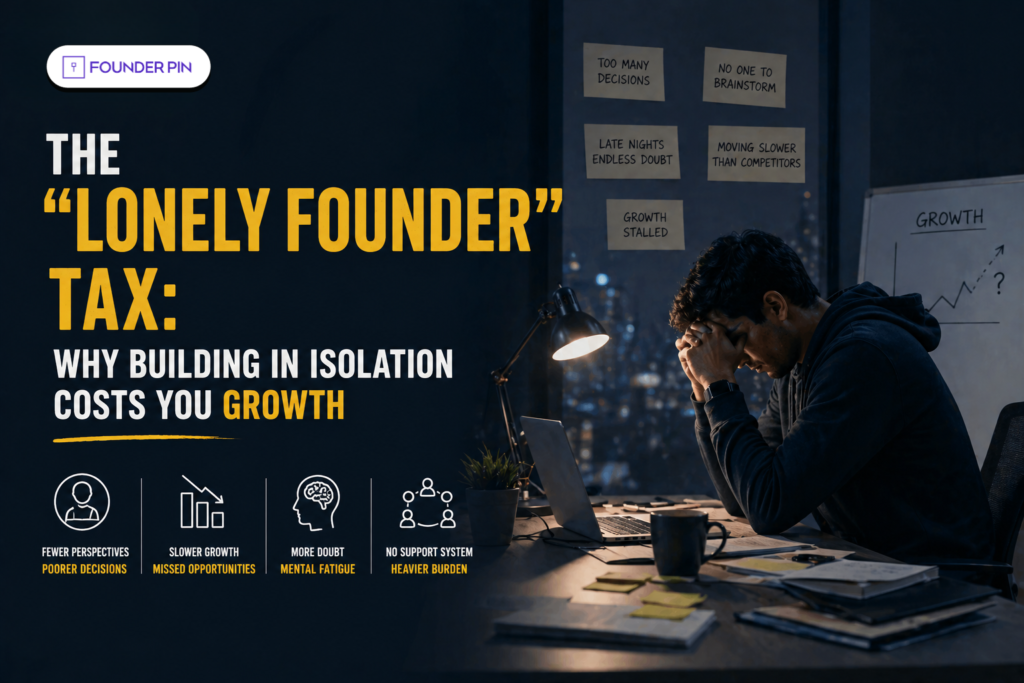
At FounderPin, we’ve seen a recurring pattern among early-stage founders—the tendency to build in isolation. While focus and independence are valuable, going solo for too long comes with hidden costs. This is what we call the isolation tax—the compounded loss of opportunities, insights, and growth that happens when founders operate without strong networks, mentors, or peer support.
In India’s rapidly evolving startup ecosystem, where competition is fierce and execution speed matters, isolation can significantly delay progress. Studies suggest that founders with strong networks are 2–3x more likely to secure funding and partnerships, highlighting the real cost of going it alone.
What Is the Isolation Tax?
Defining the Isolation Tax
The isolation tax refers to the hidden cost founders pay when they build their startups without external input, collaboration, or community support. This includes missed opportunities, slower decision-making, and limited access to resources.
Why Founders Fall into Isolation
Many founders isolate themselves due to fear of idea theft, lack of access to networks, or the belief that they must solve everything independently. While this mindset may seem protective, it often leads to slower growth and higher risk.
The Real Cost of Building in Isolation
Slower Decision-Making
Without external perspectives, founders often spend more time validating ideas and making decisions. Data shows that startups with advisory support make decisions 30–40% faster, giving them a competitive edge.
Missed Opportunities
Isolation limits access to partnerships, collaborations, and funding opportunities. Founders who actively network are significantly more likely to discover new growth channels and strategic alliances.
Increased Burn Rate
Building without guidance can lead to costly mistakes—whether in hiring, marketing, or product development. These inefficiencies increase burn rate and reduce runway, putting startups at greater risk.
How the Isolation Tax Impacts Funding and Growth
Limited Investor Access
Investors often rely on warm introductions and trusted networks. Founders operating in isolation struggle to get noticed, reducing their chances of securing funding.
Weak Market Validation
Without feedback from peers, mentors, or customers, founders risk building products that don’t meet market needs. This lack of validation can lead to failed launches and wasted resources.
Breaking the Isolation Cycle
Build a Strong Founder Network
Connecting with other founders provides access to shared experiences, insights, and opportunities. Founder communities often act as informal support systems, helping navigate challenges more effectively.
Leverage Mentorship
Mentors bring experience and perspective that can accelerate decision-making. Startups with active mentorship programs report higher success rates and faster growth.
Engage with Startup Ecosystems
Participating in events, accelerators, and online communities can significantly expand your network. Platforms like Y Combinator and Indian Angel Network demonstrate the power of structured ecosystems in driving startup success.
Data Insights: The Cost of Isolation vs Collaboration
Growth and Success Rates
Research indicates that startups with strong networks and advisory support are twice as likely to scale successfully compared to those operating in isolation. Collaboration enables faster learning and reduces trial-and-error cycles.
Impact on Fundraising
Startups with network-driven introductions have a significantly higher chance of closing funding rounds. Warm introductions can increase investor response rates by up to 50%.
Actionable Strategies to Avoid the Isolation Tax
Build in Public
Sharing your journey on platforms like LinkedIn can attract feedback, partnerships, and investor interest. Transparency builds trust and visibility.
Create Feedback Loops
Regularly seek input from customers, mentors, and peers. Continuous feedback ensures that your product evolves in line with market needs.
Collaborate Strategically
Partnerships with other startups or organizations can unlock new growth opportunities. Collaboration reduces risk and accelerates execution.
Common Mistakes Founders Make
Waiting Too Long to Network
Many founders delay networking until they need funding or partnerships. Building relationships early is far more effective.
Relying Only on Internal Decision-Making
While internal alignment is important, external perspectives provide valuable insights that can improve outcomes.
Future Outlook: Why Collaboration Will Define Startup Success
As the startup ecosystem becomes more interconnected, the ability to collaborate will become a key differentiator. Founders who actively engage with networks, mentors, and communities will be better positioned to scale and succeed.
Conclusion: Turning Isolation into Opportunity
The isolation tax is real—and costly. Founders who choose to build in isolation often pay the price through slower growth, missed opportunities, and increased risk.
At FounderPin, we believe that success in today’s startup ecosystem is driven by connections, collaboration, and shared knowledge. By stepping out of isolation and building strong networks, founders can unlock new opportunities and accelerate their growth journey.
Join the 1 Million Founder Mission
Marketing Budget Audit? Contact Us to help you analyze your IPL-readiness.
Raising for Growth? Read our Full Guide on Raising Funding in India.
Learn More: Explore About Our Mission to see how we’re helping India’s founders build profitable, resilient businesses.