National Startup Day 2026: Top Government Schemes for New Founders
Table of Contents
Toggle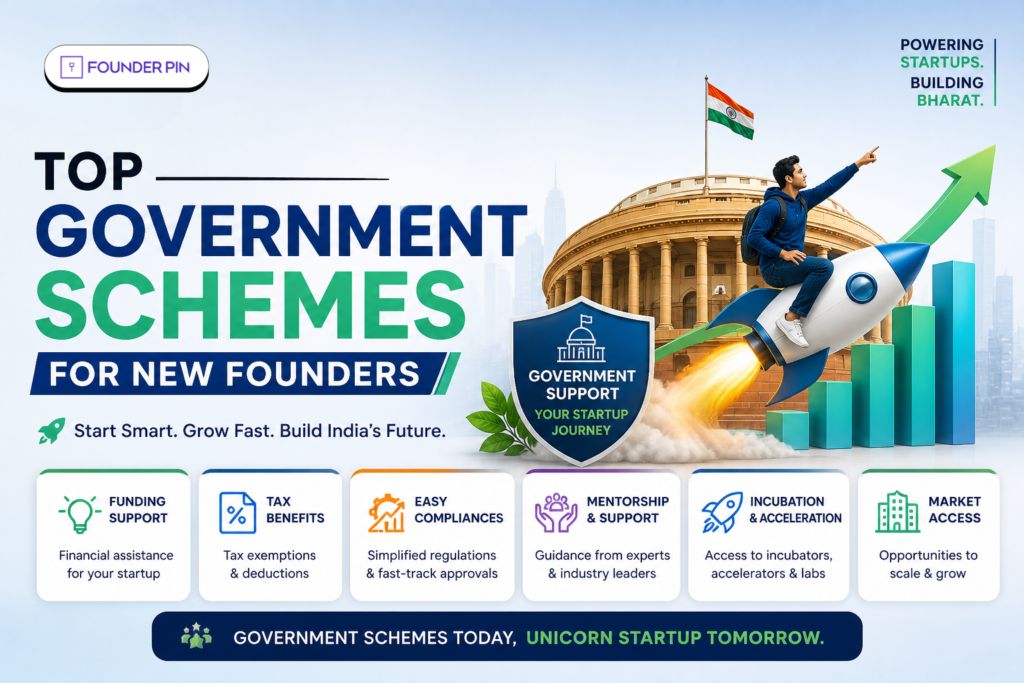
India celebrates National Startup Day on January 16, marking a strong commitment to building a world-class startup ecosystem. For early-stage founders, this is more than a symbolic event—it reflects policy momentum, funding support, and regulatory ease.
In 2026, the focus has shifted from just enabling startups to helping them scale sustainably. As a result, understanding the right government schemes for startups in India can give founders a significant competitive advantage.
The Evolution of Government Support for Startups in India
Over the past decade, India has transformed into the third-largest startup ecosystem globally. This growth has been fueled by strong government initiatives, digital infrastructure, and increasing investor participation. To explore this growth in detail, check out our list of unicorn in India, covering valuations, founders, and key industries.
Earlier policies focused on ease of doing business. Today, the emphasis is on innovation, deep tech, and global expansion. Government schemes now go beyond funding—they provide mentorship, incubation, and market access.
Top Government Schemes for Startups in India (2026)
Startup India Initiative
The Startup India Initiative is the foundation of most government schemes for startups in India. It begins with DPIIT recognition, which officially classifies your business as a startup. This recognition is essential because it unlocks access to multiple benefits.
One major advantage is tax exemption for up to three consecutive years, which helps early-stage startups preserve cash flow. In addition, startups receive fast-track patent filing support, reducing both time and legal costs associated with intellectual property.
Another key benefit is access to government tenders without prior experience requirements. This allows early-stage startups to compete with larger, established companies. Overall, Startup India acts as a gateway to the broader startup ecosystem.
Fund of Funds for Startups (FFS)
The Fund of Funds scheme does not invest directly in startups. Instead, it provides capital to SEBI-registered venture capital funds, which then invest in startups. This indirect model ensures better allocation of funds through experienced investors.
For founders, this means increased access to venture capital without needing to approach the government directly. Many leading Indian startups have benefited from VC firms backed by this scheme.
As a result, the Fund of Funds has played a crucial role in scaling high-growth startups, especially in sectors like fintech, SaaS, and consumer tech.
Startup India Seed Fund Scheme (SISFS)
The Seed Fund Scheme is designed specifically for early-stage startups that are still validating their ideas. It provides financial support for building prototypes, conducting product trials, and entering the market.
Startups can receive funding of up to ₹50 lakh, depending on their stage and requirements. This funding is usually routed through incubators, which also provide mentorship and operational guidance.
For founders without access to angel investors or venture capital, this scheme offers a critical early push, helping them move from idea to execution.
Atal Innovation Mission (AIM)
The Atal Innovation Mission focuses on building a long-term innovation ecosystem. It supports startups through Atal Incubation Centers (AICs), which provide infrastructure, mentorship, and networking opportunities.
In addition, Atal Tinkering Labs (ATLs) encourage innovation at the school level, creating a pipeline of future entrepreneurs. For founders, AIM offers access to a strong ecosystem of mentors, investors, and research institutions.
This scheme is particularly valuable for startups working in deep tech, AI, and research-driven industries, where long-term innovation is critical.
Credit Guarantee Scheme for Startups
One of the biggest challenges for startups is accessing capital without collateral. The Credit Guarantee Scheme addresses this issue by providing government-backed guarantees to lenders.
This reduces the risk for banks and financial institutions, making it easier for startups to secure loans. As a result, founders can access capital without giving up equity.
This scheme is especially useful for startups that need working capital or want to scale operations while maintaining ownership control.
Biotechnology Industry Research Assistance Council (BIRAC)
BIRAC is a specialized scheme designed for startups in biotechnology and life sciences. It provides grants, funding, and incubation support to help startups develop innovative healthcare solutions.
Startups working on vaccines, diagnostics, or medical devices can benefit significantly from BIRAC’s support. The scheme also connects founders with research institutions and industry experts.
In a sector where R&D costs are high, BIRAC plays a crucial role in enabling innovation-driven growth.
Sector-Specific Government Support in 2026
Deep Tech and AI Startups
The Indian government is increasingly focusing on deep tech and AI. It offers incentives for research, development, and commercialization of advanced technologies.
Startups in this space benefit from grants, tax incentives, and access to research infrastructure. This support helps them compete globally and build cutting-edge solutions.
EV and Climate Tech
Electric vehicles and sustainability are key priorities in 2026. Government policies include subsidies, tax benefits, and infrastructure development.
These initiatives reduce the cost of innovation and encourage startups to build eco-friendly and scalable solutions. As a result, EV and climate tech startups are attracting strong investor interest.
Fintech and Digital Infrastructure
India’s digital infrastructure, including UPI and Aadhaar, has created a strong foundation for fintech startups. Government support ensures continuous innovation in this sector.
Startups benefit from regulatory support, digital frameworks, and large-scale adoption, making fintech one of the fastest-growing segments in the ecosystem.
How Founders Can Leverage Government Schemes Effectively
Many startups fail to fully utilize available schemes. To maximize benefits:
- Register under Startup India (DPIIT recognition) early
- Apply for multiple schemes based on stage and sector
- Leverage incubators and accelerators for guidance
- Align your business model with government priorities (AI, EV, sustainability)
- Maintain compliance and proper documentation
Taking a strategic approach can significantly improve funding access and growth opportunities.
Common Mistakes Founders Should Avoid
Even with strong government support, mistakes can limit impact:
- Ignoring eligibility criteria
- Delaying applications
- Poor documentation and compliance
- Over-reliance on grants instead of building revenue
Founders should treat these schemes as growth enablers, not substitutes for business fundamentals.
Future Outlook: Government’s Role in Startup Growth
Looking ahead, government support will continue to evolve. The focus will likely shift toward:
- Global expansion support
- Deep-tech innovation funding
- Public-private partnerships
- Startup-friendly regulations
As India aims to become a global innovation hub, government schemes will play a critical role in shaping the next generation of startups.
Conclusion: Turning Government Support into Startup Success
The landscape of government schemes for startups in India in 2026 represents more than just policy support—it reflects a strong commitment to building a globally competitive and innovation-driven ecosystem. These initiatives are not only helping founders launch their ventures but also enabling them to scale with confidence in an increasingly competitive market.
At FounderPin, we believe that the next generation of successful startups will be defined by how effectively they leverage government support, strategic execution, and market understanding. Founders who combine these advantages with strong fundamentals can build businesses that go beyond early traction and create long-term impact.
Need Funding Strategy Support? Contact us to identify the best government schemes and funding paths for your startup.