The Rise of Tier-2 Cities: Why Jaipur, Indore, and Surat are the New Startup Hubs
Table of Contents
Toggle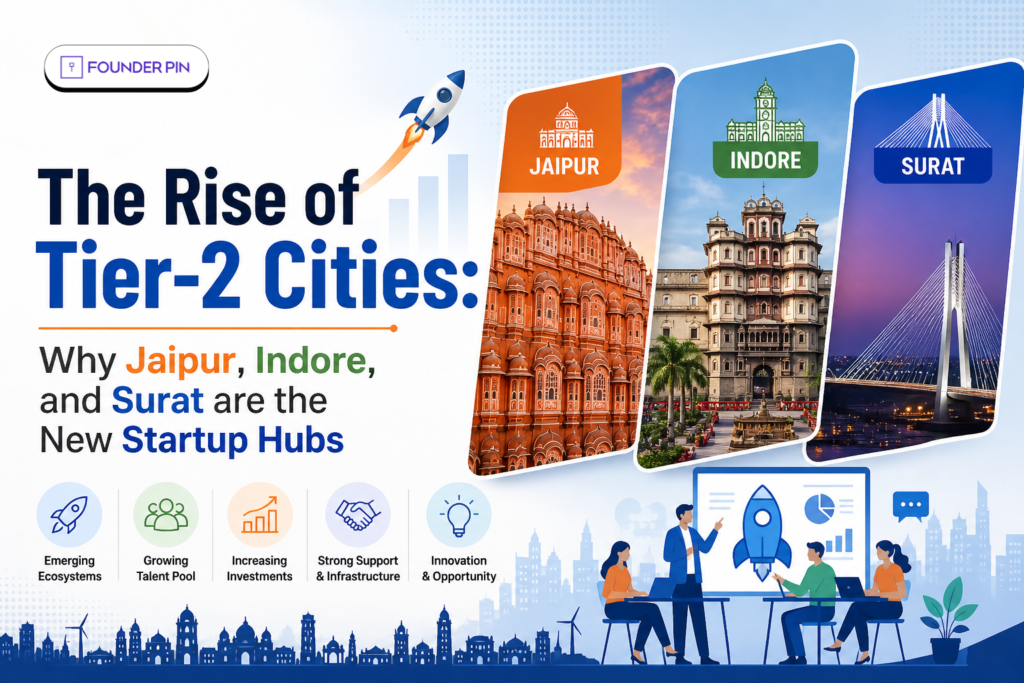
India’s startup story is no longer limited to metro cities like Bengaluru or Mumbai. In recent years, a new trend has emerged. Founders are building companies in smaller cities where costs are lower and opportunities are growing.
As a result, startup hubs India is no longer a metro-only concept. Tier-2 cities are gaining attention for their strong talent pools, improving infrastructure, and supportive ecosystems. Among them, Jaipur, Indore, and Surat are leading the transformation.
This shift is redefining the startup ecosystem India cities narrative and opening new doors for founders. If you want a broader view of high-growth companies, explore our list of top 50 startups in India to understand where the ecosystem is heading.
Why Tier-2 Cities Are Emerging as Startup Hubs in India
The rise of emerging startup hubs India is driven by several practical factors.
First, operational costs are significantly lower. Office space, salaries, and living expenses are more affordable compared to metro cities. This allows startups to extend their runway and focus on growth.
Second, talent availability is improving. Many skilled professionals are choosing to stay in their hometowns. As a result, startups in tier-2 cities can access quality talent without high hiring costs.
In addition, digital infrastructure has improved across India. High-speed internet and cloud tools enable startups to operate efficiently from anywhere.
Therefore, startup growth tier 2 cities is not accidental. It is a result of structural changes in the ecosystem.
Jaipur: The Creative and D2C Startup Hub
Jaipur is emerging as a strong startup destination, especially for D2C and creative businesses.
Strong Design and Craft Ecosystem
Jaipur has a rich heritage in design and craftsmanship. Startups are leveraging this to build unique product-based brands. Many D2C businesses are combining traditional craftsmanship with modern branding.
Growing Founder Community
The city has a growing network of founders, incubators, and co-working spaces. This creates a collaborative environment for startups.
As a result, Jaipur is becoming one of the most promising startup hubs India for creative entrepreneurs.
Indore: The Fast-Growing Tech and Service Hub
Indore has gained recognition as one of the fastest-growing startup cities in India.
Many startups from such ecosystems are now attracting significant capital. You can learn more in our guide on Indian startup funding trends.
Strong Educational Base
Indore is home to top institutions like Indian Institute of Management Indore. These institutions produce skilled graduates who contribute to the startup ecosystem.
Government and Policy Support
The local government actively supports startups through policies and incubation programs. This encourages innovation and entrepreneurship.
Because of these factors, Indore is a key player in the startup ecosystem India cities landscape.
Surat: The Emerging Business and Fintech Hub
Surat is traditionally known for textiles and diamonds. However, it is now evolving into a modern startup hub.
Strong Business Culture
Surat has a deep-rooted entrepreneurial mindset. Many family businesses are transitioning into tech-driven ventures.
Rise of Fintech and Trade Startups
Fintech, logistics, and trade solutions are the main areas of concentration for Surat startups. These industries complement the city’s advantages.
As a result, Surat is becoming one of the fastest-growing emerging startup hubs India.
Key Advantages of Building in Tier-2 Startup Cities
Building a startup in tier-2 cities offers several advantages.
First, founders can work for less money. Early on, this lessens financial strain. Second, there is frequently a better rate of staff retention. Professionals favour stable, less expensive places to live.
Moreover, competition is lower compared to metro cities. This allows startups to capture market share more easily.
Finally, local markets in tier-2 cities are still underpenetrated. This creates opportunities for innovation and growth.
Challenges Founders Should Consider
Despite the growth, tier-2 startup hubs also face challenges.
Access to funding is still limited compared to metro cities. Many investors prefer established ecosystems. In addition, networking opportunities may be fewer.
However, these challenges are gradually reducing. With remote work and digital connectivity, founders can connect with investors and mentors globally.
Future of Startup Hubs in India
Beyond metropolitan areas, India’s startup centers have a bright future. In the upcoming stage of expansion, Tier-2 cities will be crucial.
Infrastructure is being improved by both public and private initiatives. Founders are investigating new markets and business strategies concurrently.
As a result, the startup growth tier 2 cities trend will continue to accelerate in the coming years.
Actionable Insights for Founders
If you are planning to build a startup, consider tier-2 cities as a viable option.
Start by analyzing your target market. Then, evaluate cost advantages and talent availability. Choose a city that aligns with your business model.
In addition, leverage digital tools to scale beyond your location. This allows you to combine local advantages with global reach.
Conclusion: A New Era of Startup Growth
The rise of startup hubs India in tier-2 cities marks a major shift in the ecosystem. Cities like Jaipur, Indore, and Surat are proving that innovation is not limited by geography.
For founders, this creates new opportunities. By building in emerging ecosystems, they can reduce costs, access talent, and scale efficiently.
At FounderPin, we believe that the next wave of successful startups will come from these cities.