
1. Kiran Mazumdar-Shaw — Biocon
- Founder: Kiran Mazumdar-Shaw
- Business: Biocon
- Founded: 1978
- Industry: Biotechnology and biopharmaceuticals
- Current role: Executive Chairperson, Biocon and Syngene International
- Education/previous career: Studied at institutions affiliated with the University of Melbourne, then trained in brewing in Australia before heading back to India
- Key achievement: Took Biocon from a tiny biotech venture to a globally recognised biopharmaceutical company
- Why she succeeded: She got into a deeply technical field early, stayed focused on innovation, and built real expertise over decades instead of chasing whatever was trendy
- Founder lesson: Deep expertise becomes its own competitive edge, given enough time
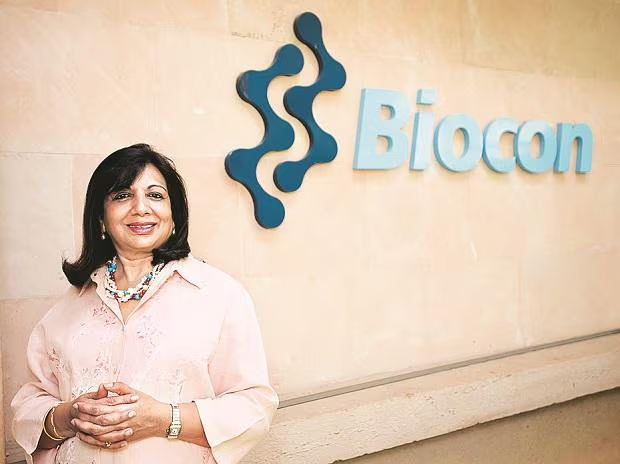
If there’s one name that comes up again and again in conversations about women entrepreneurs in India, it’s hers.
Biocon’s own account of the story starts in a garage — that’s literally where Kiran Mazumdar-Shaw began, back in 1978. Fast forward to now, and she’s Executive Chairperson of both Biocon and Syngene International.
What makes her story stand out is the timing. Biotechnology wasn’t exactly a field people jumped into as entrepreneurs back then, especially in India. She went in anyway, building around science, research, and — maybe most importantly — making healthcare more affordable. That combination is a big part of why Biocon eventually became a genuinely global life-sciences company, not just a domestic success story.
The takeaway here is simple: if you actually know an industry deeply, don’t sell its commercial potential short just because nobody else is betting on it yet.
Becoming a successful entrepreneur requires more than a good idea. Founders also need strong leadership, financial, communication and problem-solving abilities. Read our guide to 10 Essential Skills for Startup Founders to understand the skills that can help turn an idea into a sustainable business.
2. Falguni Nayar — Nykaa
- Founder: Falguni Nayar
- Business: Nykaa
- Founded: 2012
- Industry: Beauty, fashion, e-commerce
- Current role: Executive Chairperson, Managing Director & CEO
- Education/previous career: Post-graduate diploma in management from IIM Ahmedabad; 18 years at Kotak Mahindra Capital
- Key achievement: Turned Nykaa into one of India’s largest omnichannel beauty platforms
- Why she succeeded: Brought real finance experience to a market she understood was about to explode
- Founder lesson: Your career before founding can end up being your biggest advantage, not a delay
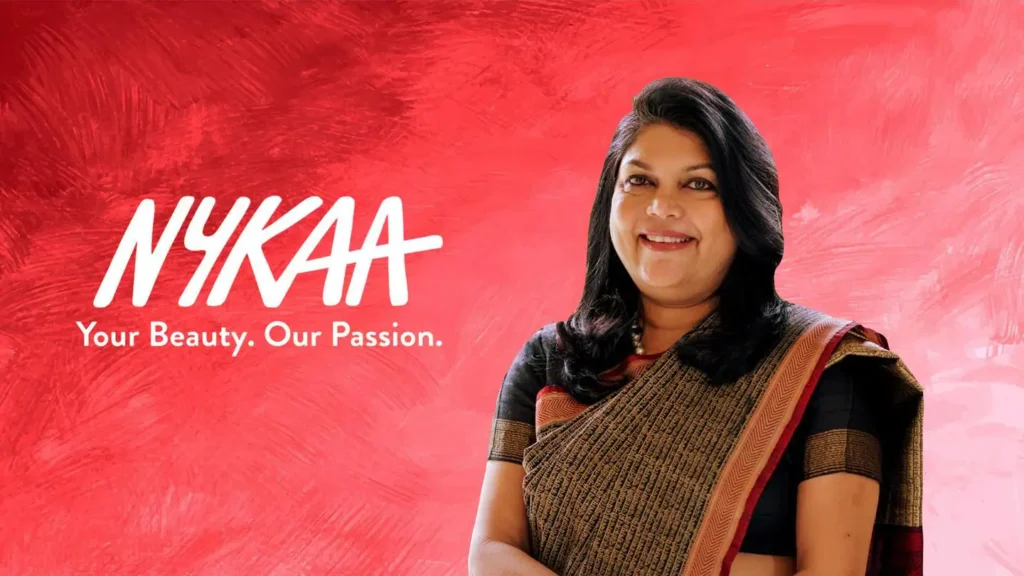
There’s a persistent myth in startup culture that founders need to start young. Falguni Nayar’s story pretty much dismantles that.
She spent nearly two decades in investment banking before launching Nykaa at all. Today, Nykaa lists her as founder, Executive Chairperson, Managing Director, and CEO — quite a stack of titles for someone who came to entrepreneurship relatively late by industry standards.
What Nykaa actually did well was curation — picking beauty products Indian consumers could trust were genuine, at a time when counterfeit products were a real concern online. That focus paid off. The company now calls itself India’s largest omnichannel beauty destination, carrying more than 2,400 brands.
If you’re still searching for a business opportunity of your own, explore our guide to 20 Profitable Startup Ideas in India for 2026 for ideas across digital, D2C, services and technology.
Her story is worth remembering for one reason especially: a strong corporate career isn’t a late start. Sometimes it’s exactly the foundation a founder needs.
3. Ghazal Alagh — Mamaearth and Honasa Consumer
- Founder: Ghazal Alagh, alongside Varun Alagh
- Business: Mamaearth / Honasa Consumer
- Founded: 2016
- Industry: Beauty and personal care
- Current role: Co-founder & Chief Innovation Officer, Honasa Consumer
- Education/previous career: Bachelor’s in Information Technology; later specialised in Modern Art and Design at the New York Academy of Arts
- Key achievement: Helped build Mamaearth, then grew it into a much wider house of beauty and personal-care brands
- Why she succeeded: Took a genuine parenting worry and turned it into a real consumer brand, letting community feedback actually shape what got built
- Founder lesson: A real problem you’ve personally felt can turn into a genuinely powerful business

The origin story here is pretty personal. According to Honasa, Ghazal and Varun Alagh started the company in 2016 after becoming new parents themselves — and struggling to find products they actually trusted for their child.
That search became Mamaearth. It started with baby-care products specifically, then gradually widened into broader beauty and personal care as the brand found its footing.
Today, Honasa’s portfolio has grown well beyond that first idea — Mamaearth, The Derma Co., Aqualogica, BBlunt, Dr. Sheth’s, and a few others sit under the same umbrella now.
Ghazal’s role within all this has leaned heavily toward innovation — really understanding what customers actually want, and turning that into new products worth launching.
The lesson worth taking from her story: sometimes the best product research doesn’t start in a lab or a focus group. It starts with your own frustration as a customer, trying to solve a problem nobody else seemed to be solving well.
4. Vineeta Singh — SUGAR Cosmetics
- Founder: Vineeta Singh, alongside Kaushik Mukherjee
- Business: SUGAR Cosmetics
- Founded: 2015
- Industry: Beauty and cosmetics
- Current role: Co-founder & CEO
- Education/previous career: IIT Madras and IIM Ahmedabad graduate; tried two businesses before SUGAR, neither of which worked out
- Key achievement: Built a beauty brand that actually thinks about Indian skin tones and Indian climate — not just repackaged Western products
- Why she succeeded: Took the lessons from two earlier failures and used them to sharpen SUGAR’s whole approach
- Founder lesson: Failure only becomes useful once you actually sit with it and learn something
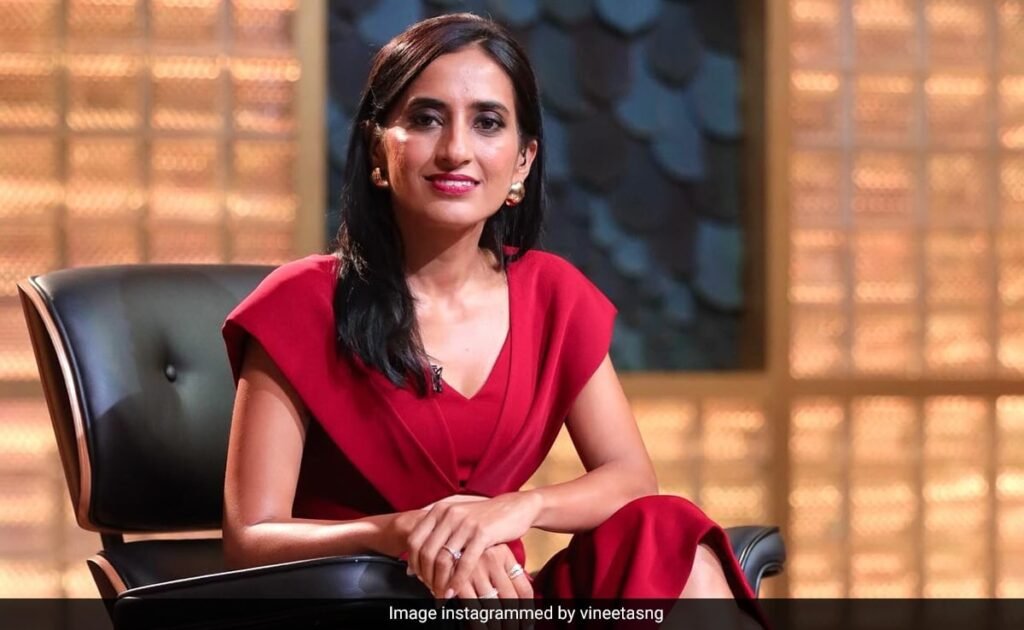
Here’s what makes Vineeta Singh’s story worth telling: SUGAR wasn’t her first attempt at building something.
Before this, she tried a background-verification company and a beauty subscription business. Neither one worked. But those failures weren’t wasted — they clearly shaped how she approached SUGAR the second, third time around.
SUGAR was built with something specific in mind — Indian skin, Indian heat, Indian humidity. Not an afterthought, but the actual starting point for how products got designed.
Her path is a good reminder that entrepreneurship rarely goes in a straight line, no matter how the highlight reel makes it look.
The takeaway: your first startup doesn’t need to succeed for you to eventually become a successful founder. Sometimes it’s the opposite — the failure is what teaches you what actually works.
5. Upasana Taku — MobiKwik
- Founder: Upasana Taku, alongside Bipin Preet Singh
- Business: MobiKwik
- Founded: 2009
- Industry: Fintech and digital financial services
- Current role: Co-founder, Executive Director & CFO
- Education/previous career: Studied at Stanford, then worked in payments before co-founding MobiKwik
- Key achievement: Helped grow MobiKwik into one of India’s major digital financial-services platforms
- Why she succeeded: Brought real payments expertise, paired with a genuine focus on making digital finance accessible
- Founder lesson: Deep domain knowledge helps you solve the hard, unglamorous problems at scale

MobiKwik started as a mobile wallet. Over time, under Taku and Singh, it grew into something much bigger — a full financial-services platform.
Per the company’s own listings, Taku holds the title of Co-founder, Executive Director & CFO, while Singh serves as Co-founder, MD & CEO.
Her background in payments turned out to matter a lot here. Fintech isn’t a space where you can just have a good idea and wing the rest — trust, regulation, technology, and financial infrastructure all have to work together, and getting any one piece wrong can sink the whole thing.
The lesson worth pulling from her story: in genuinely complicated industries, actual expertise can matter just as much as a flashy idea, sometimes more.
6. Richa Kar — Zivame
- Founder: Richa Kar
- Business: Zivame
- Founded: 2011
- Industry: E-commerce, women’s intimate wear
- Current role: Founder; stepped away from the CEO role in 2017
- Education/previous career: Engineering degree from BITS Pilani, management education from NMIMS
- Key achievement: Built one of India’s earliest online lingerie businesses, making intimate-wear shopping far more private and convenient
- Why she succeeded: Spotted a real, if uncomfortable, consumer problem and built a solution around privacy and actual choice
- Founder lesson: An uncomfortable problem, tackled well, can turn into a genuinely valuable business
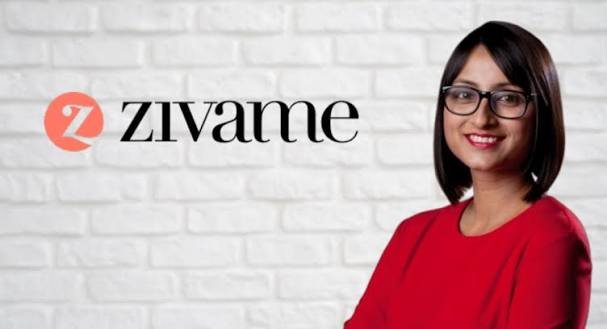
Richa Kar noticed something a lot of Indian women dealt with quietly — and almost nobody in retail was actually addressing it well.
According to Zivame’s own press materials, Kar wanted to fix the genuinely awkward experience many women faced shopping for lingerie in physical stores, where privacy was often an afterthought.
Going online changed the equation. Suddenly there was privacy, a much wider range of products, and real convenience — three things the traditional retail experience just didn’t offer.
That combination ended up creating an entirely new shopping category in India, one that didn’t really exist before.
Kar’s story is a good reminder that the biggest opportunities aren’t always sitting in the flashy, obvious industries. Sometimes they’re hiding in the stuff nobody’s willing to talk about openly — which is exactly why nobody’s built a good solution for it yet.
7. Radhika Ghai Aggarwal — ShopClues
- Founder: Radhika Ghai Aggarwal, alongside Sandeep Aggarwal and Sanjay Sethi
- Business: ShopClues
- Founded: 2011
- Industry: E-commerce marketplace
- Current role: Co-founder and business leader
- Education/previous career: Studied at Washington University in St. Louis, worked in marketing before turning entrepreneur
- Key achievement: Became the first Indian woman entrepreneur to lead a company into unicorn status, through ShopClues
- Why she succeeded: Steered ShopClues toward small merchants and value-conscious buyers outside India’s biggest metros — a segment the giants weren’t chasing hard
- Founder lesson: Underserved customers can become the real foundation of a massive marketplace
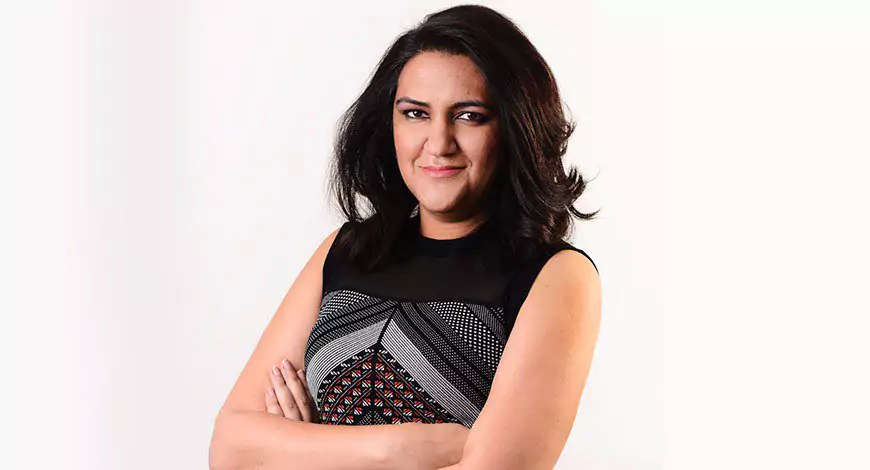
ShopClues showed up at a moment when Flipkart and Amazon were already dominating the conversation around Indian e-commerce.
Rather than trying to out-Amazon Amazon, the company went the other direction — leaning hard into merchants, smaller cities, and India’s messy, fragmented retail landscape that the bigger players hadn’t fully figured out yet.
Radhika Ghai Aggarwal served as co-founder and Chief Business Officer, based on crunchbase company profiles.
Her story points to a strategy worth remembering: you don’t always have to beat the biggest player at their own game. Sometimes it’s smarter to find the part of the market they’re serving badly, or not serving at all.
8. Suchi Mukherjee — LimeRoad
- Founder: Suchi Mukherjee and the founding team
- Business: LimeRoad
- Founded: 2012
- Industry: E-commerce, social commerce
- Current role: Former Founder & CEO
- Education/previous career: Economics and mathematics at Cambridge, finance and economics at LSE; previously worked at Lehman Brothers, eBay, Skype, and Gumtree
- Key achievement: Built LimeRoad into one of India’s early social-commerce and fashion-discovery platforms
- Why she succeeded: Brought serious international tech experience together with a sharp instinct for how people actually browse and discover things online
- Founder lesson: A career across different industries can turn into a genuinely useful entrepreneurial edge
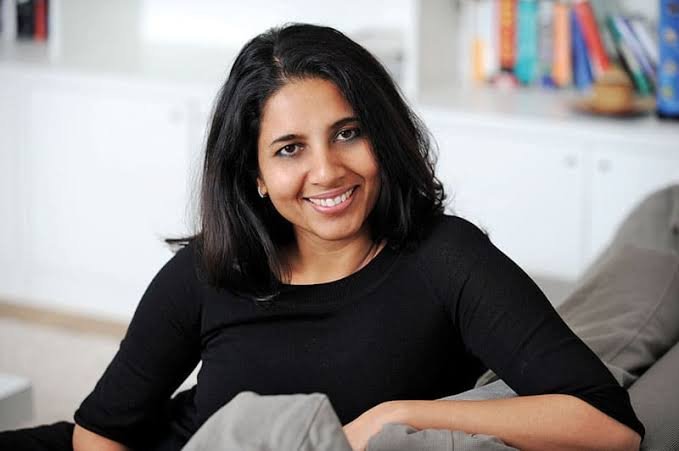
By the time Mukherjee started LimeRoad, she’d already spent years inside some of the biggest names in tech and finance.
She held leadership roles at eBay and Skype, and served as Managing Director at Gumtree, before eventually coming back to India to build something of her own.
LimeRoad’s whole premise was that online shopping didn’t have to be purely transactional — it could be about discovery and inspiration instead, especially for fashion and lifestyle products where browsing is half the fun.
Her path is a good example of how skills picked up abroad don’t just stay abroad. They can translate directly into real opportunities back home, in a market that was just starting to open up.
9. Aditi Gupta — Menstrupedia
- Founder: Aditi Gupta, alongside Tuhin Paul and other founding collaborators
- Business: Menstrupedia
- Founded: 2012
- Industry: Education, social-impact entrepreneurship
- Current role: Co-founder and Managing Partner
- Education/previous career: Alumna of the National Institute of Design, Ahmedabad
- Key achievement: Used comics, workshops, and digital content to make menstrual education actually approachable
- Why she succeeded: Turned a personal experience and a design-school research project into a real platform tackling a major social taboo
- Founder lesson: Solving a genuine information gap can create social impact and real economic value at the same time

Aditi Gupta’s story starts with something pretty simple: she noticed how confusing, or sometimes just plain wrong, the information young people got about menstruation actually was.
What began as research at the National Institute of Design eventually turned into Menstrupedia. The platform leans on comics and relatable, easy-to-digest material to make conversations around puberty and periods a lot less awkward than they usually are.
According to Menstrupedia, its educational materials are now used across thousands of schools and organisations, both in India and beyond.
It’s a solid example of design thinking applied where it actually matters — not just for aesthetics, but for genuinely fixing how information reaches people.
The lesson here: when people struggle to understand something important, making it simple and accessible can become a business in its own right.
10. Vani Kola — Kalaari Capital
- Founder: Vani Kola
- Business: Kalaari Capital
- Founded: 2012, in its current Kalaari form
- Industry: Venture capital, startup investing
- Current role: Founder & Managing Director
- Education/previous career: Engineering graduate from Osmania University, master’s from Arizona State University; built tech businesses in Silicon Valley before this
- Key achievement: Grew Kalaari into a well-known early-stage investment firm, backing numerous Indian tech companies along the way
- Why she succeeded: Combined her own entrepreneurial background with investing skill and genuine long-term mentorship for founders
- Founder lesson: Building an ecosystem can matter just as much as building one company
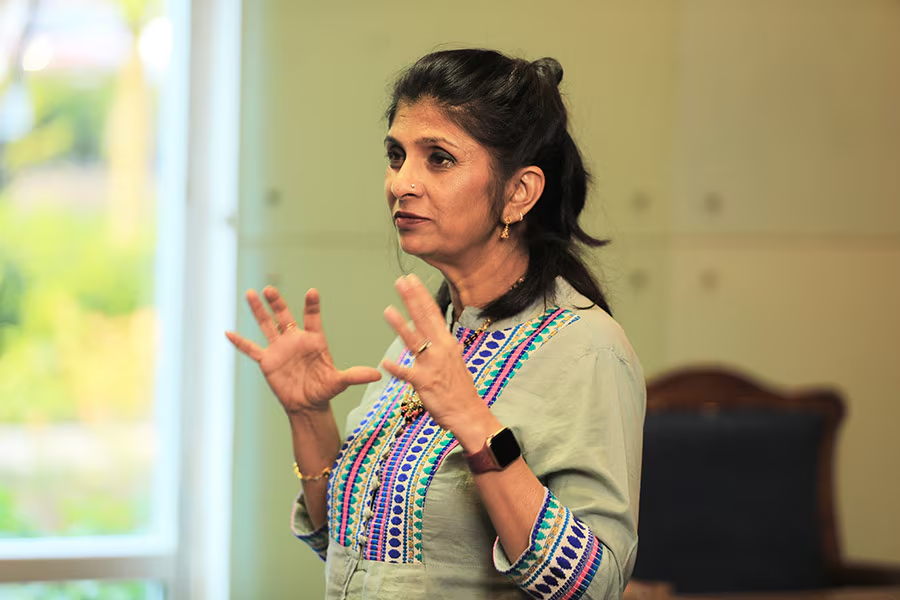
Vani Kola’s path looks pretty different from everyone else on this list.
Instead of building a consumer brand or a tech platform of her own, she built something that backs and supports other founders trying to do exactly that.
Kalaari lists her as Founder and Managing Director, with the firm focused on early-stage companies spanning consumer internet, digital media, health-tech, and gaming.
What makes her approach distinct is the fact that she was a founder herself, first. That experience clearly shapes how she works with the entrepreneurs she now backs — she’s been on their side of the table.
The takeaway: entrepreneurship doesn’t only create value by building one company yourself. Sometimes it’s about helping the next wave of founders build theirs.
What do successful women entrepreneurs in India have in common?
Ten very different businesses, but the same handful of patterns keep showing up — real customer understanding, resilience, deep domain expertise, and a willingness to push into markets nobody else had figured out yet.
A few things worth pulling out from their stories:
- Solve a real problem. Zivame and Mamaearth both grew out of needs their founders genuinely felt, not market research
- Use what you already know. Nayar, Kola, and Mukherjee all turned years of professional experience into a real edge as founders
- Actually understand your local customer. SUGAR built around Indian skin and climate instead of just repackaging global products
- Play the long game. Biocon’s story is a lesson in what patient innovation looks like in a genuinely complex industry
- Trust matters more than people think. Nykaa built a huge chunk of its brand around simply proving its products were authentic
- Don’t shy away from the hard industries. Fintech and biotech both demand serious technical and regulatory know-how — that’s exactly why fewer people compete there
- Failure isn’t the end of the story. Vineeta Singh’s earlier ventures didn’t work, but what she learned clearly shaped SUGAR
- Sometimes you have to build the category yourself. Menstrupedia went after a subject most businesses were too uncomfortable to touch
This all matters beyond just these ten stories, too — women-led entrepreneurship is becoming a genuinely visible part of India’s startup ecosystem overall.
Startup India reported 73,151 recognised startups with at least one woman director as of October 31, 2024. On top of that, the government’s put ₹227.12 crore through the Startup India Seed Fund Scheme toward 1,278 women-led startups since the scheme launched.
For founders planning to formally build and scale a startup in India, DPIIT Startup Recognition can be an important consideration. Our guide explains the eligibility requirements, application process and potential benefits.
What can aspiring women entrepreneurs learn from these founders?
Maybe the biggest lesson from all ten stories is this: there’s no single template for how to become a successful entrepreneur.
You can start after nearly two decades in corporate life, the way Falguni Nayar did. Or you can build something rooted deeply in science, like Kiran Mazumdar-Shaw. Some turn their own frustration as a new parent into a consumer brand, like Ghazal Alagh, while others use design thinking to tackle something most businesses were too uncomfortable to touch, like Aditi Gupta.
For anyone thinking about starting out, a few things are worth focusing on early:
- Finding a problem that’s actually real, not just theoretically interesting
- Understanding your market before you try to scale it
- Building genuine expertise in whatever industry you’re entering
- Testing the business model before betting everything on it
- Actually learning from the experiments that don’t work
- Building a team you can rely on
- Watching your cash carefully, especially early on
- Creating a brand that’s differentiated, not just another version of what’s already out there
- Staying in the habit of listening to customers, continuously, not just at launch
- Thinking past the next quarter’s growth number
NITI Aayog’s Women Entrepreneurship Platform points to four areas that matter most here: training, access to finance and markets, mentoring, and broader support services.
That’s worth remembering, because a good idea is really just the starting line. What actually gets you to the finish is capital, customers, the right networks, and the skills to scale — none of which show up automatically just because the idea was good.
Final Takeaway
The journeys of these successful women entrepreneurs in India show that entrepreneurship is not defined by one industry, one age or one business model.
Kiran Mazumdar-Shaw built in biotechnology. Falguni Nayar transformed beauty retail. Upasana Taku built in fintech. Richa Kar tackled an uncomfortable consumer problem. Aditi Gupta turned education and social impact into a scalable platform.
Their businesses may look completely different, but the underlying lesson is similar:
Find a meaningful problem, understand your customer better than competitors and keep building even when the first version isn’t perfect.
For aspiring women founders, these stories offer more than inspiration. They provide practical examples of how experience, customer insight, resilience and smart execution can turn an idea into a real business.
At FounderPin, we believe the best founder stories should do more than celebrate success—they should show the decisions, challenges and strategies behind it. If you’re planning your own startup journey and need help with strategy, positioning or business planning, contact us for a consultation.
FAQs About Successful Women Entrepreneurs in India
1. Who are some successful women entrepreneurs in India?
Some of the most successful women entrepreneurs in India include Kiran Mazumdar-Shaw, Falguni Nayar, Ghazal Alagh, Vineeta Singh, Upasana Taku, Richa Kar, Radhika Ghai Aggarwal, Suchi Mukherjee, Aditi Gupta and Vani Kola. They have built businesses across biotechnology, beauty, fintech, e-commerce, education and venture capital.
2. Who is the most successful woman entrepreneur in India?
There is no single measure for the “most successful” woman entrepreneur because success can be measured through business value, innovation, social impact or industry influence. Kiran Mazumdar-Shaw and Falguni Nayar are among India’s most prominent women founders, having built Biocon and Nykaa into influential businesses.
3. What businesses have been started by successful women entrepreneurs in India?
Successful women entrepreneurs in India have built businesses across many industries. Examples include Biocon in biotechnology, Nykaa in beauty and e-commerce, Mamaearth in personal care, SUGAR Cosmetics in beauty, MobiKwik in fintech, Zivame in e-commerce and Menstrupedia in education and social impact.
4. What can aspiring women entrepreneurs learn from successful women founders in India?
Aspiring founders can learn the importance of solving genuine customer problems, understanding the market, building industry expertise, managing finances carefully and learning from failure. The journeys of founders such as Falguni Nayar and Vineeta Singh also show that there is no fixed age or career path for starting a business.
5. What are the common qualities of successful women entrepreneurs in India?
Successful women entrepreneurs often demonstrate resilience, customer focus, innovation, leadership, adaptability and strong decision-making. Many also identify underserved markets and build differentiated products instead of simply copying existing businesses.