
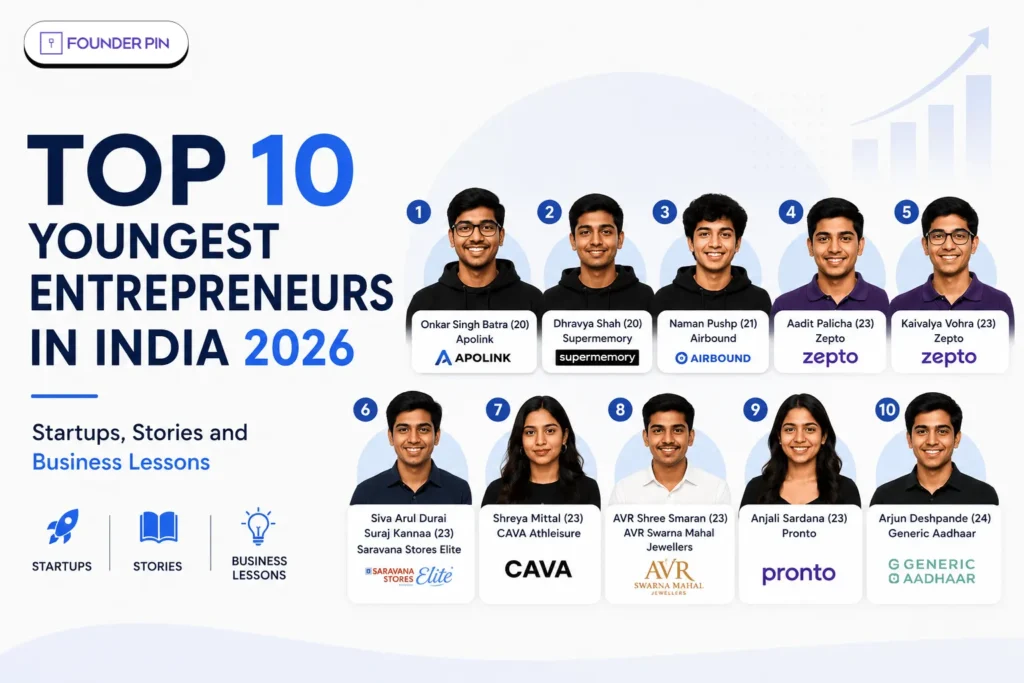
The 2026 list shows how India’s young-founder ecosystem has moved beyond conventional software startups. DeepTech and HardTech account for one in four U30 entrepreneurs, while AI and machine learning alone account for eight entrepreneurs across six companies.
Starting young can be an advantage, but age alone doesn’t build a successful company. Founders also need strong leadership, financial, communication and problem-solving abilities. Read our guide to 10 Essential Skills for Startup Founders to understand the capabilities that can help entrepreneurs build and scale a business.
1. Onkar Singh Batra — Apolink
- Entrepreneur → Onkar Singh Batra
- Startup → Apolink
- Founded → 2024
- Industry → SpaceTech and satellite communications
- Current role → Founder & CEO
- Education/previous career → Studied at Avenues The World School and attended Penn State before pursuing entrepreneurship; he began building technology projects as a child.
- Key achievement → Built a satellite at a remarkably young age and raised $4.3 million for Apolink.
- Why successful → He developed technical skills early and stayed focused on a difficult infrastructure problem.
- Founder lesson → Start learning before you think you’re ready.
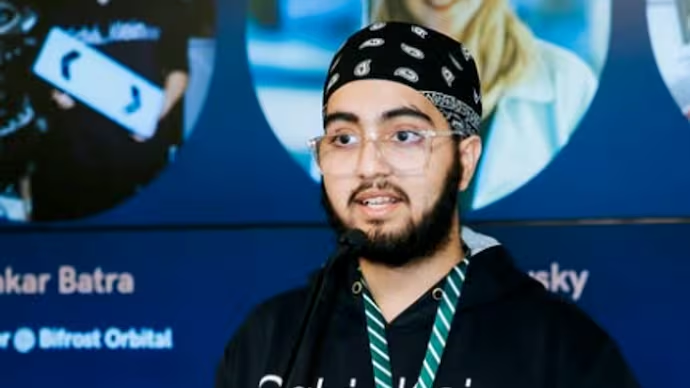
Onkar Singh Batra is the youngest entrepreneur on the 2026 list at 20.
His technology journey started unusually early. At seven, he built a website and later developed an open-source satellite project. By 16, he had built a satellite, according to profiles published about his journey.
Apolink is working on satellite relay infrastructure designed to keep low-Earth-orbit satellites connected when they move outside the line of sight of ground stations.
In 2025, Apolink raised $4.3 million, and in 2026 it deployed its first demonstration satellite.
The bigger lesson: Technical curiosity can compound into entrepreneurial expertise when you keep building instead of merely consuming information.
2. Dhravya Shah — Supermemory
- Entrepreneur: Dhravya Shah
- Startup: Supermemory
- Founded: 2024, as a project
- Industry: Artificial intelligence, AI infrastructure
- Current role: Founder & CEO
- Education/previous career: Studied at Arizona State University; worked at Cloudflare, and built several software projects before this
- Key achievement: Raised $3 million for Supermemory before turning 20
- Why he succeeded: Fast experimentation, real software chops, and a genuine obsession with AI infrastructure
- Founder lesson: Build fast, test fast, learn faster than the market’s moving
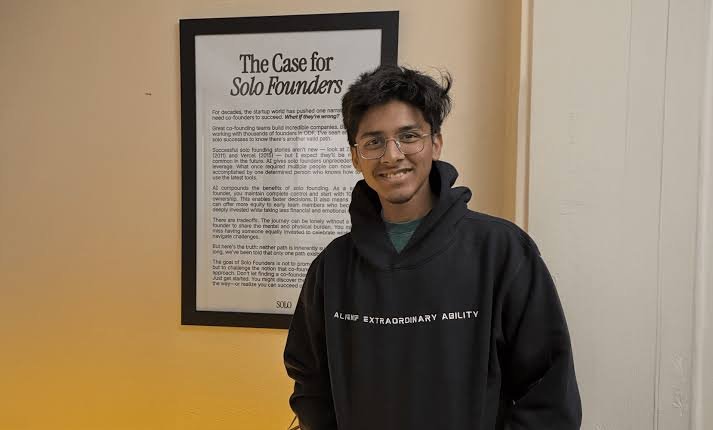
Dhravya Shah is the other 20-year-old on the 2026 U30 list — and honestly, this wasn’t his first attempt at building something.
He’d already built and sold companies as a teenager, long before Supermemory existed. Cloudflare came next, and only after that did he go all-in on his own thing.
What became Supermemory actually started as a hackathon project back in 2024. From there it grew into something much bigger — an AI memory infrastructure company. By 2026, that project had turned into a real business, one that raised $3 million in seed funding.
The core idea behind it: giving AI systems something closer to persistent memory, and better context to work with.
The bigger takeaway here is worth sitting with. In fast-moving tech markets, how quickly you can actually learn tends to matter more than whether your first idea was perfect.
3. Naman Pushp — Airbound
- Entrepreneur: Naman Pushp
- Startup: Airbound
- Founded: 2023
- Industry: Drones, DeepTech
- Current role: Founder & CEO
- Education/previous career: Started tinkering with drones as a teenager, skipped the conventional college route for entrepreneurship instead
- Key achievement: Built autonomous delivery drones and racked up more than 13,000 autonomous flights
- Why he succeeded: Went after one specific logistics problem instead of building yet another generic drone company
- Founder lesson: DeepTech rewards persistence and real engineering discipline — not just good pitching
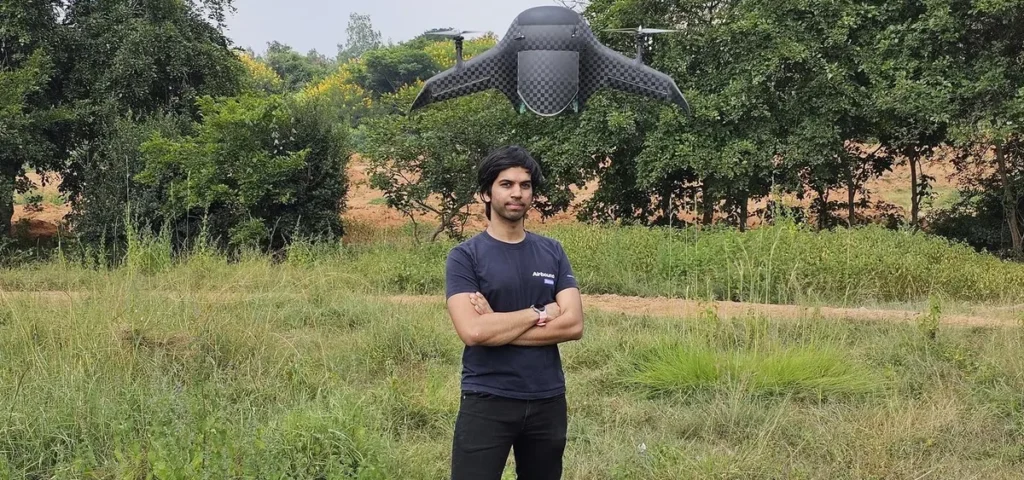
At 21, Naman Pushp lands third on the 2026 U30 list’s youngest-entrepreneurs ranking.
Airbound builds vertical-flight drones designed for things like medical delivery and mid-mile logistics. The whole design challenge comes down to one tension — carrying a meaningful payload while keeping the aircraft light enough to actually fly well.
Founded in 2023, the company had crossed 13,000 autonomous flights across Bengaluru and Guntur by August 2026 — a real number, not a projection.
That’s worth sitting with for a second, because it says something important: DeepTech startups can’t survive on a good pitch deck forever. Eventually, the hardware has to actually leave the ground.
The bigger lesson here: build technology that genuinely works out in the real world, not technology that just sounds impressive in a slide.
4. Aadit Palicha — Zepto
- Entrepreneur → Aadit Palicha
- Startup → Zepto
- Founded → 2021
- Industry → Quick commerce
- Current role → Co-founder & CEO
- Education/previous career → Stanford University; left college to build Zepto after finding traction with the business.
- Key achievement → Helped build Zepto into India’s leading quick-commerce companies.
- Why successful → He combined product thinking with intense operational execution.
- Founder lesson → Speed only matters when the underlying business can execute.
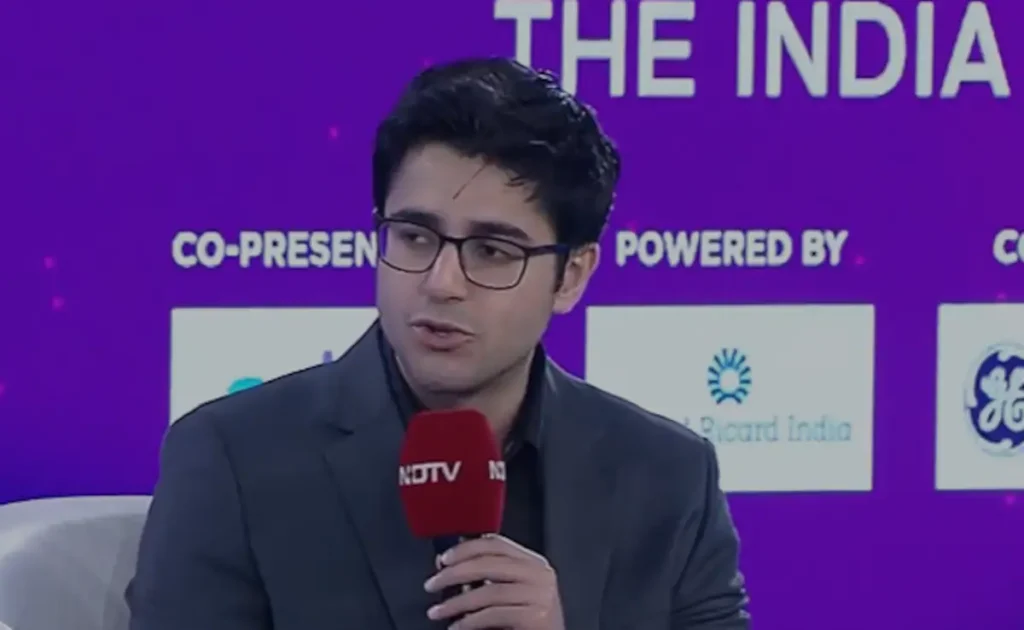
Aadit Palicha is 23 and one half of Zepto’s famous young founding team.
Palicha and Kaivalya Vohra began experimenting with grocery delivery during the pandemic before developing the quick-commerce model that became Zepto. Their decision to leave Stanford came after the business showed strong traction rather than simply because dropping out sounded exciting.
By 2026, Zepto had raised around $2.3 billion, making it the most-funded U30 startup represented on the list. Rapid growth often requires access to the right funding at the right stage. If you’re exploring funding options for your own startup, read our guide to Early-Stage VC Funds in India to understand where founders can look for early institutional capital.
The bigger lesson: Taking a big career risk makes more sense when evidence supports the decision.
5. Kaivalya Vohra — Zepto
- Entrepreneur → Kaivalya Vohra
- Startup → Zepto
- Founded → 2021
- Industry → Quick commerce
- Current role → Co-founder
- Education/previous career → Stanford University; left college to build Zepto.
- Key achievement → Became one of India’s youngest self-made entrepreneurs through Zepto’s rapid growth.
- Why successful → He focused on solving the difficult operational problem behind ultra-fast grocery delivery.
- Founder lesson → A great customer promise requires great operations.
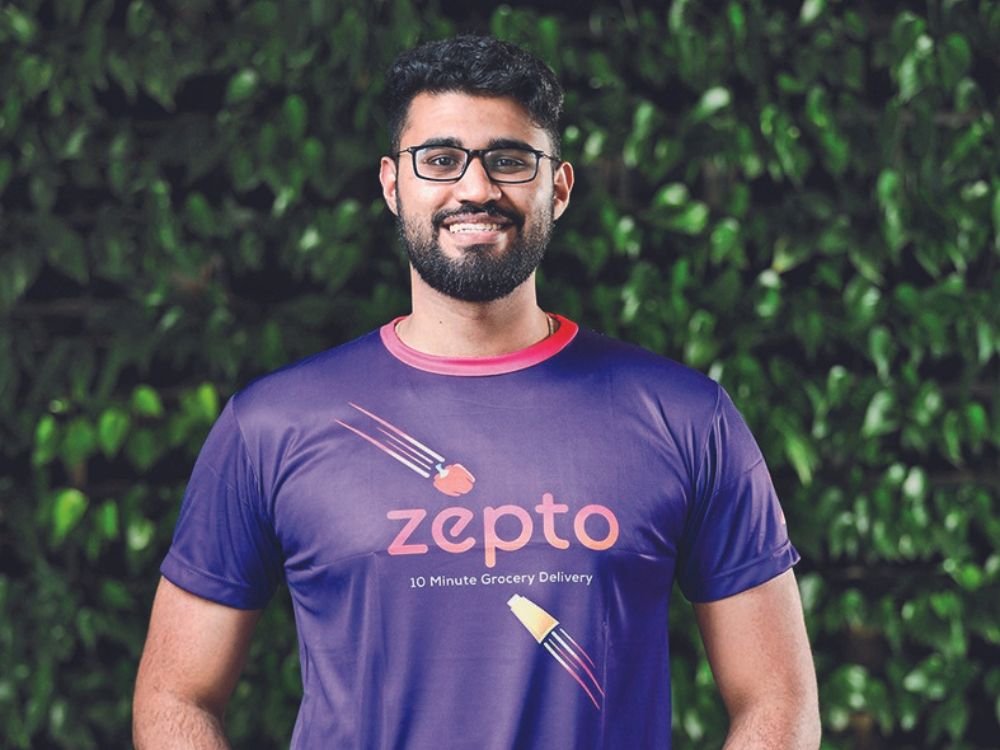
Vohra is also 23, making him one of the youngest entrepreneurs in the 2026 ranking.
Zepto’s success was not simply about creating another grocery app. The company built a network of dark stores and technology systems designed around fast fulfilment.
The business operates in one of India’s most competitive consumer markets, where delivery speed, assortment, pricing and customer retention all matter.
The bigger lesson: If your competitive advantage is speed, your entire organisation has to be designed around speed.
6. Siva Arul Durai Suraj Kannaa — Saravana Stores Elite
- Entrepreneur → Siva Arul Durai Suraj Kannaa
- Business → Saravana Stores Elite
- Founded → 2019 as a corporate entity
- Industry → Retail
- Current role → Director
- Education/previous career → Part of the next generation of the Saravana Stores business.
- Key achievement → Joined the leadership of a large Tamil Nadu retail enterprise at a young age.
- Why successful → He combines knowledge of a legacy retail business with the perspective of a younger generation.
- Founder lesson → You don’t always have to start from zero to be an entrepreneur.
Suraj Kannaa is 23 and represents an important side of Indian entrepreneurship: family-business succession.
Saravana Stores Elite Private Limited was incorporated in Chennai in November 2019. Corporate records list Siva Arul Durai Suraj Kannaa among its directors.
His appearance on the U30 list is a reminder that entrepreneurial leadership also involves modernising and scaling an existing business.
The bigger lesson: Family businesses can create entrepreneurial opportunities when the next generation brings new skills and thinking.
7. Shreya Mittal — CAVA Athleisure
- Entrepreneur: Shreya Mittal
- Startup: CAVA Athleisure
- Founded: 2020
- Industry: Fashion and athleisure
- Current role: Co-founder
- Education/previous career: Business Management with Entrepreneurship at the University of Warwick
- Key achievement: Built CAVA into a fast-growing Indian athleisure brand and helped secure a $4.5 million Series A in 2026
- Why successful: She identified a gap between premium international activewear and cheaper functional products
- Founder lesson: A clear market gap can become a strong brand proposition

Shreya and her sister Ria Mittal launched CAVA during the 2020 lockdown, after spotting a real gap in India’s athleisure market. At the time, she was studying Business Management with Entrepreneurship at Warwick Business School, building the company alongside her degree rather than after finishing it.
Funding followed a clear trajectory: a $1.14 million seed round in 2024, then a $4.5 million Series A in January 2026. What the company actually focuses on is simple — fashionable, comfortable activewear made for Indian consumers specifically.
The bigger lesson here: you don’t need to invent a completely new category. Sometimes serving an existing one better is enough.
8. AVR Shree Smaran — AVR Swarna Mahal Jewellers
- Entrepreneur → AVR Shree Smaran
- Business → AVR Swarna Mahal Jewellers
- Founded → Multigenerational family business
- Industry → Jewellery
- Current role → Director / next-generation business leader
- Education/previous career → Fifth-generation member of the family business.
- Key achievement → Joined the leadership of an established jewellery enterprise while still in his early twenties.
- Why successful → He combines legacy industry knowledge with younger-generation thinking.
- Founder lesson → Legacy becomes valuable when you know how to evolve it.
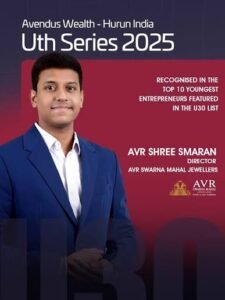
Shree Smaran is 23 and represents another form of entrepreneurship: building on an established family enterprise.
AVR Swarna Mahal’s history spans multiple generations, and Shree Smaran is part of its fifth generation. He joined the business alongside the next generation of the family.
That makes his journey different from a typical startup founder. The challenge is not just starting a business; it is helping an established brand remain relevant.
The bigger lesson: Entrepreneurship can mean preserving what works while changing what no longer does.
9. Anjali Sardana — Pronto
- Entrepreneur: Anjali Sardana
- Startup: Pronto
- Founded: 2025
- Industry: Home services
- Current role: Founder & CEO
- Education/previous career: B.S. in Biology from Georgetown, previously worked in investment roles at Bain Capital
- Key achievement: Grew Pronto to a $100 million post-money valuation, closing a $25 million Series B in 2026
- Why she succeeded: Spotted real inefficiencies in India’s fragmented domestic-help market and built a fast-service model directly around them
- Founder lesson: A massive market can be hiding inside a problem people deal with every single day

At 23, Anjali Sardana is one of the youngest women on the 2026 list — and her idea didn’t come from nowhere.
Pronto grew out of genuine research into India’s informal labour market, specifically how hard it actually is to reliably connect households with domestic workers. That’s a frustration most people just live with, rarely one anyone builds a company around.
By March 2026, Pronto had raised $25 million in a Series B, valuing the company at $100 million post-money. Daily bookings, according to the company, had already crossed 18,000 — solid traction for something so young.
What Pronto actually does is deliver fast household services through trained professionals, cutting out a lot of the unreliability that’s plagued this space for years.
The bigger lesson worth sitting with: the biggest opportunities often aren’t in some brand-new market. They’re sitting inside something people already use constantly, but where the experience has stayed frustrating for way too long.
10. Arjun Deshpande — Generic Aadhaar
- Entrepreneur: Arjun Deshpande
- Startup: Generic Aadhaar
- Founded: 2018/2019
- Industry: Pharmaceuticals
- Current role: Founder & CEO
- Education/previous career: Schooled at DAV Public School, Thane; got interested in pharma early on through family ties to the industry
- Key achievement: Started Generic Aadhaar at 16, and landed both investment and mentorship from Ratan Tata
- Why he succeeded: Zeroed in on medicine affordability and access — not a flashy problem, but a genuinely important one
- Founder lesson: A serious problem can be a powerful place to start, even without any obvious credentials yet
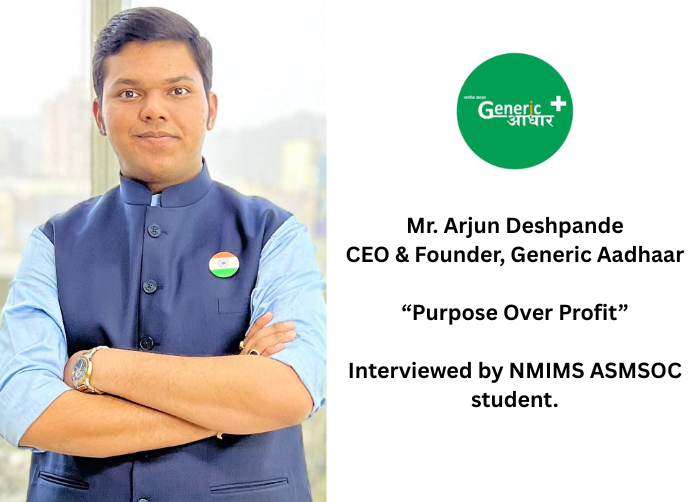
Arjun Deshpande launched Generic Aadhaar as a teenager, driven by a pretty simple goal: making medicines more affordable and easier to actually get.
That goal caught Ratan Tata’s attention. Business Standard reported that Tata took a personal interest in the venture, and eventually invested in it himself — while Deshpande was still a teenager, no less.
By 2026, Deshpande’s still leading the company as founder and CEO, years after that initial spark.
What makes his story stand out isn’t just the age. It’s that he walked into pharma — a heavily regulated, genuinely complicated industry — instead of taking the easier route most young founders go for, building another consumer app.
The bigger lesson here: how old a founder is matters a lot less than how serious the problem they’re actually trying to solve is.
What do the youngest entrepreneurs in India have in common?
Look across the 2026 list, and one thing jumps out — young Indian entrepreneurs are increasingly picking hard problems, not easy ones. Technically demanding, operationally messy, the kind of sectors that don’t forgive shortcuts.
A few patterns worth pulling out:
- AI keeps climbing. Eight U30 entrepreneurs are behind six different AI/ML companies
- DeepTech isn’t a niche anymore. One in four people on this list comes out of DeepTech or HardTech
- SpaceTech’s quietly growing too. Six entrepreneurs, three ventures
- Most are starting from scratch. 84% of the whole U30 cohort are first-generation entrepreneurs — no family business to fall back on
- Bengaluru’s pulling further ahead. 21 U30 entrants came from the city in 2026, up from just seven the year before
- But it’s not only Bengaluru. 40 entrepreneurs came from non-metro cities, which says something real about where startup talent’s actually showing up
- These companies are hiring, not just raising money. U30 entrepreneurs collectively employ more than 75,000 people
- Zepto’s in a league of its own on funding. The top 10 companies on the broader list raised over $3.5 billion combined, and Zepto alone accounts for roughly $2.3 billion of that
Put it all together, and the picture’s pretty clear: young entrepreneurship in India is getting more technical, more ambitious, and increasingly built with a global audience in mind — not just the domestic market.
Understanding startup terminology can make these business decisions much easier. Our guide to 50 Startup Terms Every Founder Should Know explains concepts such as product-market fit, CAC, burn rate, runway, valuation and more in simple language.
What can aspiring entrepreneurs learn from these young founders?
Here’s the real lesson, and it’s not “start a company at 20.” It’s “start solving real problems early, whatever age you happen to be.”
Look at the paths above and they don’t line up neatly at all. Some dropped out of college entirely. Others stuck it out at top universities while building on the side. A few walked into family businesses. Others built hardware, AI infrastructure, consumer platforms — all from nothing.
What ties them together isn’t the path. It’s a willingness to experiment, actually learn from what happens, and execute without waiting for perfect conditions.
A few practical takeaways:
- Find a real problem before you go chasing a startup idea
- Build genuine expertise, technical or industry-specific, as early as you can
- Test the market before you scale anything aggressively
- Pick co-founders who cover your blind spots, not just your friends
- Don’t mistake raising money for actually succeeding
- Understand your customers better than your competitors bother to
- Stay willing to change the product, or even the whole business model
- Think globally wherever the technology actually allows it
- Don’t write off traditional, “boring” industries — some of the biggest gaps live there
- Treat failure like feedback, not a final verdict on whether you should keep going
Zepto’s story is a good one to sit with here. Its founders didn’t just leave university and hope something worked out. They’d already tested the idea and built real traction before making the bigger leap.
Naman Pushp’s Airbound tells a different but related story — DeepTech founders often need years of testing physical systems before anything actually flies reliably. Dhravya Shah’s Supermemory shows the opposite end of that spectrum — how fast software founders can iterate when they stay genuinely close to developers and users, rather than working in isolation.
Final Takeaway: What makes these young entrepreneurs different?
The top 10 youngest entrepreneurs in India in 2026 are not all building the same kind of company. That’s exactly what makes the list interesting.
Onkar Singh Batra is working on satellite infrastructure at 20. Dhravya Shah is building AI memory infrastructure at the same age. Naman Pushp is developing autonomous drones. Zepto’s Aadit Palicha and Kaivalya Vohra transformed grocery delivery, while Anjali Sardana is tackling India’s fragmented domestic-services market.
Then there are entrepreneurs such as Shreya Mittal and AVR Shree Smaran, who show that young leadership can also reshape fashion and family businesses.
The real lesson is simple:
You don’t need decades of experience to identify a valuable problem. But you do need the discipline to understand that problem deeply and build a solution people actually want.
Age may get these founders onto a “youngest entrepreneurs” list. Execution is what keeps their companies in the conversation.
At FounderPin, we believe founder stories are most useful when they offer practical lessons—not just impressive numbers. If you’re building your own startup and need help with strategy, positioning or business planning, contact us for a consultation.
FAQs About the Top 10 Youngest Entrepreneurs in India 2026
1. Who are the youngest entrepreneurs in India in 2026?
According to the Avendus Wealth–Hurun India U30 List 2026, the 10 youngest entrepreneurs are all aged 24 or below. Onkar Singh Batra of Apolink and Dhravya Shah of Supermemory, both aged 20, are the youngest, followed by 21-year-old Naman Pushp of Airbound.
2. Who is the youngest entrepreneur in India in 2026?
Onkar Singh Batra and Dhravya Shah are the youngest entrepreneurs featured in the 2026 Hurun U30 list, at 20 years old. Batra founded SpaceTech company Apolink, while Shah founded AI startup Supermemory.
3. What startups are founded by the youngest entrepreneurs in India?
The 2026 list includes startups and businesses such as Apolink, Supermemory, Airbound, Zepto, Pronto, Cava Athleisure and Generic Aadhaar. The businesses span AI, SpaceTech, drones, quick commerce, home services, fashion and pharmaceuticals.
4. What can young entrepreneurs learn from India’s youngest startup founders?
The biggest lessons include solving genuine customer problems, developing strong technical or industry expertise, testing ideas early, building the right team and focusing on execution. The 2026 U30 list also shows that young founders are increasingly entering DeepTech and HardTech rather than focusing only on consumer apps.
5. Is age important for becoming a successful entrepreneur in India?
Age can be an advantage, but it is not the main reason these entrepreneurs have succeeded. The 2026 U30 list shows young founders working across highly different industries, from AI and SpaceTech to retail and pharmaceuticals. Their stories suggest that identifying a valuable problem, building relevant skills and executing consistently matter more than starting at a particular age.