20 Legal Documents for Startups in India Every Company Needs
Table of Contents
Toggle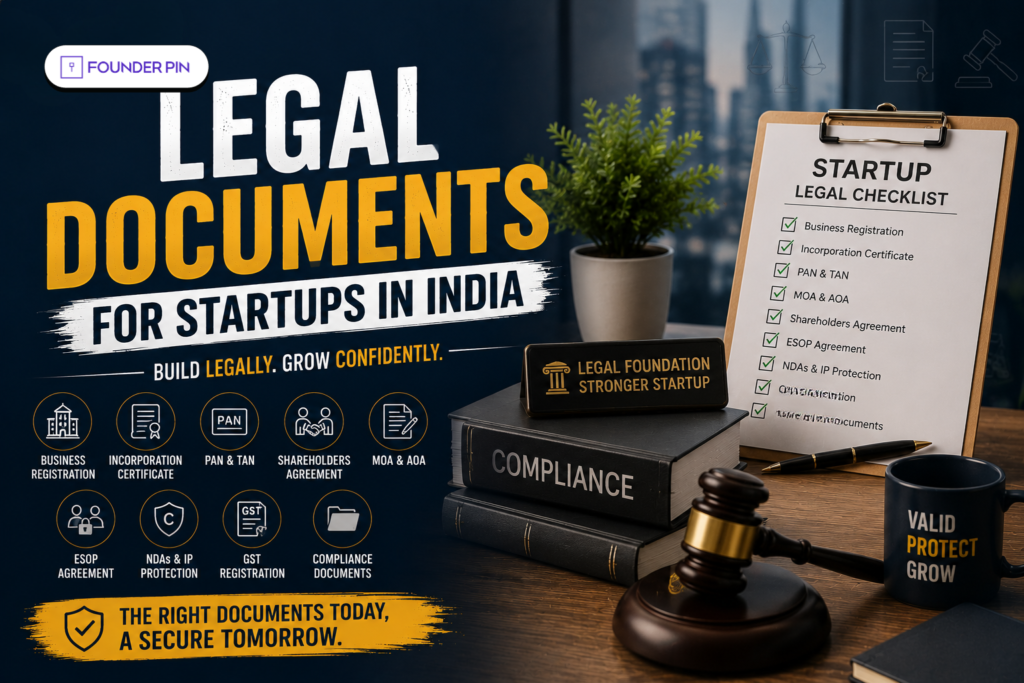
Starting a business in India involves far more than building a product or acquiring customers. One of the most overlooked yet critical aspects of entrepreneurship is legal documentation. Many startups focus heavily on growth while neglecting the legal foundation required to protect the company, founders, employees, and investors. This is why understanding the importance of Legal Documents for Startups In India is essential from day one.
Startups that plan for long-term growth should also understand government initiatives and compliance frameworks like DPIIT Recognition Guide 2026, which can unlock tax benefits and startup incentives in India.
Proper legal documentation not only ensures compliance with Indian laws but also prevents disputes, protects intellectual property, and builds credibility with investors. Startups that ignore legal structures often face operational challenges, funding issues, and unnecessary legal risks later in their journey.
Legal Documents for Startups In India: The Foundation of a Secure Business
Legal documents serve as the operational backbone of a startup. They define ownership structures, govern relationships, clarify responsibilities, and establish protections for the business. Without these documents, even promising startups can face confusion and conflict.
For founders, legal clarity creates confidence. For investors, it demonstrates professionalism. For employees and partners, it establishes trust and accountability. This is why every startup—regardless of size—must prioritize legal readiness.
This guide covers the 20 most important Legal Documents for Startups In India, along with their key components and business significance.
1. Incorporation Certificate
The incorporation certificate is one of the first and most essential legal documents required for any startup in India. Issued by the Ministry of Corporate Affairs (MCA), this document legally recognizes your company as a registered business entity. Without incorporation, a startup cannot officially operate, open a corporate bank account, raise investment, or sign legal agreements as a company.
The incorporation certificate acts as proof that the company exists under Indian law. Investors and financial institutions often require this document before engaging with startups.
Key Components
- Company Identification Number (CIN): A unique identification number assigned to the company for legal and compliance purposes.
- Company Name and Incorporation Date: Determine the startup’s legal identification and registration schedule.
- Registered Office Address and ROC Details: Confirm the company’s official location and registration authority under Indian law.
2. Memorandum of Association (MOA)
The Memorandum of Association defines the scope and objectives of the company. It acts as the company’s constitutional document and outlines the activities the business is legally permitted to undertake. Any activity outside the MOA may be considered legally invalid.
This document is especially important during fundraising and compliance checks because investors want clarity about the startup’s operational focus.
Key Components
- Business Objectives: Define the scope of activities the startup is legally allowed to perform.
- Liability and Capital Clauses: Explain shareholder liability and authorized share capital structure.
- Subscriber Details and Registered State: Identify the initial shareholders and official operational jurisdiction.
3. Articles of Association (AOA)
The Articles of Association govern the company’s internal management. While the MOA defines what the company can do, the AOA explains how the company will function internally.
This document establishes rules related to shareholding, director appointments, meetings, voting procedures, and operational governance.
Key Components
- Director Powers and Duties: Define management authority and operational responsibilities.
- Voting Rights and Meeting Rules: Establish governance procedures for company decisions.
- Share Transfer and Dividend Policies: Clarify ownership transfer processes and profit distribution.
4. Founder Agreement
A founder agreement is one of the most important Legal Documents for Startups In India because it prevents misunderstandings between co-founders. Many startups fail due to internal conflicts rather than external competition.
This agreement clearly defines equity ownership, responsibilities, decision-making authority, and exit conditions. It helps ensure transparency and accountability among founders.
Key Components
- Equity Distribution: Specifies ownership percentages among founders.
- Roles and Responsibilities: Clearly defines operational duties and decision-making authority.
- Vesting and Exit Clauses: Protect long-term commitment and manage founder departures professionally.
Building a startup is not just about legal protection but also about developing the right entrepreneurial mindset and leadership abilities. Founders can also explore 10 Skills Every Founder Must Have to understand the practical skills needed for long-term success.
5. Non-Disclosure Agreement (NDA)
A Non-Disclosure Agreement protects confidential information from unauthorized disclosure. Startups regularly share sensitive business ideas, customer data, financial details, and product information with employees, consultants, and partners.
An NDA helps prevent misuse or leakage of confidential business information.
Key Components
- Confidential Information Definition: Identifies the business information protected under the agreement.
- Confidentiality Obligations: Explains the responsibilities of parties handling sensitive data.
- Breach Penalties and Exceptions: Defines legal consequences and situations where disclosure may be allowed.
6. Employment Agreement
An employment agreement establishes the legal relationship between the company and its employees. It defines job responsibilities, compensation, workplace rules, and confidentiality obligations.
Well-structured employment contracts help startups avoid future disputes and maintain professional workplace standards.
Key Components
- Job Responsibilities and Work Conditions: Clarify employee duties and workplace expectations.
- Salary and Benefits: Define compensation structure and additional employee benefits.
- Termination and Confidentiality Clauses: Protect company interests during and after employment.
7. Offer Letter
An offer letter is issued before onboarding an employee and formally communicates the terms of employment. Although simpler than employment contracts, offer letters are essential for professional hiring processes.
They create clarity between the employer and employee from the beginning.
Key Components
- Job Title and Joining Date: Confirm employment position and official start date.
- Compensation Details: Outline salary structure and offered benefits.
- Reporting Structure and Conditions: Define workplace hierarchy and employment expectations.
8. Intellectual Property Assignment Agreement
Intellectual property is one of the most valuable assets for startups, especially in technology and creative industries. This agreement ensures that any work created by employees, freelancers, or contractors belongs to the company.
Without this agreement, ownership disputes may arise later.
Key Components
- Ownership Transfer Clause: Ensures all created intellectual property belongs to the startup.
- Rights Assignment Terms: Legally transfer innovation rights from creators to the company.
- Employee Obligations: Define confidentiality and ownership responsibilities.
9. Privacy Policy
A privacy policy is legally important for startups operating websites, apps, or digital platforms. It provides users with information regarding the collection, storage, and use of their data.
With increasing focus on data protection, privacy policies also help build customer trust.
Key Components
- Data Collection Practices: Explain what user information is collected and why.
- User Rights and Data Usage: Clarify how data is processed and protected.
- Third-Party Sharing Policies: Describe situations where data may be shared externally.
10. Terms and Conditions Agreement
Terms and Conditions define the rules users must follow while using a company’s services or platform. It protects startups from legal liabilities and clarifies user obligations.
This document is especially critical for SaaS, e-commerce, and app-based businesses.
Key Components
- User Obligations: Define acceptable platform usage and customer responsibilities.
- Payment and Service Terms: Clarify billing structures and service limitations.
- Liability and Suspension Clauses: Protect the startup from misuse and legal risks.
11. Shareholders’ Agreement
A shareholders’ agreement governs the relationship between shareholders and defines their rights and obligations.
This document becomes especially important during fundraising, mergers, or exits.
Key Components
- Ownership and Voting Rights: Define shareholder authority and equity participation.
- Dividend and Profit Policies: Clarify how profits will be distributed.
- Exit and Transfer Restrictions: Manage shareholder exits and ownership transfers.
12. Vendor Agreement
Vendor agreements establish clear terms between startups and suppliers. These agreements reduce misunderstandings regarding pricing, quality, delivery timelines, and responsibilities.
Strong vendor contracts help maintain operational consistency.
Key Components
- Scope of Products or Services: Clearly define vendor deliverables.
- Payment and Delivery Terms: Establish timelines and financial expectations.
- Quality and Termination Clauses: Maintain accountability and performance standards.
13. Service Agreement
Service agreements define the relationship between startups and their clients. They clearly outline deliverables, timelines, pricing, and legal protections.
These agreements are essential for agencies, consultants, freelancers, and SaaS businesses.
Key Components
- Scope of Work and Deliverables: Define expected services and outcomes.
- Pricing and Timelines: Establish payment schedules and project deadlines.
- Liability Clauses: Protect both parties from disputes and legal complications.
14. GST Registration Certificate
The GST Registration Certificate is mandatory for businesses crossing the prescribed turnover threshold under Indian tax law.
This document allows startups to legally collect GST and claim input tax credits.
Key Components
- GSTIN Number: Unique tax identification number under GST law.
- Business and Address Details: Confirm the startup’s registered operational identity.
- Registration Information: Enable legal tax collection and input credit claims.
15. NOC (No Objection Certificate)
A No Objection Certificate (NOC) is an important legal document that confirms that a person, organization, landlord, or authority has no objection to a specific business activity, transaction, or operational use. For startups in India, NOCs are often required for office spaces, regulatory approvals, trade licenses, bank processes, and certain industry-specific operations.
Startups operating from rented properties frequently need an NOC from the property owner for company registration, GST registration, or obtaining licenses. Without a proper NOC, startups may face compliance issues or delays in approvals. This document helps establish legal clarity and prevents future disputes related to permissions or usage rights.
Key Components
- Purpose of the NOC: Clearly explains the activity or permission being granted to the startup.
- Details of Parties Involved: Includes names, addresses, and identification details of both the issuer and recipient.
- Validity and Authorization: Specifies the validity period, conditions, and official authorization signature.
16. ESOP Documentation
Employee Stock Ownership Plans (ESOPs) are widely used by startups to attract and retain talented employees by offering equity incentives. Proper ESOP documentation creates transparency regarding employee ownership rights and future equity benefits. It also helps startups build long-term employee commitment.
Key Components
- Vesting Schedule: Define when employees become eligible for ownership benefits.
- Equity Allocation and Pricing: Explain stock percentage and exercise price.
- Exit Conditions: Clarify rules during resignation or company exits.
17. Compliance Registers and Statutory Records
Indian companies are legally required to maintain statutory registers and compliance records related to directors, shareholders, financial filings, and meetings. These records are essential during audits, investor due diligence, and legal inspections. Failure to maintain them can lead to penalties and compliance issues.
Key Components
- Director and Shareholder Records: Maintain official ownership and management details.
- Meeting Minutes and Financial Records: Document company decisions and compliance activities.
- Statutory Filings: Ensure adherence to Indian corporate regulations.
18. Partnership Agreement
A partnership agreement defines the legal relationship between business partners in LLPs or partnership firms. It helps prevent misunderstandings by clearly outlining ownership percentages, operational responsibilities, and financial obligations. This document is critical for maintaining transparency among partners.
Key Components
- Profit Sharing and Capital Contribution: Define financial participation of each partner.
- Roles and Responsibilities: Clarify operational duties within the business.
- Dispute Resolution and Exit Rules: Reduce partnership conflicts and manage exits smoothly.
19. Investor Term Sheet
An investor term sheet outlines the preliminary terms and conditions of investment before final legal agreements are signed. It helps both investors and founders align expectations regarding valuation, ownership, governance, and funding structure. This document plays a crucial role during fundraising rounds.
Key Components
- Investment and Valuation Details: Define funding amount and startup valuation.
- Equity Allocation: Specify ownership distribution after investment.
- Investor Rights and Governance: Clarify decision-making powers and investor protections.
20. Exit and Dissolution Agreement
Every startup should prepare for future transitions such as acquisitions, founder exits, or business closure. An exit and dissolution agreement defines how liabilities, assets, and responsibilities will be managed during such situations. This document helps avoid legal disputes and ensures smoother transitions.
Key Components
- Exit Conditions and Asset Distribution: Define how ownership and assets will be divided.
- Settlement and Non-Compete Clauses: Prevent future conflicts and competitive misuse.
- Post-Exit Obligations: Clarify legal responsibilities after departure.

20 Profitable Startup Ideas for India …
How Proper Legal Documentation Helps Startups Scale
Well-structured legal systems improve operational efficiency and build investor trust. Venture capital firms and angel investors conduct detailed due diligence before investing, and incomplete documentation can delay or even cancel funding opportunities.
Strong legal foundations also make partnerships, acquisitions, and hiring smoother, allowing founders to focus on growth instead of legal complications.
Best Practices for Managing Legal Documents for Startups In India
Maintain Digital Records
Store all legal documents securely in cloud-based systems for easy access and backup.
Review Agreements Regularly
Business requirements evolve, so agreements should be updated periodically to stay relevant and compliant.
Consult Legal Professionals
Founders should seek professional legal guidance instead of relying solely on generic templates.
Conclusion: Building a Legally Strong Startup
The importance of Legal Documents for Startups In India cannot be overstated. They protect your startup, establish trust, and create a strong foundation for sustainable growth.
Startups that invest early in legal readiness are better equipped to handle scaling challenges, investor expectations, and operational complexities. In the long run, strong legal systems are not just about compliance—they are a competitive advantage.
Ready to Strengthen Your Startup Legally?
At FounderPin, we help startups navigate business growth, compliance, branding, and operational strategy.
Contact us for a consultation and build your startup on a strong legal foundation today.
Frequently Asked Questions (FAQs)
1. What are the most important legal documents for startups in India?
The most important legal documents for startups in India include the incorporation certificate, founder agreement, NDA, employment agreements, shareholder agreements, GST registration, and intellectual property documents. These documents help startups maintain legal compliance, protect business interests, and build investor confidence.
2. Why are legal documents important for startups in India?
Legal documents are important because they define ownership, responsibilities, operational rules, and legal protections for the startup. Proper documentation helps prevent disputes, ensures compliance with Indian laws, and improves credibility with investors, employees, and clients.
3. What is a founder agreement in a startup?
A founder agreement is a legal document that outlines the roles, responsibilities, equity ownership, decision-making rights, and exit clauses among co-founders. It helps avoid misunderstandings and protects the startup from internal conflicts in the future.
4. Do startups in India need an NDA?
Yes, startups in India should use a Non-Disclosure Agreement (NDA) to protect confidential business information, product ideas, customer data, and intellectual property when dealing with employees, investors, vendors, or partners.
5. Which legal documents are required for startup funding in India?
For startup funding in India, important legal documents include incorporation certificates, shareholder agreements, investor term sheets, compliance records, financial statements, and intellectual property agreements. Investors usually review these documents during due diligence before investing.