
1. Byju’s — When hyper-growth became financial distress

Key details:
Founder: Byju Raveendran
Startup: Think & Learn, popularly known as Byju’s
Founded: 2011
Industry: Edtech
Outcome: Entered corporate insolvency proceedings in 2024
Major issues: Debt obligations, financial distress, governance concerns and an aggressive expansion strategy.
Why did Byju’s struggle?
Byju’s became one of India’s most valuable startups after rapidly expanding through acquisitions and building a huge education business.
However, the company later faced serious financial and governance problems. The NCLT admitted the insolvency petition against Think & Learn in July 2024, beginning the corporate insolvency resolution process. The case has continued through Indian courts and tribunals.
This makes Byju’s different from a simple startup shutdown. The company entered a formal insolvency process, so calling it “dead” would oversimplify its current legal position.
Founders should also understand how startup funding works before relying heavily on external capital. Read our guide on How to Apply for Startup India Seed Fund and Get Up to ₹50 Lakhs to understand the eligibility and funding structure.
Business lesson
Growth should not outrun financial controls.
A founder needs to understand debt, cash flow, acquisition economics and governance just as carefully as revenue and user growth.
2. Dunzo — When hyperlocal ambition met brutal economics

Key details:
- Founders: Kabeer Biswas, Dalvir Suri, Ankur Aggarwal, Mukund Jha
- Startup: Dunzo
- Founded: 2015
- Industry: Hyperlocal delivery and quick commerce
- Outcome: Operations shut down in 2025
- Major issues: Cash burn, brutal competition, restructuring, funding troubles
Why did Dunzo fail?
Dunzo started out as a hyperlocal delivery service — the kind that would grab you anything from a phone charger to lunch. Over time, it pushed hard into quick commerce, building out a dark-store model to chase that same fast-delivery promise at scale.
Money wasn’t the problem, at least not early on. Dunzo raised serious capital, including a $240 million round led by Reliance Retail back in 2022. But things went south from there — financial pressure kept mounting, layoffs followed, and operational cracks started showing. Eventually, Reliance wrote off its entire $200 million stake in Dunzo in its FY2025 annual report, which said a lot about where things stood.
Industry reporting pointed to two things behind the collapse: brutal competition in quick commerce, and the sheer cost of keeping fast-delivery infrastructure running.
Business lesson
Fast delivery alone doesn’t fix broken economics. Founders need to actually understand their contribution margins and cash burn before they scale an expensive operating model across city after city — speed means nothing if every delivery loses money.
3. Koo — A homegrown social network that could not secure enough runway

Key details:
- Founders: Aprameya Radhakrishna, Mayank Bidawatka
- Startup: Koo
- Founded: 2020
- Industry: Social media
- Outcome: Shut down in July 2024
- Funding: More than $60 million
- Major issues: Funding shortage, expensive tech infrastructure, failed acquisition talks
Why did Koo fail?
Koo billed itself as an Indian alternative to Twitter, built with real emphasis on regional languages — something Twitter had never quite figured out.
The app got a real boost during the friction between Twitter and Indian authorities, and investors took notice. Tiger Global, Accel, and others poured in more than $60 million. But acquisition talks that seemed promising eventually collapsed, and the founders were candid about it — funding got harder to come by, and keeping the tech running cost more than expected.
By July 2024, Koo announced it was shutting down for good.
Business lesson
Growing your user base only matters if you can turn all that attention into an actual business. A large audience isn’t a substitute for revenue, funding, or a real path to profitability — sooner or later, that gap catches up with you.
4. BluSmart — How governance risk can destroy an operating business
Key details:
- Founders: Anmol Singh Jaggi, Puneet Singh Jaggi
- Startup: BluSmart
- Founded: 2019
- Industry: Electric mobility
- Outcome: Operations halted in 2025
- Major issues: Financial and governance crisis tied to its promoter group, along with funding troubles
Why did BluSmart fail?
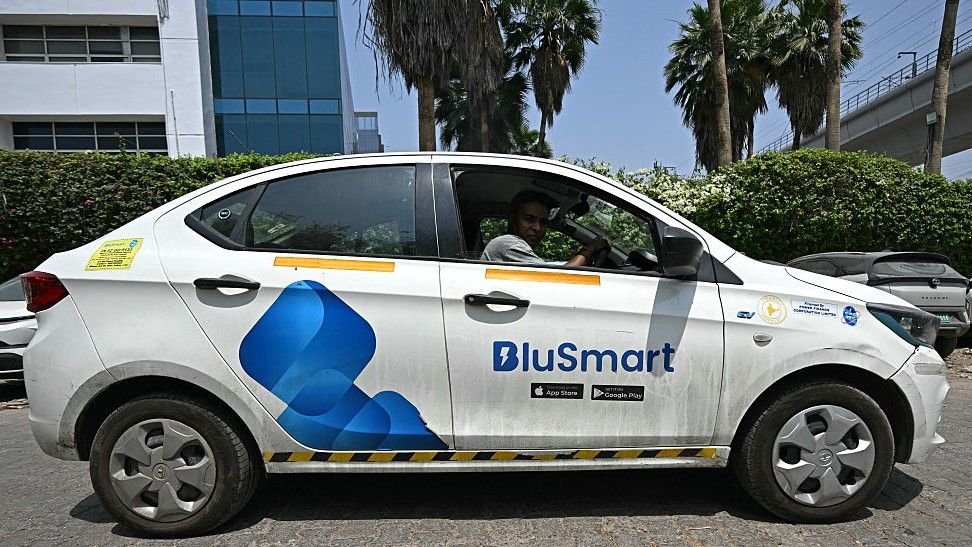
BluSmart built its whole identity around all-electric ride-hailing, and for a while, it looked like a genuine challenger to Uber and Ola.
Then, in April 2025, SEBI stepped in with interim action against the promoters of Gensol Engineering — who also happened to be BluSmart’s co-founders — over allegations of financial misconduct and fund diversion. Almost immediately, BluSmart’s ride services stopped being available, and the company began winding down operations.
What this case really shows is how tightly connected corporate structures can drag down an otherwise operating business the moment governance falls apart.
Business lesson
Governance isn’t just paperwork sitting in a drawer — it’s part of the actual business model. Investors, employees, lenders, customers, all of them are counting on founders to keep financial and governance controls genuinely strong, not just technically compliant.
5. GoMechanic — When financial reporting destroys investor confidence

Key details:
- Founders: Kunal Kumar, Amit Bhasin, Rishabh Kewalramani, Kushal Karwa
- Startup: GoMechanic
- Founded: 2016
- Industry: Automotive services
- Outcome: Acquired by a Lifelong Group-led consortium in 2023
- Major issues: Financial reporting problems, governance failures
Why did GoMechanic fail?
GoMechanic built a tech-enabled network for car servicing and, for a while, had major investors genuinely excited about it.
Then in 2023, everything shifted. The founders came forward and admitted to serious problems in their financial reporting — a real gut-punch to investor trust. What followed was almost inevitable: investors pushed for a sale, and a consortium led by Lifelong Group ended up acquiring the struggling company.
So the company didn’t just vanish. But its story as an independent startup ended through what was essentially a distressed acquisition, not the exit anyone had planned for.
Business lesson
Trust is arguably a startup’s most valuable asset, full stop. Once a company starts taking institutional money, accurate reporting and honest communication with investors stop being optional — they become the price of staying in the game.
6. Stayzilla — Growth metrics cannot replace cash flow

Key details:
- Founders: Yogendra Vasupal, Sachit Singhi, Rupal Yogendra
- Startup: Stayzilla
- Founded: 2007
- Industry: Travel and homestays
- Outcome: Operations suspended in 2017
- Funding: About $33 million
- Major issues: Working capital, cash flow, unsustainable growth
Why did Stayzilla fail?
At its peak, Stayzilla was genuinely massive — more than 55,000 accommodation listings spread across 4,500 towns. It had also pulled in around $33 million in funding along the way.
But somewhere in that growth story, things went wrong. Founder Yogendra Vasupal later admitted the company had gotten too fixated on metrics like GMV and room nights, while losing track of something far more basic — actual cash flow and working capital.
Operations were suspended in February 2017.
Business lesson
Vanity metrics have a way of masking real financial trouble. GMV, downloads, user counts — they can look great on a slide deck, but founders eventually have to answer a much harder question: can this business actually generate sustainable cash, or is it just growing on paper?
7. TinyOwl — Food delivery before the economics were ready
Key details:
- Founders: Gaurav Choudhary and the founding team
- Startup: TinyOwl
- Founded: 2014
- Industry: Food delivery
- Funding: More than $27 million
- Outcome: Operations were sharply cut back in 2016; the business later became part of Runnr
- Major issues: Logistics costs, heavy competition, operational strain
Why did TinyOwl fail?
TinyOwl jumped into India’s booming food-delivery space early, expanding fast to 11 cities.
The problem was, food delivery turned out to be expensive to run properly — logistics costs piled up, and competition only got fiercer. According to TechCrunch, the company stopped service in most cities by May 2016, after months of operational trouble and rounds of layoffs.
What happened at TinyOwl says a lot about just how hard it was for early food-delivery startups to juggle delivery costs, keep restaurants happy, and still acquire customers affordably — three things that pulled in different directions at once.
Business lesson
Demand existing isn’t the same as a business working. Operational complexity alone can sink a startup, even when customers clearly want what you’re selling. Before chasing new cities, prove the model actually holds up in one market first.
8. PepperTap — Discounts cannot create sustainable demand
Key details:
- Founders: Navneet Singh, Milind Sharma
- Startup: PepperTap
- Founded: 2014
- Industry: Online grocery delivery
- Outcome: Grocery operations shut down in 2016
- Major issues: Heavy discounting, high customer-acquisition costs, operational complexity, cash burn
Why did PepperTap fail?
PepperTap rode India’s online grocery boom to fast growth, but never quite figured out how to make individual orders actually profitable.
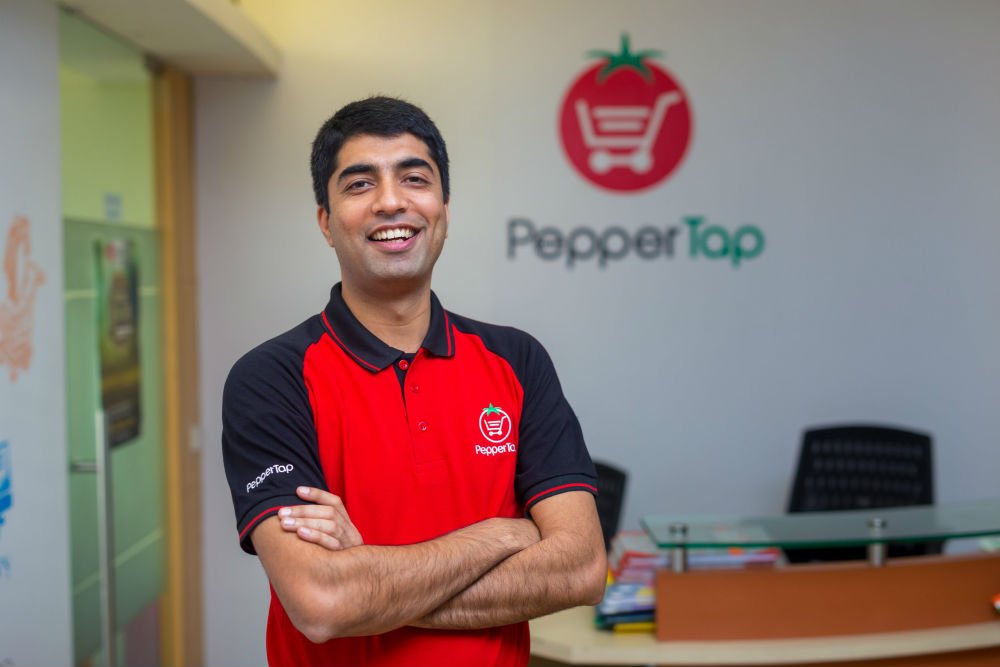
Co-founder Navneet Singh was fairly blunt about it later — the company was losing money on every single order. Keeping up logistics capacity and running discounts to win customers just made the cash burn worse and worse.
Eventually, PepperTap shut down its grocery-delivery business entirely and pivoted toward logistics instead.
Business lesson
Growing revenue doesn’t mean much if every transaction is a loss. Startups can absorb losses while scaling — that’s normal, even expected — but founders still need a credible plan for how contribution margins actually improve over time. Growth without that plan is just burning faster.
9. Doodhwala — A useful idea that could not secure enough runway
Key details:
Startup: Doodhwala
Parent company: Banger Tech
Founded: 2015
Industry: Milk and grocery delivery
Outcome: Delivery operations stopped in 2019
Major issue: Difficulty sustaining the business and raising further capital.
Why did Doodhwala fail?
Doodhwala built a subscription-style milk and daily-essentials delivery service and operated in cities including Bengaluru, Hyderabad and Pune.
In October 2019, the company suspended delivery services and handed operations to Freshtohome. At the time, Doodhwala had last raised $2.2 million from Omnivore.
The case shows how businesses with recurring demand can still struggle if margins, logistics and funding do not align.
Business lesson
A recurring customer need does not automatically create a recurring profit.
Founders must calculate delivery costs, customer acquisition costs and margins at the order level.
10. Koinex — When regulation changed the operating environment

Key details:
Founder: Rahul Raj and founding team
Startup: Koinex
Founded: 2017
Industry: Cryptocurrency exchange
Outcome: Shut down in 2019
Major issues: Banking restrictions and regulatory uncertainty.
Why did Koinex fail?
Koinex became one of India’s prominent cryptocurrency exchanges before shutting down in June 2019.
Co-founder Rahul Raj cited the lack of banking support and regulatory uncertainty as major obstacles. The company said the closure of bank accounts holding user deposits had made operating the digital-asset business extremely difficult.
This is an important example because the company’s problem was not simply customer demand. The regulatory and banking environment directly affected its ability to operate.
Business lesson
Regulatory risk should be treated as a core business risk.
Fintech, crypto, lending, gaming and other regulated startups need contingency plans for changes in policy.
Why do startups fail in India?
The biggest startup failures rarely have just one cause. Usually, several weaknesses appear at the same time.
The most common reasons include:
- Poor product-market fit
- Unsustainable unit economics
- Excessive cash burn
- Over-expansion
- Dependence on continuous fundraising
- Weak financial controls
- Governance problems
- High customer-acquisition costs
- Intense competition
- Regulatory changes
India’s official Startup India programme itself documented how the funding environment changed sharply after the 2021 boom. Startup funding rose from $13.7 billion across 820 deals in 2017 to $42 billion in 2021, before the funding environment became much tighter.
More recent shutdown data reinforces the point. The Economic Times reported that around 730 startups shut down in 2025, compared with 3,903 in 2024, while noting that financial strain, regulation and business-model problems affected several prominent companies.
Before scaling, founders need to understand the numbers behind their business. Our guide to 50 Startup Terms Every Founder Should Learn explains important concepts such as CAC, LTV, burn rate, runway, valuation and product-market fit.
The lesson is not that funding is bad. The problem comes when funding becomes the business model.
What can entrepreneurs learn from failed startups in India?
Every startup failure is different, but the strongest lessons are surprisingly consistent.
1. Validate before scaling
Don’t expand into 20 cities because one city looks promising. Prove the economics first.
2. Track unit economics
Know your customer-acquisition cost, contribution margin, retention and payback period.
3. Protect cash
A startup should know exactly how long its current cash can support operations under different revenue scenarios.
4. Don’t confuse growth with progress
Downloads, GMV and users are useful metrics, but they cannot replace sustainable economics.
5. Build governance early
Financial controls become more important—not less important—as funding and company size increase.
6. Plan for a funding slowdown
A company that requires the next funding round to survive is exposed when investors suddenly become cautious.
7. Watch regulation
A business model that works today can become unviable after a regulatory change. Financial and operational discipline should also be supported by proper documentation. See our guide to 20 Legal Documents for Startups in India to understand the key agreements and compliance documents founders may need as they scale.
8. Adapt before the market forces you to
Technology and customer behaviour move quickly. Waiting until the business is already declining can make adaptation far more expensive.
Final Takeaway: What do failed startups in India teach us?
These stories aren’t really about bad ideas — most had real products and real customers.
Byju’s shows what hyper-growth without financial discipline does. Dunzo proves how brutal scaling a cash-hungry delivery model can be. Koo ran out of runway before cracking monetisation. BluSmart shows governance can become existential. GoMechanic makes the case for financial transparency.
Older cases — Stayzilla, TinyOwl, PepperTap, Doodhwala, Koinex — add one more lesson: even good products with real demand can fail if the economics don’t work.
For founders, the goal isn’t avoiding every mistake — that’s impossible. It’s catching warning signs early, before cash runs out or the market shifts.
At FounderPin, we believe failure stories deserve as much attention as success stories. Sometimes the fastest way to learn how to build something that works is studying why something else didn’t. contact FounderPin for a consultation.
FAQs About Failed Startups in India
1. What are some major failed startups in India?
Some notable failed startups in India include Byju’s, Dunzo, Koo, BluSmart, GoMechanic, Stayzilla, TinyOwl, PepperTap, Doodhwala and Koinex. Their outcomes differed—some shut down completely, while others entered insolvency, were acquired or discontinued their original business models.
2. Why do startups fail in India?
Startups can fail because of poor product-market fit, high cash burn, weak unit economics, excessive expansion, funding shortages, intense competition, governance problems and regulatory uncertainty. In many cases, multiple problems occur together rather than one mistake causing the failure.
3. What can entrepreneurs learn from failed startups in India?
The biggest lesson is to focus on sustainable growth rather than growth at any cost. Founders should monitor cash flow, customer acquisition costs, retention, contribution margins and runway while building strong financial and governance controls.
4. Why did Byju’s fail in India?
Byju’s faced severe financial and governance problems after a period of rapid expansion and acquisitions. The company also faced disputes over debt obligations and entered corporate insolvency proceedings in 2024. Its case highlights the risks of scaling faster than financial and operational controls can support.
5. What are the biggest lessons from startup failures in India?
The biggest lessons are to validate the business model before scaling, maintain healthy unit economics, protect cash, avoid excessive dependence on funding and adapt to market or regulatory changes. A startup can have strong funding and rapid user growth but still fail if it cannot build a sustainable business.