5 Term Sheet Red Flags Every Indian Founder Must Know Before Signing
Table of Contents
Toggle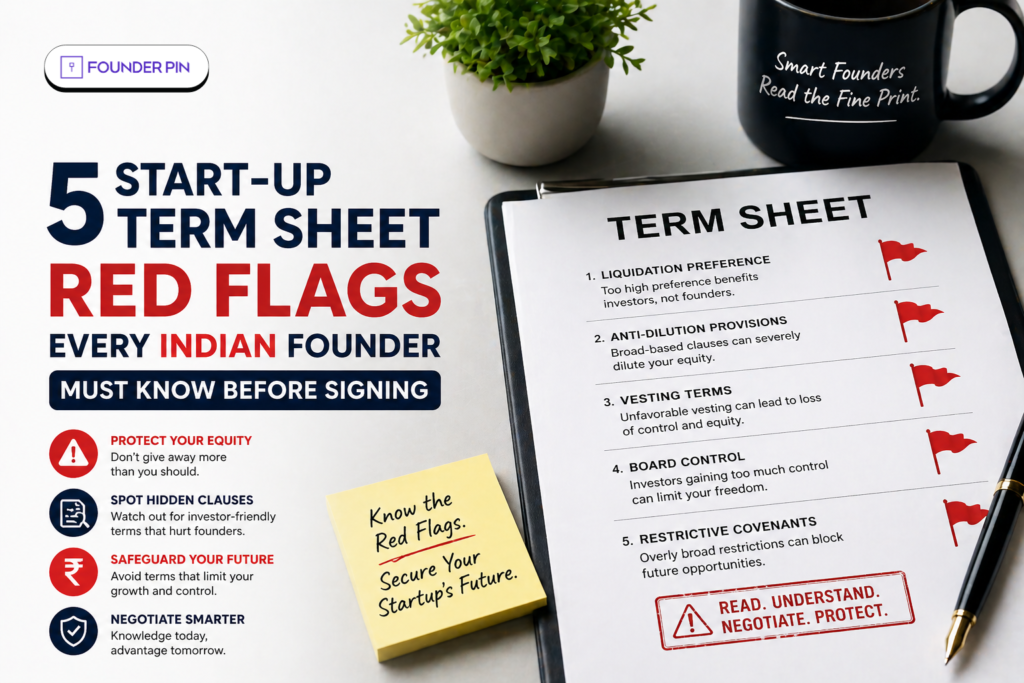
At FounderPin, we’ve seen founders celebrate funding wins—only to realize later that the terms they agreed to limited their growth, control, or future fundraising ability. A startup term sheet is not just a formality; it defines the long-term relationship between founders and investors.
In India’s fast-growing startup ecosystem, where early-stage deals have surged and competition for capital is intense, founders often rush into signing term sheets. However, even a single unfavorable clause can impact ownership, decision-making, and exit outcomes. Understanding these risks is critical before putting pen to paper.
What Is a Startup Term Sheet and Why It Matters
Defining a Startup Term Sheet
A startup term sheet is a non-binding document outlining the key terms and conditions of an investment deal. It typically covers valuation, equity distribution, investor rights, and governance structure. While it may seem preliminary, most clauses eventually make their way into final agreements.
The Cost of Ignoring Red Flags
Studies and industry insights suggest that founders who overlook term sheet clauses often face 20–40% higher dilution over multiple funding rounds. More importantly, restrictive terms can limit strategic flexibility, making it harder to pivot, raise future capital, or exit successfully.
Red Flag 1 – Excessive Liquidation Preference
What It Means
Liquidation preference determines how proceeds are distributed during an exit. A standard clause is 1x non-participating preference, meaning investors get their money back before others.
Why It’s Dangerous
Problems arise when investors demand multiple liquidation preferences (e.g., 2x or 3x) or participating preferences. This can significantly reduce founder payouts during exits. For example, in a moderate exit scenario, founders may receive little to no returns despite building the company.
Red Flag 2 – Overly Aggressive Anti-Dilution Clauses
Understanding Anti-Dilution
Anti-dilution clauses protect investors if the company raises funds at a lower valuation in the future. The two main types are full ratchet and weighted average.
The Risk for Founders
Full ratchet anti-dilution can heavily penalize founders by drastically reducing their ownership in down rounds. Data suggests that startups with aggressive anti-dilution clauses often experience founder dilution spikes of up to 30% in subsequent rounds.
Red Flag 3 – Founder Vesting Reset or Unfair Terms
What Founder Vesting Means
Founder vesting ensures that founders earn their equity over time, typically across 3–4 years. This aligns long-term commitment with ownership.
Hidden Risks
Investors may push for vesting resets or extended vesting periods, even for founders who have already built the company. This can lead to situations where founders lose significant equity if they exit early, reducing motivation and control.
Red Flag 4 – Excessive Investor Control Rights
Types of Control Clauses
Control rights include board seats, veto rights, and decision-making authority on key business matters such as hiring, fundraising, and acquisitions.
Why It Matters
While some level of investor control is standard, excessive rights can limit a founder’s ability to operate independently. Founders may need investor approval for routine decisions, slowing down execution and innovation.
Red Flag 5 – Restrictive Exit and Drag-Along Clauses
Understanding Exit Clauses
Drag-along rights allow majority shareholders to force minority shareholders to sell during an acquisition. These clauses are designed to streamline exits.
Potential Downsides
If structured unfairly, drag-along clauses can force founders to sell at unfavorable terms. In some cases, founders may be compelled to exit earlier than planned, sacrificing long-term value for short-term gains.
Real Data Insights on Startup Term Sheet Risks
Founder Dilution Trends
In India, founders typically own 15–25% of their company by Series B, depending on initial term sheet conditions. Poorly negotiated early terms are a major contributor to excessive dilution.
Impact on Future Funding
Investors in later rounds often review earlier agreements. Unfavorable clauses can deter new investors or lead to renegotiations, delaying funding and affecting valuations.
How to Negotiate a Better Startup Term Sheet
Seek Legal and Financial Advice
Founders should always consult experienced legal advisors before signing any term sheet. Professional guidance can help identify hidden risks and negotiate better terms.
Focus on Long-Term Outcomes
Instead of optimizing for immediate valuation, founders should evaluate how terms will impact future rounds, control, and exit scenarios.
Benchmark Against Market Standards
Understanding standard terms in the Indian startup ecosystem can help founders push back against unreasonable demands. For example, 1x non-participating liquidation preference is widely accepted.
Actionable Checklist Before Signing a Startup Term Sheet
Key Questions to Ask
Before signing, founders should evaluate whether the terms:
- Allow flexibility for future fundraising
- Maintain reasonable founder ownership
- Balance investor protection with founder control
Taking the time to review these factors can prevent costly mistakes.
Conclusion: Protecting Your Startup’s Future Starts Here
A startup term sheet is more than a funding document—it’s a blueprint for your company’s future. The wrong terms can limit your upside, reduce control, and create challenges in future funding rounds.
At FounderPin, we believe that informed founders make better decisions. By identifying these red flags early, you can negotiate smarter, protect your equity, and build a stronger foundation for long-term success.
also read
Join the 1 Million Founder Mission
Ready to Pitch? Contact Us for a consultation and let FounderPin help you review, negotiate, and structure deals that protect your interests and maximize your startup’s potential.
Who We Are: Learn more About Our Mission to support the next generation of Indian builders.
Stay Updated: Read our Latest Startup News for weekly ecosystem updates.