Startup Fundraising Readiness: Signs That Your Startup Is Not Ready to Raise Funds
Table of Contents
Toggle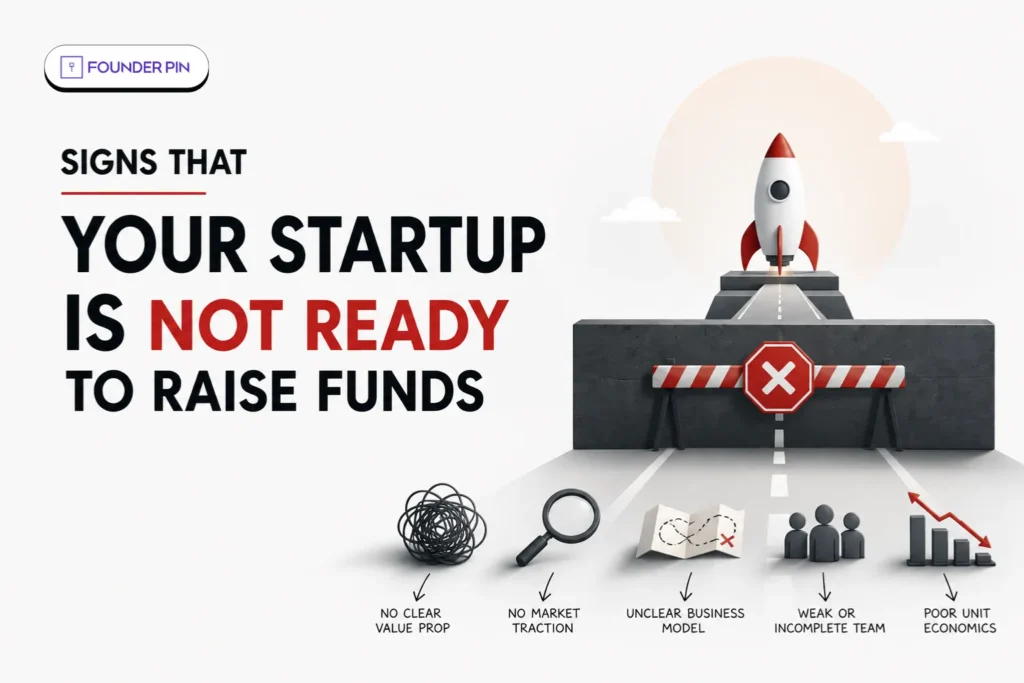
Key Takeaways
- Startup fundraising readiness is about proving your startup can grow, not just having a great idea or product.
- Investors look for market validation, customer traction, a scalable business model, and a capable founding team before committing capital.
- Common fundraising mistakes include raising too early, lacking clear financial metrics, and approaching investors without a solid fundraising strategy.
- A strong startup should have a working product, measurable growth indicators, and a clear plan for how investment will accelerate growth.
- Founders who focus on building investor readiness before fundraising significantly improve their chances of securing funding and favorable investment terms.
Introduction
Many founders assume that raising capital is the natural next step after launching a startup. However, one of the biggest fundraising mistakes startups make is seeking investment before they are truly prepared. Investors are not just evaluating ideas—they are assessing execution, traction, market potential, and team capability.
Understanding Startup Fundraising Readiness is critical because approaching investors too early can lead to repeated rejections, damaged credibility, and lost opportunities. The reality is that investors prefer startups that demonstrate evidence of market demand, clear growth potential, and a strong business foundation.
At FounderPin, we frequently work with founders who ask, “When is a startup ready to raise funds?” The answer depends on several factors. This guide explores the most common signs that your startup may not yet be investment-ready and what you can do to improve your chances of successful fundraising.
Why Startup Fundraising Readiness Matters
Fundraising is not simply about obtaining capital. It is about convincing investors that your startup can generate significant returns.
Investors look for:
- Market validation
- Strong founding teams
- Scalable business models
- Growth potential
- Competitive advantages
- Clear use of funds
Without these fundamentals, even promising startups struggle to secure investment.
Also Read | Startup Equity Distribution: How Much Equity Should First-Time Founders Give Away?
A startup may not be ready to raise investment if it lacks market validation, a scalable business model, or a solid financial strategy. Approaching investors too early can reduce your chances of securing funding. Instead, focus on refining your product, validating customer demand, and building a strong business foundation before pitching.
Sign 1: You Have Not Validated the Market
No Evidence of Customer Demand
One of the clearest signs your startup is not ready to raise funds is the absence of market validation.
Many founders believe their idea is valuable because friends or colleagues like it. Investors require stronger proof.
Examples of validation include:
- Paying customers
- User signups
- Pilot programs
- Product usage data
- Customer feedback
Without validation, investors view the startup as a high-risk opportunity.
Solution Without a Proven Problem
Investors fund solutions to meaningful problems.
If your startup cannot clearly demonstrate a real customer pain point, fundraising becomes significantly more difficult.
Sign 2: Your Product Is Not Ready
MVP Is Still Incomplete
A common fundraising mistake for startups is attempting to raise capital before developing a Minimum Viable Product (MVP).
While some exceptional founders raise pre-product funding, most investors want evidence that the product works.
An MVP helps demonstrate:
- Technical feasibility
- Customer interest
- Product-market fit potential
Frequent Product Changes
If your core offering changes every few weeks, it may indicate that your startup is still searching for direction.
Investors prefer businesses with a clear product vision and roadmap.
Sign 3: No Traction or Growth Metrics
Investors Want Proof
Traction reduces investment risk.
Metrics investors often evaluate include:
- Revenue growth
- Active users
- Customer retention
- Monthly recurring revenue (MRR)
- Conversion rates
If you cannot show measurable progress, investors may advise you to focus on execution before fundraising.
Growth Story Is Missing
Startups do not need massive revenue to raise funds.
However, they should demonstrate momentum and positive indicators that growth is possible.
Sign 4: You Don’t Have a Clear Business Model
Revenue Generation Is Unclear
Investors want to understand how your startup will make money.
Questions they commonly ask include:
- Who pays for the product?
- What is the pricing model?
- How scalable is the revenue stream?
- What are the margins?
If these questions remain unanswered, fundraising conversations become difficult.
Unit Economics Are Weak
Strong startups understand their:
- Customer acquisition cost (CAC)
- Customer lifetime value (LTV)
- Gross margins
- Revenue projections
A lack of financial understanding signals poor startup investment readiness.
Sign 5: Your Founding Team Has Major Gaps
Missing Critical Skills
Investors often invest in teams before products.
If your startup lacks expertise in technology, sales, marketing, or operations, investors may question execution capabilities.
Unclear Roles and Responsibilities
Founders should clearly define responsibilities.
Confusion within the leadership team creates concerns about future decision-making and scalability.
Sign 6: Your Startup Fundraising Checklist Is Incomplete
Missing Essential Documents
Before approaching investors, startups should prepare:
- Pitch deck
- Financial projections
- Cap table
- Business plan
- Market research
- Legal documentation
A lack of preparation can quickly undermine investor confidence.
No Fundraising Strategy
Some founders raise money simply because competitors are doing so.
Instead, fundraising should support specific growth objectives and milestones.
Sign 7: You Cannot Explain Why You Need Funding
Capital Without a Plan
One of the biggest red flags for investors is a founder who cannot explain how funds will be used.
Investors expect clear allocation plans such as:
- Product development
- Hiring
- Marketing
- Market expansion
- Technology infrastructure
Specificity demonstrates maturity and planning.
Startup Investment Readiness Checklist
Before starting investor outreach, ensure your startup can confidently answer the following questions:
- Have we validated customer demand?
- Do we have a working product?
- Can we demonstrate traction?
- Is our business model proven?
- Do we understand our financial metrics?
- Is our leadership team complete?
- Do we have fundraising materials ready?
- Can we clearly explain how funding will accelerate growth?
If several answers are “no,” it may be wise to focus on strengthening the business first.
When Is a Startup Ready to Raise Funds?
The ideal time to raise funds is when:
- Market demand is validated
- Product-market fit is emerging
- Growth metrics are improving
- The team can execute effectively
- Capital will accelerate momentum
Fundraising works best when investors see evidence that the business is already moving in the right direction.
Conclusion
Understanding Startup Fundraising Readiness can save founders significant time, effort, and frustration. Raising capital too early often leads to rejection, while waiting until key fundamentals are in place dramatically improves fundraising outcomes.
Rather than focusing solely on securing investment, founders should focus on building a strong business. Investors are naturally attracted to startups that demonstrate traction, validation, and scalable growth potential.
The best fundraising strategy is often simple: become investment-worthy before seeking investment.
Contact FounderPin for Fundraising Guidance
Preparing for fundraising requires more than a great idea. It requires strategic planning, investor readiness, and a compelling growth story.
At FounderPin, we help startups assess fundraising readiness, refine investor materials, and develop effective fundraising strategies.
Contact us for a consultation today and ensure your startup is fully prepared before approaching investors.
Frequently Asked Questions (FAQs)
1. What is startup fundraising readiness?
Startup fundraising readiness refers to a startup’s ability to attract investment by demonstrating market validation, traction, a scalable business model, financial clarity, and a capable team. Investors are more likely to fund startups that have proven demand and a clear growth strategy.
2. When is a startup ready to raise funds?
A startup is typically ready to raise funds when it has validated customer demand, a working product, measurable traction, and a clear plan for using capital to accelerate growth. Investors look for evidence that the business can scale effectively.
3. What are the most common fundraising mistakes for startups?
Common fundraising mistakes include raising capital too early, lacking market validation, having unrealistic financial projections, approaching investors without a strong pitch deck, and failing to explain how the funds will be used to achieve specific milestones.
4. What should be included in a startup fundraising checklist?
A startup fundraising checklist should include a validated business model, customer traction, financial projections, investor-ready pitch deck, cap table, legal documents, market research, and a clear funding strategy. These elements help build investor confidence.
5. How can founders improve their startup investment readiness?
Founders can improve startup investment readiness by focusing on customer acquisition, refining their product, tracking key business metrics, strengthening their team, and creating a compelling growth narrative. Building traction before fundraising significantly increases the chances of securing investment.
SHARE