
Introduction
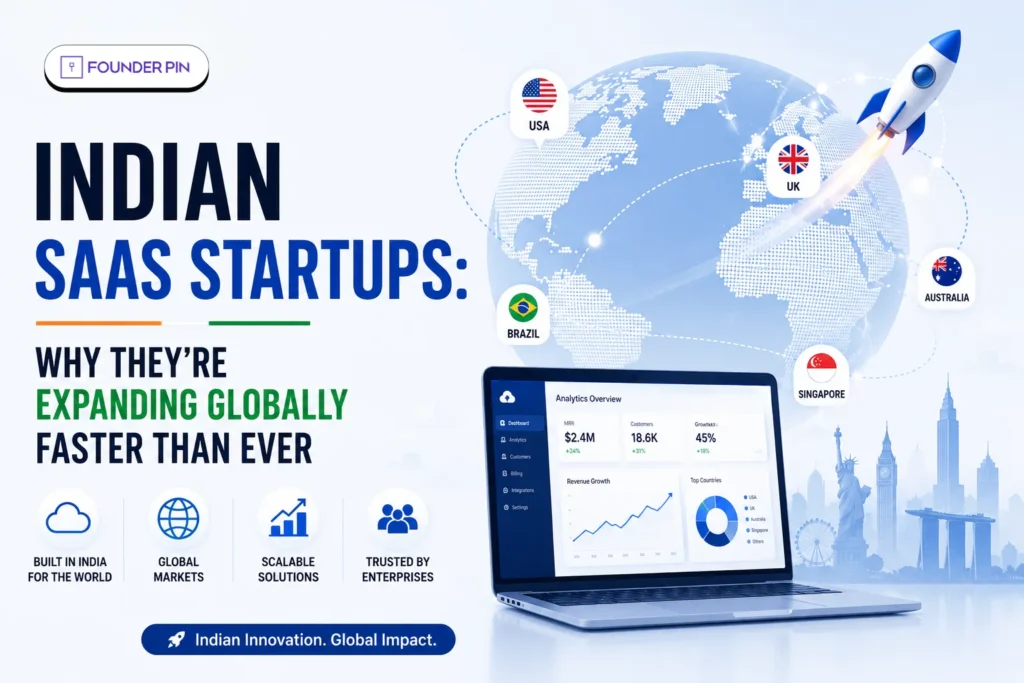
India’s startup ecosystem has evolved far beyond its roots in IT services and outsourcing. Today, Indian SaaS Startups are building software products used by businesses across North America, Europe, Asia-Pacific, and the Middle East.
Companies such as Zoho, Freshworks, Chargebee, Postman, and BrowserStack have demonstrated that globally successful software companies can be built from India. What makes this trend even more remarkable is the speed at which Indian SaaS startups are expanding internationally.
Unlike traditional startups that focused on local markets first, modern SaaS founders are building products for global customers from day one. As a result, the Indian SaaS ecosystem has become one of the most exciting sectors in the country’s startup landscape.
NASSCOM and SaaSBoomi estimate that the Indian SaaS ecosystem will generate US$50 billion in revenue by the end of the decade, making India one of the world’s leading software innovation hubs.
Indian SaaS Ecosystem: By the Numbers
The growth of Indian SaaS startups is supported by strong industry data.
- The Indian SaaS sector generated more than $15 billion in annual revenue in FY24.
- India is home to 1,000+ SaaS companies.
- More than 36 Indian SaaS companies have crossed $100 million in Annual Recurring Revenue (ARR).
- Around 75% of SaaS revenue generated by Indian companies comes from international markets.
- The Indian SaaS market is projected to reach $100 billion by 2035.
- Industry reports suggest the ecosystem could create nearly $1 trillion in economic value by 2030.
These numbers highlight why investors, founders, and global customers are increasingly paying attention to Indian SaaS startups.
The Rise of the Indian SaaS Ecosystem
Over the past decade, India’s SaaS industry has moved from a niche category to a globally recognized technology sector.
Several factors have contributed to this transformation:
- Strong engineering talent
- Growing founder communities
- Improved cloud infrastructure
- Increased investor confidence
- Global demand for software solutions
Industry reports indicate that India now has more than 1,000 SaaS startups, with over 150 companies generating more than $1 million in ARR. This demonstrates the maturity and depth of the Indian SaaS ecosystem.
The Product Mindset Shift
One of the biggest reasons behind SaaS growth is a shift from services to products.
Previous generations of Indian technology companies primarily sold services. Today’s founders are focused on creating scalable software products capable of serving thousands of customers worldwide.
This product-first mindset has fundamentally changed the trajectory of Indian startups.
Why Indian SaaS Startups Are Expanding Globally Faster Than Ever
Indian SaaS startups are rapidly building a strong presence in international markets. By combining affordable talent, digital-first sales strategies, and innovative products, these companies are competing with some of the world’s biggest software providers. Unlike many traditional businesses, Indian SaaS companies often design their products for global customers from the very beginning.
Industry reports estimate that India’s SaaS market could reach between $50 billion and $70 billion by 2030. Today, many Indian SaaS businesses already generate 80–90% of their revenue from overseas markets, particularly the United States and Europe.
Key Factors Driving Global Growth
1. Access to Skilled Engineering Talent
India produces more than 1.5 million engineering graduates every year, giving startups access to a large pool of skilled developers, product engineers, and AI specialists. Compared to Silicon Valley, companies can build high-quality software at significantly lower costs, allowing them to innovate faster with greater capital efficiency.
2. Digital-First Sales Model
Remote selling has transformed how SaaS companies acquire customers. Today, founders can demonstrate products, close enterprise deals, and support international clients through virtual meetings without opening expensive overseas offices. Cities such as Bengaluru and Chennai have become global SaaS hubs serving customers across multiple countries.
3. Product-Led Growth (PLG)
Many Indian SaaS startups follow a Product-Led Growth (PLG) strategy. Instead of relying on large sales teams, they allow users to sign up, explore, and adopt their products independently. This self-service approach removes geographical barriers and helps businesses scale much faster.
4. Cost-Efficient Operations
Indian startups operate with lower infrastructure and operating costs than many Western competitors. This enables them to offer competitive pricing, invest more in product development, and remain financially disciplined even during uncertain economic conditions.
Managing expenses effectively is essential, especially when determining how much runway a startup should have before pursuing aggressive expansion plans.
5. AI-Powered Innovation
Artificial intelligence has become a major growth driver for Indian SaaS companies. Instead of simply providing software to manage tasks, many startups now build AI-powered platforms that automate workflows, improve decision-making, and complete business processes with minimal human intervention.
6. Learning from Successful SaaS Leaders
Companies such as Zoho, Freshworks, Postman, and Chargebee have created a proven roadmap for global expansion. Their success has inspired a new generation of founders, while also creating an experienced talent pool and practical strategies that newer startups can adopt.
Indian SaaS vs. Western SaaS Companies
 Indian SaaS Startups
 Western SaaS Companies
Success Stories Driving the SaaS Revolution
Zoho
Founded by Sridhar Vembu in 1996, Zoho is one of India’s most successful SaaS companies.
What makes Zoho unique is that it achieved global scale while remaining largely bootstrapped. Today, the company serves customers across more than 150 countries and generates significant global revenue.
Freshworks
Founded by Girish Mathrubootham in 2010, Freshworks became one of the first Indian SaaS companies to list on NASDAQ.
Its success demonstrated that Indian software startups could compete successfully on the global stage.
Postman
Founded by Abhinav Asthana, Postman evolved from a simple developer tool into one of the world’s most widely used API platforms.
Its global adoption has inspired a new generation of SaaS founders across India.
Why Investors Are Bullish on Indian SaaS Startups
Investor interest in Indian SaaS continues to grow rapidly.
The SaaS business model offers:
- Recurring revenue
- High scalability
- Strong margins
- Global reach
- Predictable growth
Strong Funding Momentum
Recent industry reports show that private equity investments in India’s enterprise SaaS sector exceeded $1.3 billion during the first seven months of 2025.
This reflects growing confidence in India’s ability to produce world-class software companies.
Challenges Indian SaaS Startups Must Overcome
Despite strong momentum, challenges remain.
These include:
- Rising customer acquisition costs
- Global competition
- Data privacy regulations
- Talent retention
- International sales expansion
While Indian founders excel at product development, building globally recognized brands remains an important challenge for many startups.
The Future of the Indian SaaS Ecosystem
The future looks exceptionally bright for Indian SaaS startups.
Industry projections suggest that the Indian SaaS market could grow from approximately $20 billion today to nearly $100 billion by 2035.
Some founders are even building highly scalable businesses with minimal teams, supporting the concept of the One-Person Billion-Dollar Company powered by automation and AI.
A Trillion-Dollar Opportunity
Industry leaders believe the Indian SaaS ecosystem could create nearly $1 trillion in economic value by 2030 while generating hundreds of thousands of high-skilled jobs.
Several factors support this optimistic outlook:
- Continued cloud adoption
- Growing AI integration
- Strong engineering talent
- Increasing investor participation
- Rising global demand for software
As these trends continue, India is well positioned to become one of the world’s leading SaaS hubs.
Conclusion
The success of Indian SaaS Startups is no longer a future prediction—it is happening today. With over 1,000 SaaS companies, billions of dollars in annual revenue, and customers spread across the globe, India’s SaaS sector has become a powerful force in the global technology industry.
Driven by strong talent, cost efficiency, global ambition, and AI-powered innovation, Indian startups are expanding internationally faster than ever before. As the Indian SaaS ecosystem continues to mature, the next generation of global software leaders may very well emerge from India.
Contact FounderPin for Startup Growth and Fundraising Support
Building a successful SaaS startup requires more than a great product. It requires the right growth strategy, investor readiness, market positioning, and expansion plan.
At FounderPin, we help startups navigate fundraising, growth strategy, business planning, and global expansion opportunities.
Contact us for a consultation today and discover how to position your startup for long-term success in the global SaaS market.
Frequently Asked Questions About Indian SaaS Startups
Why are Indian SaaS startups expanding globally so quickly?
Indian SaaS startups are expanding globally because they build products for international markets from the beginning. Access to skilled engineering talent, lower operating costs, cloud-based distribution, and strong product innovation enable Indian companies to compete effectively with global software providers.
What makes the Indian SaaS ecosystem attractive to investors?
The Indian SaaS ecosystem attracts investors due to its recurring revenue model, capital-efficient growth, global customer base, and scalability. Many Indian SaaS startups achieve strong revenue growth while maintaining lower costs, making them attractive long-term investment opportunities.
Which are the most successful Indian SaaS startups?
Some of the most successful Indian SaaS startups include Zoho, Freshworks, Postman, Chargebee, BrowserStack, and Druva. These companies have built globally recognized software products and serve customers across multiple countries and industries.
How large is the Indian SaaS market expected to become?
Industry estimates suggest that the Indian SaaS market could reach $100 billion by 2035. Continued cloud adoption, artificial intelligence integration, digital transformation, and increasing global demand for software solutions are expected to drive this growth.
What challenges do Indian SaaS startups face during global expansion?
Indian SaaS startups often face challenges such as rising customer acquisition costs, global competition, data privacy regulations, talent retention, and building strong international brands. Successfully overcoming these challenges is essential for long-term global growth and market leadership.