
Why More Professionals Are Becoming Solopreneurs
Table of Contents
Toggle“Solopreneurs will rise because freelancers will become commodities to utilize.” — Richie Norton
Key Takeaways
- A solopreneurs builds and manages a business independently while maintaining full control and flexibility.
- Technology, remote work, and AI tools have made it easier than ever to start a one-person business.
- Many professionals choose solopreneurship for greater freedom, income potential, and work-life balance.
- Popular solopreneur business models include consulting, coaching, content creation, and digital products.
- Success as a solopreneur depends on strong skills, smart systems, and the ability to adapt and grow.
Introduction
For decades, career success followed a familiar path: secure a stable job, climb the corporate ladder, and eventually move into leadership roles. However, the modern workforce is experiencing a significant shift. More professionals are leaving traditional employment and building businesses on their own terms.
This growing movement has fueled the rise of the Solopreneur—an individual who starts, manages, and grows a business independently. Unlike traditional entrepreneurs who often build teams early, solopreneurs focus on creating profitable and scalable ventures while maintaining operational control.
Advancements in technology, remote work, digital tools, and artificial intelligence have made it easier than ever to launch a successful solopreneur business. As a result, professionals across industries are embracing the freedom, flexibility, and financial potential of running a one-person business.
In this guide, we’ll explore why more professionals are becoming solopreneurs, the key benefits and challenges of solopreneurship, how to become a solopreneur successfully, and why this business model is shaping the future of entrepreneurship.
What Is a Solopreneur?
A solopreneur is someone who owns and operates a business independently. They manage key functions such as marketing, sales, operations, customer relationships, and product development without relying on a large team.
While solopreneurs may outsource specific tasks when necessary, they remain the primary driver of the business.
Solopreneur vs Entrepreneur
The difference between a solopreneur and a traditional entrepreneur lies in scale and structure.
A traditional entrepreneur often focuses on building teams, raising capital, and creating large organizations. A solopreneur, on the other hand, prioritizes independence, flexibility, and sustainable profitability.
Neither model is better—the choice depends on personal goals and business ambitions.
Why More Professionals Are Becoming Solopreneurs
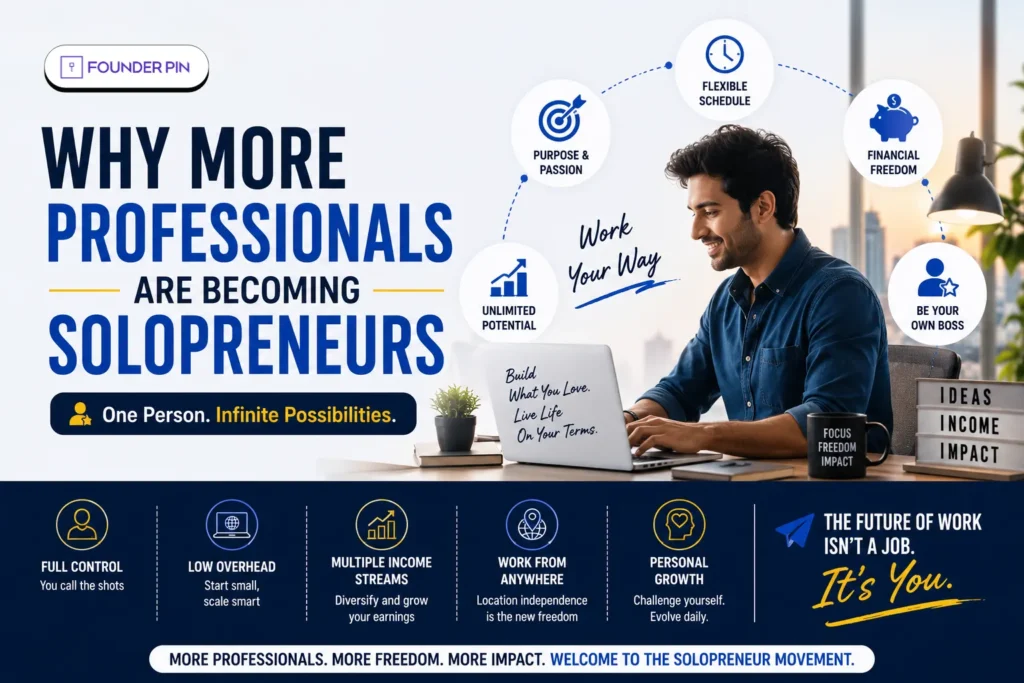
More professionals are choosing solopreneurship because modern technology and AI make it easier than ever to build and manage a successful business independently. Instead of relying on large teams, solopreneurs use digital tools to automate daily tasks, reduce costs, and focus on delivering value to clients. This business model also offers greater flexibility, independence, and control over career growth.
Why Solopreneurship Is Growing
1. Lower Startup Costs
Starting a solo business requires much less investment than launching a traditional company. Solopreneurs can use contractors, freelancers, and cloud-based technologies to run their businesses without the need for costly office space or full-time staff.
2. AI and Digital Tools Increase Productivity
AI-powered platforms help solopreneurs automate tasks such as content creation, marketing, customer communication, invoicing, and project management. This allows one person to achieve the productivity of a much larger team.
The growing use of AI employees and virtual teams is making it easier for solopreneurs to automate operations and scale efficiently.
3. Greater Freedom and Flexibility
Many professionals value the freedom to choose their working hours, clients, and projects. Solopreneurship offers better work-life balance while giving individuals complete control over their careers.
4. Rising Job Uncertainty
Economic uncertainty, layoffs, and inflation have encouraged many professionals to build independent income streams. Running a solo business provides greater financial independence and reduces reliance on traditional employment.
5. Growing Demand for Personalized Services
Customers increasingly prefer working directly with specialists who provide personalized solutions. As a result, by providing knowledge and specialised services, solopreneurs can successfully compete with larger firms and forge closer bonds with their clients.
Advantages of Solopreneurship
1. Complete Independence
Solopreneurs have full control over their business decisions, pricing, work schedule, and long-term vision without relying on partners or stakeholders.
2. Lower Business Costs
Running a solo business eliminates expenses such as employee salaries, office space, and large operational costs, making it easier to start and maintain a business.
3. Faster Decision-Making
Without multiple approvals or management layers, solopreneurs can quickly adapt their products, services, or business strategies to meet changing market demands.
4. Keep All the Profits
Since there are no partners or shareholders, solopreneurs retain 100% of the profits generated by their business.
Challenges of Solopreneurship
1. Risk of Burnout
Managing sales, marketing, finance, customer support, and operations alone can become overwhelming and lead to stress or burnout.
2. Unpredictable Income
Unlike traditional employment, solopreneurs do not receive a fixed salary. Business income depends entirely on their ability to attract clients and deliver work consistently.
3. Working Alone
Running a business independently can sometimes feel isolating. Without a team, solopreneurs must solve challenges and make important decisions on their own.
4. Limited Growth Capacity
Because a solopreneur’s time and energy are limited, business growth can eventually slow down unless they automate processes, outsource tasks, or build scalable systems.
How to Become a Successful Solopreneurs
Becoming a solopreneur means building and running a business on your own. You take on the roles of founder, manager, and employee while using your skills, digital tools, and automation to grow the business. The most effective way to succeed is by solving real problems, validating your ideas early, and creating systems that allow you to scale efficiently.
1. Identify Your Skills and Choose a Niche
Start by evaluating your skills and choosing a niche where you can provide valuable solutions to your target audience.
- Identify challenges that people are willing to pay to solve.
- Choose a specific service or target audience.
- Concentrate on places where you can add special value.
2. Launch a Minimum Viable Offer (MVO)
Instead of spending months creating the perfect product, launch a simple offer to test market demand.
- Start with a consulting package, digital product, or small service.
- Reach out to potential customers directly.
- Share valuable content on platforms like LinkedIn or X to attract your first clients.
3. Build Your Personal Brand
Your personal brand helps establish credibility and attract new opportunities.
- Share your knowledge and industry insights regularly.
- Document your journey and showcase your expertise.
- Network with other creators, founders, and professionals to build relationships and referrals.
4. Use Automation and AI
Technology allows solopreneurs to accomplish more with less effort.
- Use AI tools to create content, manage projects, and improve productivity.
- Automate tasks such as scheduling, invoicing, email marketing, and client onboarding.
- Focus your time on delivering value instead of repetitive administrative work.
5. Transition Gradually
You don’t have to leave your full-time job immediately.
- Start your business as a side hustle.
- Validate your business idea and build a steady income.
- Move to full-time solopreneurship once your business consistently covers your living expenses or you have sufficient savings.
The Solopreneurs Economy Is Growing Faster Than Ever
Recent data shows that solopreneurship is no longer a niche trend. According to a 2026 industry analysis, nearly 29.8 million Americans now operate businesses without employees, collectively generating approximately $1.7 trillion in annual revenue. In fact, 81.9% of all small businesses have zero employees, highlighting the growing popularity of the business-of-one model.
Additionally, the research indicates that this change is being accelerated by technology. Around 73% of solopreneurs use AI for core business operations, allowing individuals to perform tasks that previously required entire teams.
Popular Solopreneur Business Models
Not every business is suitable for a solopreneur. The most successful models often combine expertise with scalability.
Consulting and Advisory Services
Professionals with specialized knowledge can build profitable consulting businesses serving startups, SMEs, and enterprises.
Content Creation and Personal Branding
Creators, writers, educators, and industry experts can monetize audiences through content, sponsorships, and digital products. Many successful solopreneurs also build community-driven businesses that create loyal audiences and recurring revenue streams.
Online Education and Coaching
The growing demand for professional development has created opportunities for coaches, mentors, and educators. Professionals building service-based ventures often focus on AI-proof businesses that rely on trust, expertise, and human relationships.
Digital Product Businesses
Templates, software tools, eBooks, courses, and membership communities allow solopreneurs to generate revenue without directly trading time for money.
Conclusion
The rise of the Solopreneur reflects a broader shift in how people think about work, freedom, and success. Professionals are no longer limited to traditional career paths. With access to digital tools, AI, and global markets, individuals can build profitable businesses independently.
Whether through consulting, coaching, content creation, or digital products, the modern solopreneur business offers flexibility, ownership, and significant growth potential.
For professionals seeking greater control over their careers and financial futures, becoming a solo entrepreneur may be one of the most compelling opportunities of the decade.
Contact FounderPin for Startup and Business Growth Support
Thinking about launching your own business or scaling an existing venture?
At FounderPin, we help founders, solopreneurs, and startups develop growth strategies, improve business models, and prepare for long-term success.
Contact us for a consultation today and discover how to build a sustainable and successful business on your own terms.
SHARE