
Introduction
India’s goal of becoming a global economic powerhouse depends on strong infrastructure. Efficient ports, modern airports, reliable power networks, and advanced logistics are essential for sustainable growth. In addition, digital connectivity and renewable energy are becoming equally important for the country’s future.
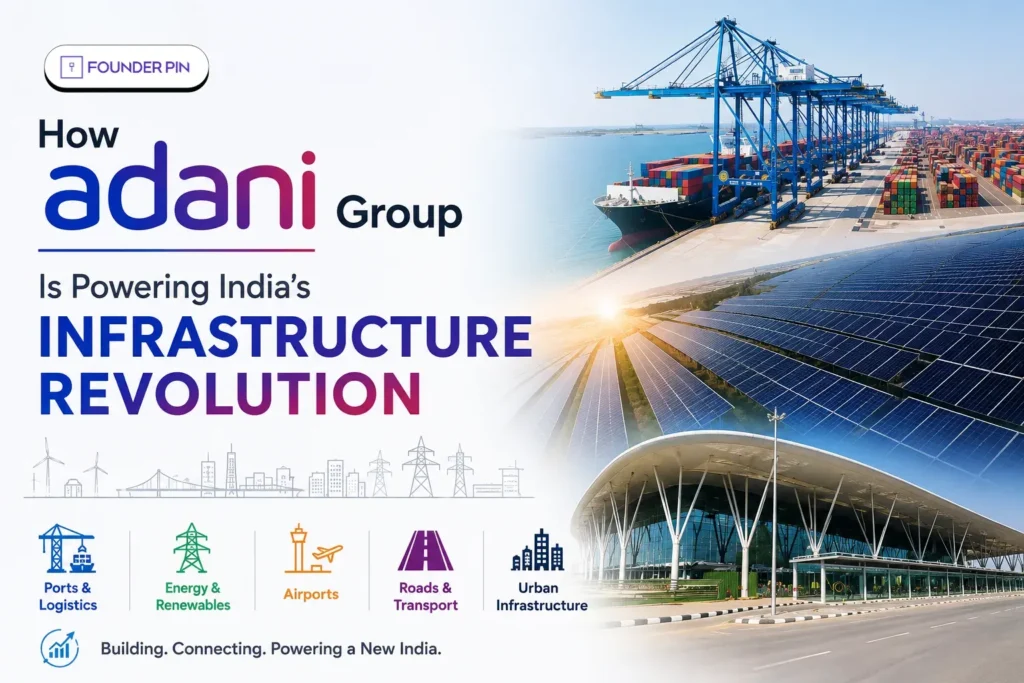
Among the companies driving this transformation, the Adani Group infrastructure ecosystem has become one of India’s most influential contributors. Over the past three decades, the group has expanded from a commodity trading business into a diversified infrastructure conglomerate. To understand how this remarkable journey began, read our detailed Gautam Adani Success Story. Today, it operates across ports, airports, renewable energy, electricity transmission, city gas distribution, logistics, data centres, artificial intelligence infrastructure, and green hydrogen.
This Adani infrastructure revolution is playing a key role in India’s economic development. Moreover, the group’s long-term investments support industrial growth, improve connectivity, and strengthen the country’s energy security.
In this article, you’ll discover how the Adani infrastructure revolution is shaping India’s future. You’ll also explore major Adani Group projects, understand its business strategy, and learn why its infrastructure investments continue to influence India’s long-term growth.
Adani Group Infrastructure: Building India’s Growth Engine
Infrastructure as a Long-Term Strategy
Unlike companies focused on short-term opportunities, the Adani Group has consistently invested in industries that will remain critical for decades.
Rather than operating isolated businesses, the group has created an integrated infrastructure ecosystem where ports support logistics, logistics strengthen manufacturing, energy powers industries, airports improve connectivity, and digital infrastructure enables technological innovation. You can also explore our complete guide to the Adani Business Empire, where every major Adani company and subsidiary is explained in detail.
This interconnected model has become one of the defining strengths of the Adani Group infrastructure strategy.
Massive Investments Driving India’s Infrastructure Revolution
Record Capital Commitments
The scale of the Adani infrastructure revolution is reflected in the group’s unprecedented investment plans.
Some of its major 2026 announcements include:
- A planned US$100 billion investment by 2035 to develop AI-ready digital infrastructure, hyperscale data centres, and advanced technology platforms.
- These investments are expected to catalyse an additional US$150 billion across semiconductor manufacturing, cloud computing, electrical equipment, and digital ecosystems, creating a potential US$250 billion AI economy.
- Development of a 3 GW hyperscale data centre platform by 2030, including large-scale partnerships supporting India’s AI ecosystem.
These investments demonstrate that the group’s vision now extends beyond physical infrastructure into digital infrastructure capable of supporting India’s next phase of economic growth. You can know more about the Adani Group’s ongoing infrastructure initiatives and official announcements by visiting the Adani Group Newsroom.
Enhancing International Trade Through Ports and Logistics
India’s Largest Private Port Network
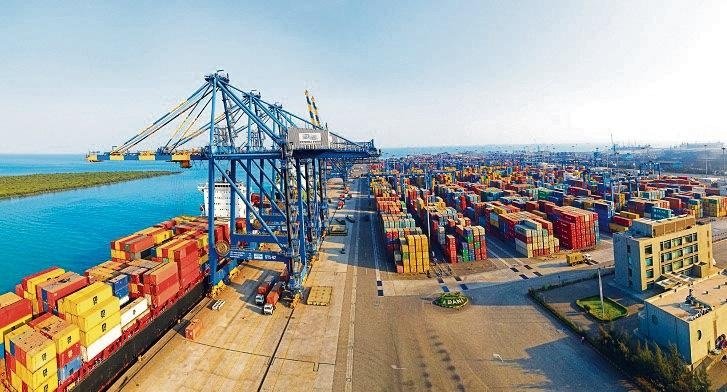
One of the primary contributors to the Adani Group infrastructure ecosystem is the APSEZ area (Adani Ports & Special Economic Zone).
Today, the company manages India’s most extensive commercial port system that facilitates global commerce, exports, imports and logistics, as well as industrial growth.
Recent milestones include:
- Failing to handle more than 500 million tonnes of cargo in FY2025–26.
- The expansion of logistics parks, warehousing facilities, industrial corridors, and multimodal transportation networks persisted.
- The Vizhinjam International Seaport’s first year of operation saw the shipment of over 1 million TEUs, solidifying India’s position as an international transshipment hub.
These initiatives are effective in enhancing supply chain efficiency and decreasing logistics expenses for Indian enterprises.
Airport Infrastructure Connecting a Growing Economy
Expanding India’s Aviation Network
The Adani Group has become one of India’s largest private airport operators.
Its airport strategy focuses on modernising aviation infrastructure while improving passenger experience and regional connectivity.
Major developments include:
- Construction of the Navi Mumbai International Airport, designed to serve 90 million passengers annually once fully operational.
- Opening of the new integrated terminal at Guwahati Airport, strengthening connectivity across Northeast India.
- Planned airport investments of approximately ₹90,000 crore–₹1 lakh crore over the next five years.
These projects support tourism, business travel, cargo movement, and regional economic development.
Renewable Energy and India’s Clean Energy Transition
Building Sustainable Infrastructure
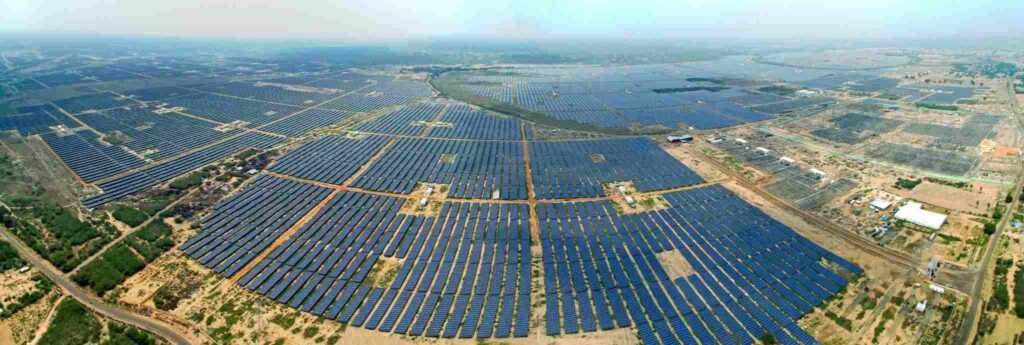
Renewable energy remains one of the fastest-growing areas of the Adani Group.
Its investments include:
- Solar power
- Wind energy
- Hybrid renewable projects
- Battery storage
- Green hydrogen
In addition, the company plans to develop 10 GW of nuclear power capacity by 2035, further strengthening India’s long-term energy security.
The Adani Group has also partnered with Bhutan’s Druk Green Power Corporation to develop 5,000 MW of hydroelectric capacity, expanding regional clean-energy collaboration.
Power Infrastructure Supporting Industrial Growth
Reliable Electricity for India’s Economy
Infrastructure extends beyond energy generation.
Adani Energy Solutions continues expanding electricity transmission and distribution networks throughout India.
Key developments include:
- Transmission order book exceeding ₹72,000 crore.
- Continued investment in smart grid technology and electricity infrastructure.
Meanwhile, Adani Power has announced a ₹2 lakh crore capital expenditure programme aimed at expanding total generation capacity to 45 GW over the next five years.
Reliable electricity infrastructure remains essential for manufacturing, industrial growth, and urban expansion.
Financial Strength Supporting Infrastructure Expansion
Scale Enables Long-Term Investments
Large infrastructure projects require substantial financial capacity.
For FY2025–26, the Adani Group reported:
- Revenue: ₹2.92 lakh crore
- EBITDA: ₹94,834 crore
- Profit After Tax: ₹46,376 crore
- Operating Cash Flow: ₹67,995 crore
These financial results provide the flexibility required to continue investing in infrastructure projects that generate long-term economic value.
What Entrepreneurs Can Learn From the Adani Infrastructure Revolution
Think Long Term
The Adani Group demonstrates that sustainable businesses are built by investing ahead of demand rather than reacting to short-term trends. These long-term principles are explained further in our article on Gautam Adani Business Strategy, highlighting the leadership decisions behind the group’s growth.
Create Integrated Business Ecosystems
Rather than building unrelated businesses, entrepreneurs should look for complementary opportunities that strengthen one another.
Invest in Future Technologies
The group’s investments in AI infrastructure, renewable energy, digital platforms, and green hydrogen illustrate the importance of preparing for tomorrow’s economy instead of today’s market alone.
The Future of Adani Group Projects
Supporting India’s Next Growth Phase
Looking ahead, major Adani Group projects are expected to continue expanding across:
- Artificial Intelligence infrastructure
- Hyperscale data centres
- Renewable energy
- Green hydrogen
- Airports
- Ports
- Smart logistics
- Digital infrastructure
As India pursues its vision of becoming a developed economy, these projects are expected to play a significant role in strengthening national competitiveness and industrial growth. Many of these industries are also featured in our guide to Future Business Opportunities expected to dominate the next decade.
Conclusion
The Adani Group infrastructure strategy represents far more than business expansion. It reflects a long-term vision of building the assets that power economic development.
From handling more than 500 million tonnes of cargo to investing US$100 billion in AI infrastructure, expanding renewable energy, modernising airports, and strengthening India’s electricity network, the Adani Group continues to shape the country’s infrastructure future.
For entrepreneurs, the biggest lesson is simple: businesses that solve large-scale problems while investing in future opportunities often create the greatest long-term impact.
Contact FounderPin for Startup Growth Guidance
Looking to build a future-ready business with a scalable growth strategy?
At FounderPin, we help startups with company registration, fundraising preparation, business planning, and sustainable growth strategies.
Contact us for a consultation today and build a stronger foundation for your entrepreneurial journey.