
Introduction
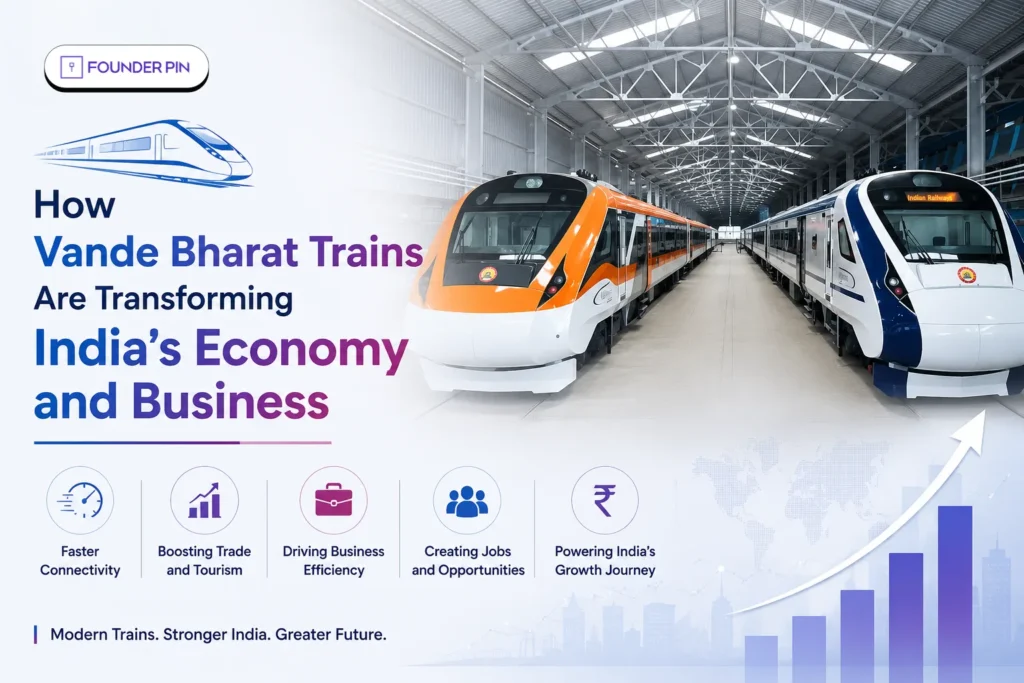
India’s railway network is changing rapidly. Today, Vande Bharat Trains are leading this transformation. As India’s first indigenous semi-high-speed train, they offer faster travel, greater comfort, and improved safety. Moreover, they support the Make in India initiative and strengthen railway infrastructure.
In addition, Vande Bharat Trains contribute to economic growth. They boost tourism, support business travel, and improve regional connectivity. As a result, they create new opportunities for industries and local businesses. You can also explore the latest developments and official initiatives on the Ministry of Railways website to learn more about India’s railway modernization efforts.
In this article, you’ll learn how Vande Bharat Trains are modernizing Indian Railways and driving India’s economic growth.
Why Vande Bharat Trains Matter for India’s Infrastructure
More Than Just Faster Trains
Modern economies rely on efficient transportation to connect businesses, workers, industries, and consumers. Railways remain one of India’s most important transportation networks, carrying millions of passengers every day.
The introduction of Vande Bharat Trains marks a significant shift from traditional rail infrastructure toward technology-driven mobility. These trains combine higher speeds, improved passenger comfort, enhanced safety systems, and energy-efficient operations while being designed and manufactured primarily within India.
Unlike earlier premium trains that relied heavily on imported technology, Vande Bharat showcases India’s growing engineering capabilities and manufacturing strength.
1. Enhanced Efficiency in Business Travel and Greater Adaptability
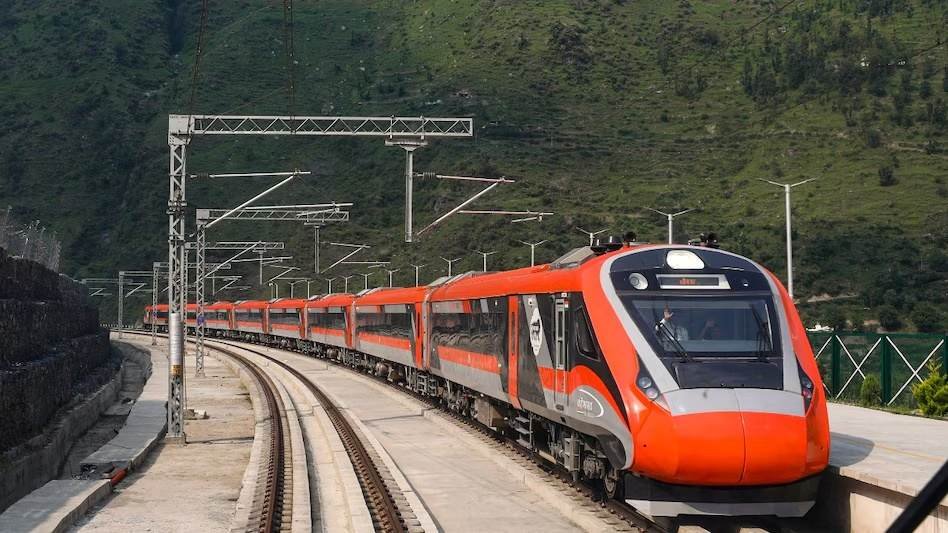
Vande Bharat trains have a speed of 52 seconds and can reach speeds of 0 to 100 km/h at first. This makes them one of the fastest-accelerating trains in India. A significant decrease in travel time is observed on several routes.
By reducing journey time by up to 45%, some corridors are now designed to allow for same-day business trips more quickly. Faster intercity connectivity is also opening new future business opportunities in logistics, tourism, hospitality, and regional commerce, especially for entrepreneurs looking to expand into emerging markets.
Business travellers can benefit from modern amenities such as ergonomic seating, charging stations and GPS-based passenger information systems.
2. Boosting Tourism and Local Economies
The improvement of rail connections has led to a surge in both tourist arrivals and commercial activity in several cities.
Almost 73 lakh passengers were transported by Vande Bharat services in Gujarat, which generated revenue of around 722 crore between October 2022 and March 2026. The demand for passengers on certain routes was so high that occupancy rates went as high as 1400%.
This has led to increased foot traffic on these corridors for hotels, restaurants, transport companies, retailers and local tourism businesses.
3. Enhancing the Make in India Program
Natively developed Vande Bharat, the first semi-high speed train, is part of India’s Make in India program.
India manufactures almost 90% of its components, which results in numerous domestic suppliers and MSMEs, while also reducing the use of imported railway technology. Large-scale infrastructure investments are becoming a key driver of India’s economic transformation, similar to the initiatives discussed in our article on How Adani Group Is Powering India’s Infrastructure Revolution.
The manufacturing of railways in India is becoming more accessible, thanks to the inclusion of Coach Factory (ICF) production in Chennai.
4. Expanding Export Opportunities
In the meantime, India is shifting from being a technology importer to merely exporting its own modern railway systems.
Governments in Africa, Asia, and Latin America are introducing Vande Bharat technology to their domestic markets, as they strive for low-cost rail alternatives that don’t need modernization of infrastructure.
5. Supporting Sustainable Economic Growth
Due to the fast-growing Indian railway network, Vande Bharat trains are able to run and help India reduce its dependence on fossil fuels.
The trains are a green alternative to short-haul flights and road transport, as they reduce carbon emissions and increase energy efficiency. Why is this so? This benefits India’s long-term sustainability and infrastructure development.
Entrepreneurs can draw valuable lessons from these long-term infrastructure investments by understanding Gautam Adani’s business strategy, which emphasizes building scalable assets that support national economic growth over decades.
6. Supporting India’s Long-Term Infrastructure Vision
Vande Bharat is not just a transportation project—it forms part of India’s broader infrastructure transformation.
The trains complement other national initiatives, including:
- Railway electrification
- Dedicated Freight Corridors
- Smart stations
- Digital ticketing
- Advanced signaling systems
Together, these investments improve logistics, enhance productivity, reduce transportation costs, and strengthen India’s long-term economic competitiveness.
Challenges Ahead
Scaling the Vande Bharat Network
Despite its success, several challenges remain.
These include:
- Upgrading railway tracks for higher speeds
- Expanding maintenance infrastructure
- Increasing manufacturing capacity
- Training skilled technical personnel
- Integrating newer routes into existing railway operations
Continued investment in supporting infrastructure will be essential to maximize the long-term Vande Bharat business impact.
The Future of Vande Bharat Trains
Building the Railway Network of Tomorrow
The Government of India continues expanding the Vande Bharat network to improve regional connectivity and economic integration.
Future developments are expected to include:
- More intercity routes
- Sleeper versions of Vande Bharat
- Faster train technologies
- Increased production capacity
- International exports
- Greater private sector participation in railway manufacturing
As these projects progress, Vande Bharat economic impact will extend far beyond transportation, supporting industrial development, tourism, manufacturing, exports, and regional growth.
Conclusion
The success of Vande Bharat Trains demonstrates how infrastructure investment can transform an economy.
From reducing travel time and strengthening regional business ecosystems to boosting domestic manufacturing and creating export opportunities, Vande Bharat has become a symbol of Indian railway modernization.
More importantly, it highlights how strategic infrastructure projects can generate long-term economic benefits by improving productivity, supporting businesses, creating jobs, and strengthening India’s global competitiveness.
As the network expands across the country, the Vande Bharat business impact is expected to become even more significant, making it one of India’s most important infrastructure success stories.
Contact FounderPin for Startup Growth Guidance
Infrastructure drives economic growth—but building a successful business requires the right strategy.
At FounderPin, we help entrepreneurs with company registration, startup compliance, fundraising preparation, business planning, and long-term growth strategies.
Contact us for a consultation today and take the next step toward building a scalable business in India’s rapidly evolving economy.
Frequently Asked Questions (FAQs)
1. What are Vande Bharat Trains, and why are they important?
Vande Bharat Trains are India’s first indigenously developed semi-high-speed trains, built under the Make in India initiative. They are important because they improve passenger comfort, reduce travel time, support Indian railway modernization, and strengthen the country’s transportation infrastructure.
2. What is the economic impact of Vande Bharat Trains?
The Vande Bharat economic impact includes faster business travel, increased tourism, stronger regional connectivity, higher productivity, job creation, and growth in domestic manufacturing. These benefits contribute to India’s long-term economic development.
3. How do Vande Bharat Trains benefit businesses?
The Vande Bharat business impact is significant because reduced travel time enables entrepreneurs, professionals, and companies to conduct business more efficiently. Better rail connectivity also supports trade, attracts investment, and boosts local economies along major routes.
4. How are Vande Bharat Trains supporting Indian railway modernization?
Vande Bharat Trains are a key part of Indian railway modernization by introducing advanced technologies such as automatic doors, regenerative braking, GPS-based passenger information systems, modern safety features, and energy-efficient operations while encouraging continued investment in railway infrastructure.
5. Are Vande Bharat Trains manufactured in India?
Yes. Vande Bharat Trains are largely manufactured in India, with approximately 80–85% of their components sourced domestically. Developed under the Make in India initiative, they have strengthened India’s railway manufacturing ecosystem and created opportunities for hundreds of Indian suppliers and MSMEs.