
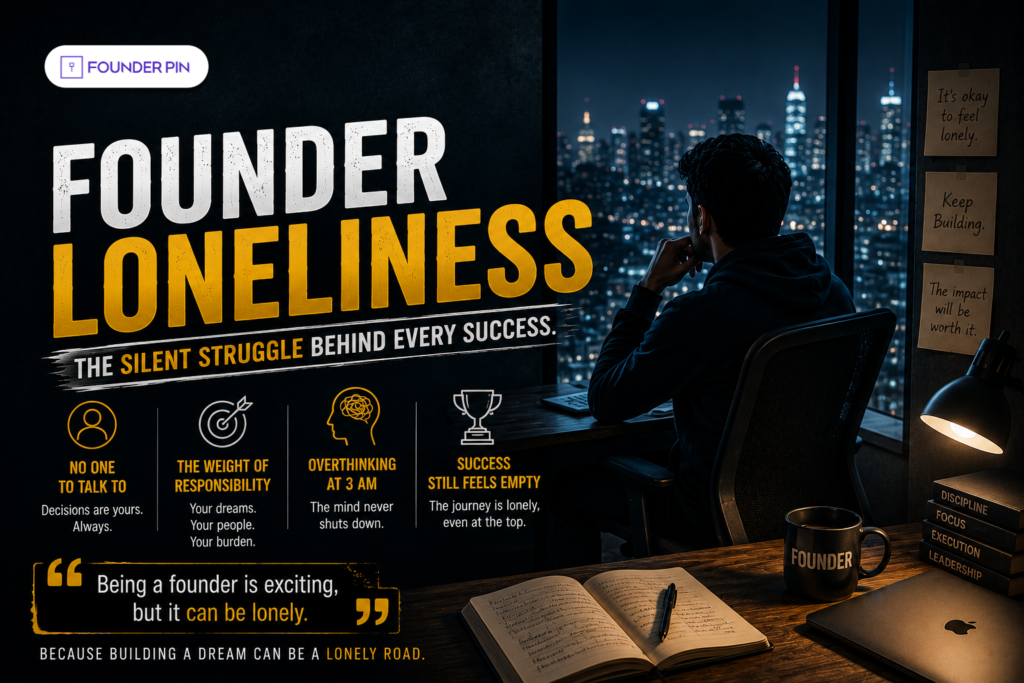
The narrative around startups is often filled with funding rounds, rapid growth, and success stories. Yet behind this polished surface lies a quieter, more difficult truth—founder loneliness. Every decision, every risk, and every failure ultimately rests on the shoulders of the founder. While teams, investors, and advisors play important roles, the emotional burden of leadership is rarely shared equally.
Founder loneliness is not just about being physically alone; it is about the psychological isolation that comes from responsibility. Founders often find themselves in situations where they cannot openly express doubts or fears, as they are expected to project confidence at all times. This creates a gap between external perception and internal reality, making the journey far more isolating than it appears from the outside.
Why Startup Founder Loneliness Is Inevitable
The Weight of Decision-Making
One of the primary drivers of startup founder loneliness is decision-making pressure. Founders are constantly required to make high-stakes choices with incomplete information. Whether it’s hiring key team members, pivoting business models, or managing cash flow, these decisions often lack clear right or wrong answers. The inability to share this burden equally creates a sense of isolation that compounds over time.
The Expectation to Always Be Strong
In a startup environment, the founder is often seen as the emotional anchor. Employees look to them for direction, investors look for confidence, and customers look for reliability. This expectation forces founders to suppress vulnerability, which can intensify feelings of loneliness. Over time, this emotional suppression can lead to founder burnout, a state of mental and physical exhaustion that affects both personal well-being and business performance.
The Psychological Impact of the Lonely Founder Journey
The lonely founder journey is not just a temporary phase—it can have lasting psychological effects. Continuous stress, lack of emotional support, and the pressure to perform can lead to anxiety, decision fatigue, and reduced creativity.
Founder loneliness also affects relationships outside of work. Friends and family may struggle to fully understand the pressures of running a startup, leading to a disconnect. This creates a feedback loop where the founder becomes increasingly isolated, both professionally and personally.
In many cases, this isolation can quietly erode confidence. Even successful founders may begin to question their decisions or feel disconnected from their own achievements. Recognizing these patterns early is crucial to preventing long-term consequences.
Visualizing the Founder’s Emotional Journey
The founder journey is rarely linear. It consists of highs and lows, moments of clarity and periods of doubt. Understanding this emotional cycle can help founders normalize their experiences and reduce the stigma around loneliness.
Founder Burnout: When Loneliness Turns Into Exhaustion

Founder burnout is often the result of prolonged loneliness combined with intense work pressure. It manifests as fatigue, lack of motivation, and decreased productivity. Unlike regular stress, burnout does not resolve with short breaks—it requires intentional changes in mindset and behavior.
One of the key contributors to burnout is the inability to disconnect. Founders often blur the lines between personal and professional life, leading to continuous mental engagement with work. This constant state of alertness prevents recovery and accelerates burnout.
Addressing burnout requires acknowledging its presence. Many founders ignore early signs, assuming it is part of the journey. However, untreated burnout can lead to poor decision-making, strained relationships, and even business failure.
How to Overcome Founder Loneliness
Build a Trusted Inner Circle
One of the most effective ways to combat founder loneliness is to build a circle of trusted peers, mentors, or fellow founders. These individuals provide a safe space to share challenges, exchange ideas, and gain perspective. Unlike employees or investors, peers understand the journey at a deeper level.
Normalize Vulnerability
Contrary to popular belief, vulnerability is not a weakness—it is a strength. Being open about challenges fosters stronger relationships and builds trust within teams. It also reduces the emotional burden of pretending to have all the answers.
Create Structured Downtime
Intentional breaks are essential for long-term performance. Scheduling downtime, whether through hobbies, travel, or simply disconnecting from work, helps reset mental energy and improve clarity.
Separate Identity from the Startup
Many founders tie their self-worth entirely to their startup’s success. This creates additional pressure and intensifies loneliness. By developing interests and relationships outside of work, founders can maintain a healthier sense of identity.
One of the most effective ways to reduce founder loneliness is to focus on building and taking action. Exploring new opportunities can shift your mindset from stress to growth. If you’re looking for inspiration, check out these 20 profitable startup ideas for India in 2026 with low investment to kickstart your next move with clarity.
Lessons for Founders and Startup Leaders
The experience of startup founder loneliness offers several important lessons. First, success does not eliminate loneliness—it often amplifies it. As responsibilities grow, so does the emotional burden.
Second, building a strong support system is not optional; it is a strategic necessity. Founders who actively invest in relationships are better equipped to handle challenges and sustain long-term growth.
Finally, mental well-being is directly linked to business outcomes. A founder who is mentally resilient is more likely to make better decisions, inspire teams, and navigate uncertainty effectively.
Conclusion: Redefining the Founder Journey
The lonely founder journey is an inherent part of building something meaningful. However, it does not have to be endured in silence. By acknowledging the reality of founder loneliness, addressing founder burnout, and building systems of support, founders can transform isolation into strength.
The journey of entrepreneurship is not just about building companies—it is about building resilience, self-awareness, and meaningful connections. When approached with the right mindset, even loneliness can become a catalyst for growth.
Ready to Build Without Feeling Alone?
At FounderPin, we help founders not just scale their startups, but also navigate the emotional and strategic challenges of entrepreneurship.
Contact us for a consultation and build your startup journey with clarity, confidence, and the right support system.