
How to Fundraise for a Startup in India Without Investor Connections
Table of Contents
Toggle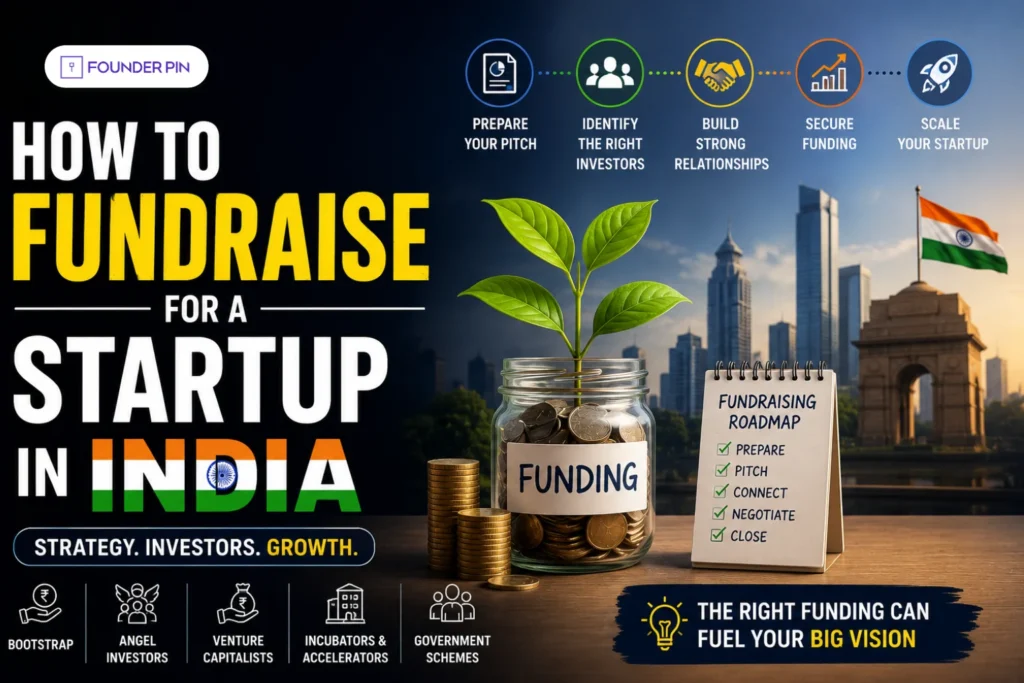
At FounderPin, we frequently meet founders with innovative ideas who believe fundraising is impossible without a powerful network. Many first-time entrepreneurs assume that venture capital is only accessible to those with insider connections, elite backgrounds, or warm introductions.
The reality is very different. Today, India’s startup ecosystem offers multiple fundraising opportunities for founders who may not know investors personally. From startup incubators and accelerator programs to government grants, crowdfunding platforms, and angel investor networks, there are more pathways to capital than ever before.
If you’re wondering how to fundraise for a startup without investor connections, this guide will show you practical strategies to attract funding, build credibility, and secure capital for growth.
How to Raise Startup Funding in India
Securing startup funding without an existing investor network can be challenging, but it is far from impossible. Founders can build credibility by leveraging government schemes, generating early traction, joining startup incubators, and creating public visibility for their businesses. Once a startup demonstrates progress and market demand, attracting investor interest becomes significantly easier.
Start With Government Grants and Startup Schemes
Before approaching private investors, founders can explore various government-backed programs designed to support early-stage startups.
Startup India Seed Fund Scheme (SISFS)
The Startup India Seed Fund Scheme provides financial support to eligible startups for product development, proof-of-concept validation, and market testing. Startups can access funding through approved incubators under the scheme.
MeitY TIDE 2.0 and NIDHI PRAYAS
These programs support technology-focused startups and innovators by offering grants for prototype development and early-stage experimentation. The funding helps founders build and validate products without giving up ownership.
Stand-Up India Scheme
This initiative supports women entrepreneurs and individuals from SC/ST communities by providing access to business loans for launching new ventures across different sectors.
Explore Alternative Funding Options
Founders who have already started generating revenue can consider non-traditional funding methods that do not require strong investor relationships.
Revenue-Based Financing
Revenue-based financing allows startups to raise capital in exchange for a percentage of future revenue rather than company equity. This helps founders access growth capital while maintaining ownership control.
Startup Loans and Credit Schemes
Government-backed credit programs and collateral-free loan schemes can help eligible startups secure funding for expansion and operational needs without relying solely on investors.
Build Visibility and Establish Credibility
When founders lack direct investor access, building a public track record becomes essential for earning trust and attracting attention.
Share Startup Progress Publicly
Regularly posting product updates, milestones, customer wins, and business growth metrics on platforms like LinkedIn and X can help establish credibility and showcase consistent execution.
Launch a Founder Newsletter
A newsletter can help founders document their startup journey and share valuable insights with potential investors, mentors, and industry professionals. Over time, this builds familiarity and trust before fundraising conversations begin.
Use Strategic Cold Outreach
Direct outreach can be effective when done thoughtfully and supported by strong business fundamentals.
Focus on Building Relationships
Instead of immediately asking for funding, founders can approach investors for advice, industry insights, or feedback. This creates a more natural relationship and opens the door for future discussions.
Keep Your Message Clear and Concise
When reaching out through email or LinkedIn, focus on the problem your startup solves, your key achievements, and measurable traction. A concise introduction supported by a well-structured pitch deck often generates better responses.
Build Momentum Before Fundraising
The most successful founders focus on building products, acquiring customers, and demonstrating traction before actively raising capital. Strong execution, clear progress, and public credibility often attract investors even when founders start without established connections.
Also Read | Why Indian Startup Funding Is Changing in 2026 and What Founders Must Do Now
Common Fundraising Mistakes to Avoid
Focusing Only on Funding
Many founders become obsessed with raising money instead of building a business.
Investors prefer startups that:
- Solve real problems
- Generate customer demand
- Demonstrate traction
- Show operational discipline
Funding should support growth, not replace it.
Overvaluing the Business
Unrealistic valuations often discourage investors.
Founders should base valuations on:
- Revenue
- Market traction
- Comparable companies
- Growth metrics
Reasonable expectations improve fundraising success.
The Future of Startup Fundraising in India
India’s startup ecosystem is becoming increasingly democratized.
Today, founders can access:
- Digital investor networks
- Online pitch platforms
- Startup communities
- Global funding opportunities
- AI-powered fundraising tools
As the ecosystem matures, access to capital will depend less on connections and more on execution, traction, and founder credibility.
Conclusion
Learning how to fundraise for a startup without investor connections is no longer an impossible challenge. While networking remains valuable, founders today have access to accelerators, grants, startup communities, angel platforms, and digital channels that can open doors to funding opportunities.
The most important factor is not who you know—it’s how effectively you build, validate, and communicate your business. Investors are constantly searching for founders who can execute, solve meaningful problems, and demonstrate growth potential.
Focus on building traction, telling your story clearly, and creating value for customers. Funding often follows founders who consistently deliver results.
Ready to Raise Capital for Your Startup?
At FounderPin, we help founders strengthen their startup positioning, build investor-ready brands, and create growth strategies that attract opportunities.
Contact us for a consultation and discover how to position your startup for successful fundraising and long-term growth.
Frequently Asked Questions (FAQs)
1. How can I fundraise for a startup in India without investor connections?
You can fundraise without personal investor connections by joining startup accelerators, applying for government grants, participating in startup competitions, networking through LinkedIn, and approaching angel investor platforms. Building traction and demonstrating market demand are often more important than having an existing network.
2. What are the best funding options for first-time startup founders in India?
First-time founders can explore bootstrapping, angel investments, startup incubators, accelerator programs, government schemes, crowdfunding, and seed funding opportunities. The best option depends on the startup’s stage, industry, and growth goals.
3. Do investors fund startups without revenue?
Yes, some investors fund pre-revenue startups, especially if they have a strong team, a large market opportunity, and a validated product concept. However, having early traction, user growth, or customer validation significantly increases the chances of securing investment.
4. What should be included in a startup pitch deck for fundraising?
A strong pitch deck should include the problem, solution, market size, business model, traction, revenue projections, competitive advantage, team background, and funding requirements. Investors want to understand both the opportunity and the founder’s ability to execute.
5. How long does it take to raise funding for a startup in India?
The fundraising process can take anywhere from a few weeks to several months, depending on the startup’s readiness, traction, industry, and funding stage. Founders should prepare for multiple investor meetings, due diligence processes, and negotiations before closing a deal.