
Neeraj Kakkar is the co-founder and CEO of Hector Beverages, the company behind Paper Boat. His journey combines corporate experience at Coca-Cola with entrepreneurship, product innovation and a strong understanding of Indian consumer tastes.
Key points:
- Co-founder and CEO: Hector Beverages
- Best known for: Paper Boat
- Company founded: 2009
- Paper Boat launched: 2013
- Previous experience: Coca-Cola, Wipro and Union Carbide
- Education: MDI Gurgaon and Wharton School
Hector Beverages officially identifies Neeraj Kakkar, James Nuttall, Suhas Misra and Neeraj Biyani as its four founders. The company was established in 2009, while Paper Boat was launched in 2013.
Kakkar’s journey is also part of a wider story of Indian startup founders who have turned ideas rooted in everyday Indian problems and consumer behaviour into scalable businesses.
Who Is Neeraj Kakkar?
Neeraj Kakkar is the entrepreneur behind Paper Boat — the guy who looked at flavours most Indians grew up with and figured out how to put them in a bottle people would actually buy off a shelf.
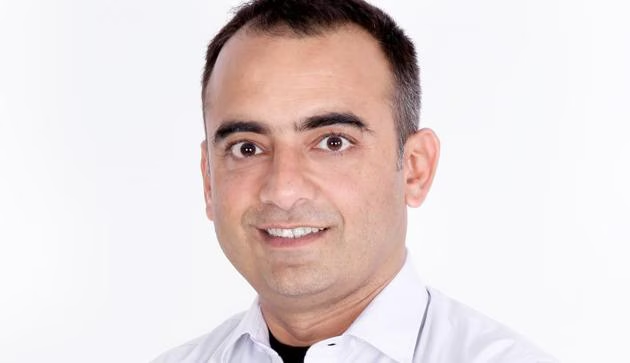
A quick snapshot of who he is:
- Founder of a consumer-focused FMCG company
- CEO of Hector Beverages
- Built Paper Boat around the taste of Indian childhood memories
- Has worked across both corporate and startup environments
What set Kakkar apart wasn’t just launching another drink brand — it was the flavours he picked. Aam Panna, Jaljeera, Aam Ras, and other distinctly Indian drinks that most companies had overlooked, given proper packaging and real distribution instead of staying stuck as something your grandmother made at home.
That’s really what made Paper Boat stand out in a beverage aisle packed with colas and juices trying to look exotic — it went the other way and leaned into something familiar.
Neeraj Kakkar’s Education Background
Kakkar’s academic path is fairly standard for a top Indian founder on paper — but it’s what he did with it that stands out. He did his PGDM at MDI Gurgaon, then went on to the Wharton School at the University of Pennsylvania for his MBA.
A quick rundown:
- PGDM: Management Development Institute, Gurgaon
- MBA: The Wharton School
- Palmer Scholar at Wharton, per biographical sources
- Took on leadership roles in student organisations along the way
He’s mentioned in interviews that Wharton gave him the confidence to think globally and, eventually, take the entrepreneurial leap.
But honestly, the classroom was only half the story. What arguably mattered just as much was what came after — the years he spent inside large consumer businesses, learning how they actually run, before he tried building one of his own.
How Did Neeraj Kakkar Start His Career?
Before he ever founded a company, Kakkar spent years working inside other people’s businesses — and a big chunk of that time was at Coca-Cola.
His path looked something like this:
- Started out at Union Carbide
- Moved to Wipro
- Then joined Hindustan Coca-Cola Beverages
- Took on general management and sales roles
- Eventually ran operations and P&L at Coca-Cola
He joined Hindustan Coca-Cola Beverages in the early 2000s and worked his way up to general manager. By his own account, that stretch is where he really learned how a large consumer business actually operates — and it’s part of what pushed him toward entrepreneurship in the first place.
That grounding turned out to be more useful than it probably felt at the time. When Hector Beverages later had to figure out the unglamorous side of FMCG — manufacturing, distribution, pricing, scaling up — Kakkar had already seen how that machinery worked from the inside.
When Was Hector Beverages Founded?
Neeraj Kakkar co-founded Hector Beverages in 2009 with James Nuttall, Suhas Misra and Neeraj Biyani.
Key points:
- Founded: 2009
- Founders: Four
- First major product: Tzinga
- Paper Boat launched later in 2013
- Manesar manufacturing operations began in the early growth phase.
According to Hector Beverages, the founding idea emerged from conversations about traditional Indian drinks and a homemade Aam Panna that one of the founders regularly brought for lunch. The company eventually decided to commercialise these familiar flavours.
It is a classic example of a simple observation becoming a business idea.
How Did Neeraj Kakkar Create Paper Boat?
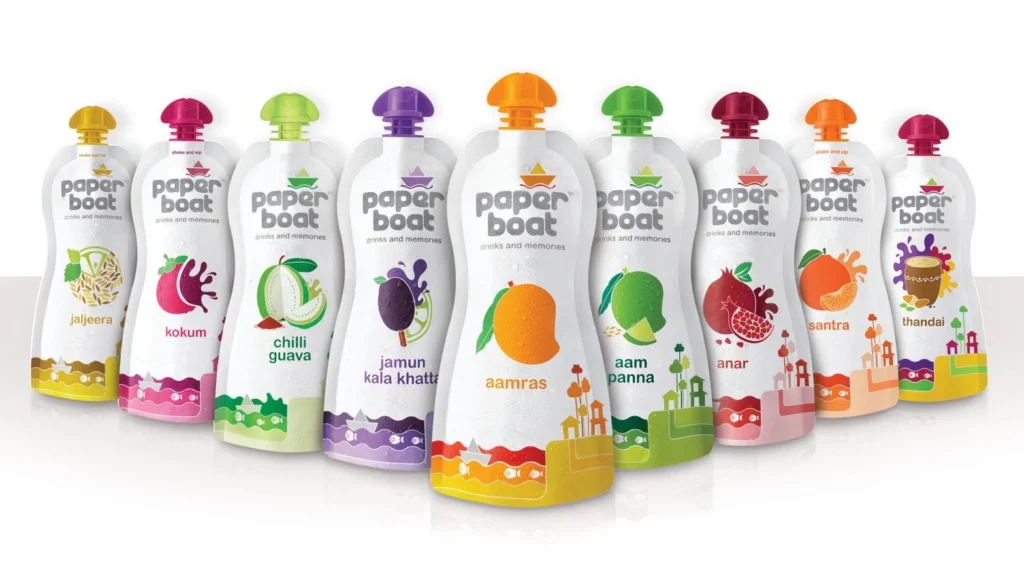
Paper Boat didn’t start as some grand strategic pivot — it came out of Hector Beverages looking past energy drinks and spotting something most companies had ignored: traditional Indian beverages nobody had properly packaged for modern shelves.
A few key points:
- Paper Boat launched in 2013
- The brand built itself around traditional Indian drinks
- Early products included Aam Panna, Jaljeera, and Aam Ras
- The branding leaned hard into memory and nostalgia
- The real innovation was in packaging and distribution, not the flavours themselves
According to Hector Beverages’ own history, the traditional-drink range launched under the Paper Boat name in 2013, with the goal of recreating the taste and feel of those drinks while keeping hygiene and safety up to modern standards.
The clever part, really, wasn’t inventing something new. It was taking flavours people already had a memory attached to and turning that memory into something you could actually buy.
Why Did Paper Boat Become Successful?
Paper Boat succeeded by combining product differentiation with storytelling.
Key success factors:
- Distinctive Indian flavours.
- Strong emotional branding.
- Memorable packaging.
- Focus on nostalgia.
- Expansion beyond one beverage category.
- Continuous product experimentation.
Paper Boat’s brand identity is closely connected with childhood memories, regional flavours and Indian traditions. That gave it a personality that was difficult to confuse with a conventional cola or fruit-drink brand.
Kakkar’s role was important because the company needed both creative thinking and operational discipline. Hector Beverages describes him as a leader deeply involved in tasting, improving and developing products.
How Has Paper Boat Expanded Its Product Portfolio?
Hector Beverages gradually expanded beyond traditional drinks into snacks and newer beverage categories.
Key developments include:
- 2011: Tzinga energy drink.
- 2013: Paper Boat traditional beverages.
- 2016: Paper Boat chikki.
- 2018: Paper Boat Swing fruit drinks.
- 2021: Trail mixes and snack products.
- 2022: Zero Sugar Sparkling Water.
- 2024: Nata de Coco range.
The company’s official timeline shows how Paper Boat moved from beverages into a broader food-and-drink portfolio.
This diversification reduced dependence on one product category while keeping the brand connected to its core idea of Indian tastes and experiences.
What Is Hector Beverages’ Financial Performance?
Hector Beverages continued to grow revenue in FY2026, but profitability came under significant pressure.
FY2026 highlights:
- Operating revenue: ₹760 crore
- FY2025 operating revenue: ₹668 crore
- Revenue growth: 13.8%
- FY2026 profit after tax: ₹2 crore
- FY2025 profit after tax: ₹46 crore
- EBITDA: ₹41.4 crore
Recent reporting based on Entrackr company financial statements filed with the Registrar of Companies shows that revenue grew strongly, but expenses increased faster.
This makes the latest chapter of the Neeraj Kakkar success story more interesting. Growth is continuing, but the company also needs to protect margins.
What Is Neeraj Kakkar’s Business Philosophy?
If there’s a thread running through Kakkar’s career, it’s this: he’s good at spotting something ordinary — a habit, a taste, a routine — and figuring out how to turn it into a brand people will pay for.
A few lessons worth pulling from his journey:
- Look for opportunity in habits people already have, not ones you have to create
- Build the product around real behaviour, not a theory of what people should want
- Use storytelling to stand out instead of competing purely on features
- Pair creativity with operational discipline — one without the other doesn’t scale
- Don’t bet everything on a single product; keep experimenting
- Learn how large companies operate before you try building your own
The years he spent in sales, operations, and P&L management inside big corporations weren’t wasted time — they gave him a playbook. What changed later was the environment: instead of running that playbook inside a large, established company, he got to test it in something smaller, scrappier, and far more experimental.
What Can Entrepreneurs Learn From Neeraj Kakkar?
The biggest lesson is that innovation does not always mean inventing something nobody has seen before.
Founders can learn to:
- Find overlooked consumer habits.
- Turn cultural familiarity into brand value.
- Build a clear product identity.
- Use experience from previous jobs intelligently.
- Scale distribution alongside demand.
- Keep experimenting after initial success.
- Watch profitability, not just revenue.
Paper Boat’s story demonstrates how something as familiar as Aam Panna can become a modern packaged product when the founder understands product, positioning and consumer emotion.
Kakkar’s journey also reinforces the importance of learning from the mistakes that can derail young companies. Founders can explore these startup mistakes every founder should avoid before scaling a new venture.
Neeraj Kakkar Success Story: Final Takeaway
The Neeraj Kakkar success story is a journey from corporate management to Indian FMCG entrepreneurship.
His journey can be summarised as:
Management Education → Corporate Experience → Coca-Cola → Hector Beverages → Tzinga → Paper Boat → Product Expansion → National FMCG Brand
Hector Beverages’ official history shows that the company has continued adding products and experimenting with new categories over the years.
The latest FY2026 numbers also offer an important business lesson: revenue growth alone does not guarantee stronger profits. Hector Beverages grew operating revenue to ₹760 crore, but profit fell sharply as costs increased.
FounderPin Perspective: Neeraj Kakkar’s biggest lesson for founders is simple: look at what people already love, understand why they love it, and find a better way to package and scale that experience.
Frequently Asked Questions About Neeraj Kakkar
1. Who is Neeraj Kakkar?
Neeraj Kakkar is the co-founder and CEO of Hector Beverages, the company behind Paper Boat.
2. Who are the founders of Paper Boat?
Paper Boat was launched by Hector Beverages, founded by Neeraj Kakkar, James Nuttall, Suhas Misra and Neeraj Biyani.
3. When was Paper Boat launched?
Paper Boat was launched in 2013, after Hector Beverages had already begun developing its beverage business.
4. What did Neeraj Kakkar do before Paper Boat?
Before building Hector Beverages, Kakkar worked with companies including Union Carbide, Wipro and Coca-Cola, gaining experience in business operations and consumer beverages.
5. What is Hector Beverages’ FY2026 revenue?
Hector Beverages reported approximately ₹760 crore in operating revenue for FY2026, up 13.8% from ₹668 crore in FY2025.