Founder Pin

startup fundraising

Pre Launch Checklist for Indian Startups
Uncategorized

A Pre-Launch Checklist for Indian Startups (No Fluff)

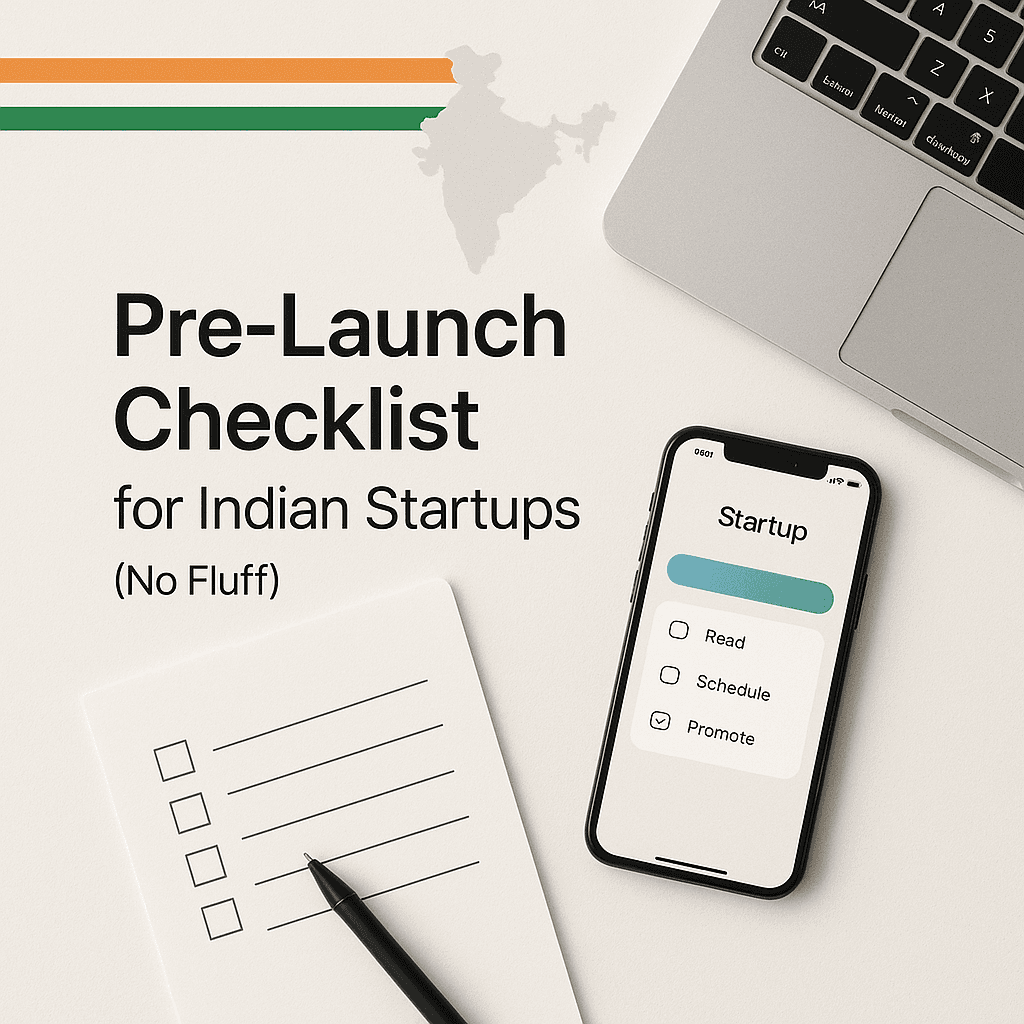
A Pre-Launch Checklist for Indian Startups (No Fluff) Most startup advice sounds like this: build an MVP, talk to users, raise money, scale. This is a complete guide on Pre-Launch Checklist for Indian Startups Right before launch, the real problems are usually boring. GST. payment failure rates. a WhatsApp number that nobody replies to. one missing clause in your Terms that gets you in trouble later. a landing page that loads in 8 seconds on Jio. So here’s a pre launch checklist for Indian startups that is actually usable. Not perfect. Just practical. [Pre-Launch Checklist for Indian Startups] 1) Pre-Launch Checklist for Indian Startups: Define what “launch” even means for you If you don’t define it, you’ll keep “preparing” forever. Or you will ship too early and call it a launch because you posted on LinkedIn. Pick one: Private beta launch: 20 to 200 users, invite only, goal is feedback and retention. Public launch: anyone can sign up, goal is acquisition and conversion. Paid launch: payment enabled from day one, goal is revenue and proof. Pilot launch (B2B): 1 to 5 companies, goal is a case study and renewal. Write it down in one line: “We are launching a paid public version for freelancers in India with UPI, aiming for 100 paid users in 30 days.” That line decides everything else below. 2) Pre-Launch Checklist for Indian Startups : Confirm your ICP and the first use case (don’t keep it broad) Indian founders love saying “we’re building for SMBs”. That is not an ICP. That’s like saying you’re building for “humans”. Before launch, tighten it: Who exactly is the buyer and who is the user? What is the first job they hire you for? What are they doing today instead of using you? Excel, WhatsApp, Tally, Google Sheets, Notion, “my cousin manages it”. Quick test: if your onboarding can’t mention a specific persona, it’s too broad. Example: Not “business owners” Instead: “D2C founders doing 10 to 30 lakhs per month who need daily cash visibility and inventory signals without hiring a finance person.” 3) Your MVP must have one killer workflow end to end (Pre-Launch Checklist for Indian Startups) A Pre-Launch Checklist for Indian Startups : A lot of Indian SaaS products ship with 50 half features. Because it feels safer. But the first 100 users don’t care about your roadmap. They care if the one thing works, fully. Checklist: One primary workflow from start to finish. No dead ends. No “contact sales” unless you’re truly enterprise. No “coming soon” buttons in the core flow. It kills trust. If you have to remove 5 features to make 1 workflow solid, do it. It’s annoying. But it works. 4) Payments and pricing (India edition) This is where a surprising number of launches break. Especially consumer and prosumer products. Pre-Launch Checklist for Indian Startups: Decide your payment rails UPI (mandatory for a lot of segments) Cards (still important, especially for higher ticket and B2B) Netbanking is optional, but helpful for some profiles If you’re using a payment gateway, test the basics: Payment success rate on mobile UPI collect vs UPI intent behavior Webhook reliability Refund flow (customers will ask, even if you think they won’t) Invoice generation, if B2B Pre-Launch Checklist for Indian Startups: Pricing sanity checks Does your pricing look “Indian”? Or copied from US SaaS. Do you have a monthly plan? Indian users like monthly. Do you have an annual plan with a real incentive? Some will take it if trust is high. Is there a simple first paid plan? Not 9 tiers. Also. write your pricing page like a human. Nobody wants “Starter, Growth, Scale”. 5) Legal and compliance basics (just cover the obvious stuff) Not legal advice. But you need baseline hygiene before you go public. Company and tax Incorporation done (usually Pvt Ltd for venture scale, LLP for some cases) PAN, TAN if needed GST registration if applicable (many B2B scenarios expect it) Current account opened, payment collections mapped properly Contracts and policies Website Terms of Service – this is crucial as it sets the ground rules for using your service. A well-drafted Terms of Use can protect your interests. Privacy Policy Refund policy (if you take payments) If you handle sensitive data, be extra careful about consent and data storage. If you’re B2B: a simple MSA template NDA template (only when needed, not for every call) Pre-Launch Checklist for Indian Startups: Founder Pin has a lot of founder resources and services around startup compliance and grant readiness. If you’re trying to avoid running around for basics, it’s worth checking their ecosystem once you’re close to going live. 6) Product instrumentation before launch (or you will fly blind) You don’t need a fancy data team. But you do need to answer: Where do users drop off? What do retained users do differently? Which acquisition channel brings better users? Minimum instrumentation checklist: Install event tracking (PostHog, Mixpanel, Amplitude, GA4, whatever you can manage) Events to track: signup started signup completed activation event (your one key action) first value delivered (moment of wow) payment started and payment success (if paid) churn signal (subscription cancelled, inactivity) Also add: error logging (Sentry) uptime monitoring (UptimeRobot etc.) This is not “nice to have”. It saves you weeks. 7) Onboarding and support: set it up like you’re already busy Because after launch, you will be. Checklist: A welcome email (simple, clear) A 3 step onboarding inside the product Set up contact methods that actually work: WhatsApp business number or support chat support email in app help link Decide response time expectations: If you can’t do 24×7, don’t pretend you can. Say “we reply within 24 hours” and actually do it. Create a basic help doc with: “How to get started” “Common issues” “How refunds work” “How to contact support” Boring. But launches fail when users get stuck and nobody helps. 8) Infrastructure and performance (India networks are not forgiving) Your product must work on: mid range Android phones slower networks weird browser
Indian startup founder presenting how to create a winning pitch deck
Startup Insights & Ecosystem

How to Create a Winning Pitch Deck in 2026

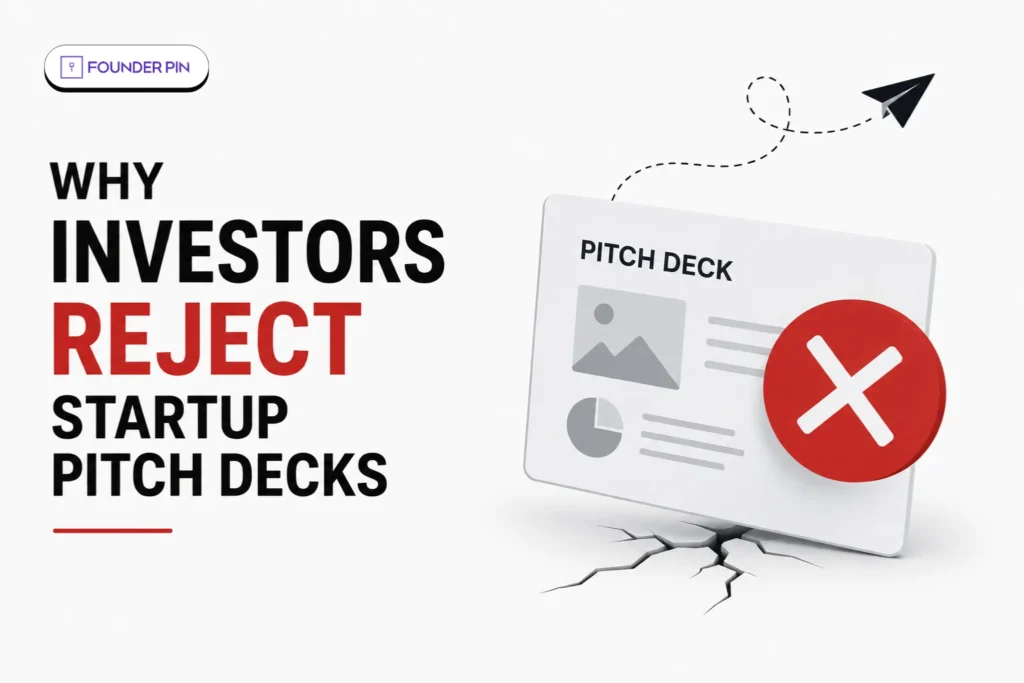
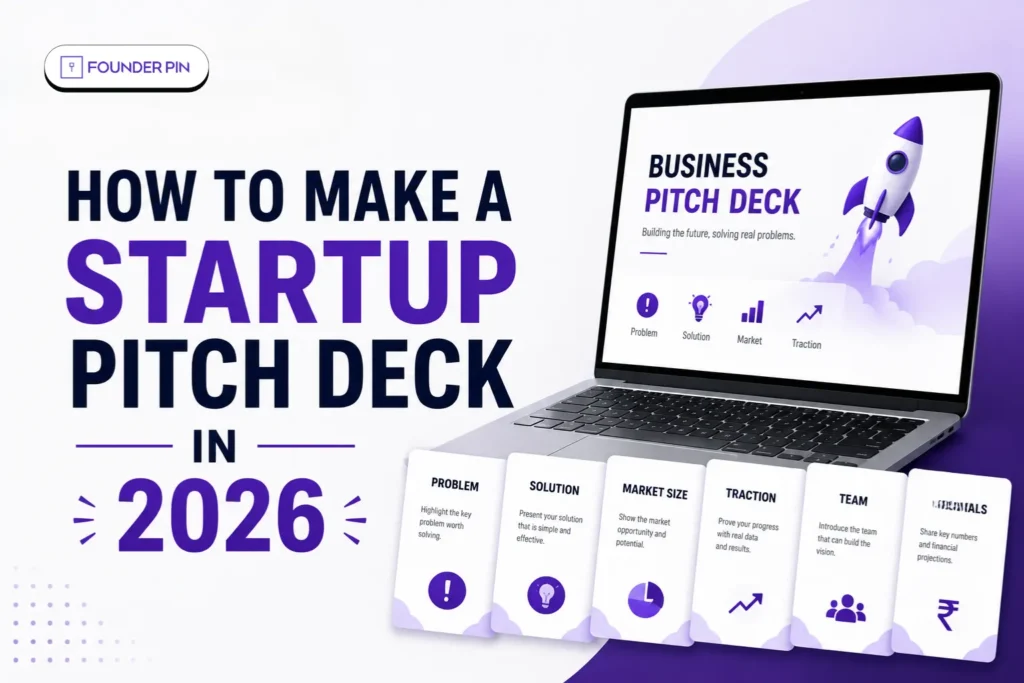
Creating A Winning Pitch Deck in 2026 Fundraising in 2026 is sharper, slower, and far more analytical than it was just a few years ago. Investors are reviewing more decks than ever, yet writing fewer cheques. Capital has become selective, and founders are expected to demonstrate clarity before confidence. This is the formula for a Winning Pitch Deck Understanding how to create a winning pitch deck is no longer about slide design or clever taglines. It is about strategic thinking, financial realism, and narrative precision. A pitch deck is not a presentation. It is a compressed business strategy document designed to survive investor scrutiny. Before opening PowerPoint or Canva, founders must ensure the foundation is strong. If the business idea itself has not been pressure-tested, fundraising becomes premature. Preparation begins long before the first slide is built, which is why every founder should first understand how to validate a startup idea before you build it A strong deck reflects a validated opportunity, not speculation. Winning Pitch Deck: The 2026 Investor Mindset Investors today evaluate startups through a disciplined lens. Growth-at-all-costs thinking has faded. Capital efficiency, sustainable revenue, and founder execution capability now dominate decision-making. When reviewing a startup pitch deck for investors, most VCs silently evaluate five core factors: Is the problem real, urgent, and measurable? Does the founder possess unique insight? Is there a clear path to monetization? Are unit economics rational? Can this scale without burning irrational capital? Your deck must answer these questions before they are even asked. The 12-Slide Structure that Works best for creating a Winning Pitch Deck Structure reduces friction. Investors think in patterns, and a coherent deck allows them to process information quickly. 1. Cover Slide Include company name, positioning statement, and contact information. The positioning line must clearly state what you do, who you serve, and what differentiates you. Clarity builds authority. 2. The Problem Define a specific, painful, and costly problem. Avoid vague market dissatisfaction statements. Quantify the problem wherever possible using data or real-world examples. Precision increases credibility. 3. The Solution Explain your product in direct business language. Avoid technical jargon unless your audience demands it. Clearly connect your solution to the problem introduced earlier. If your product is in early stages, ensure it aligns with validated user demand and MVP readiness. 4. Market Opportunity Break down your market into: Total Addressable Market (TAM) Serviceable Available Market (SAM) Serviceable Obtainable Market (SOM) Investors fund focused entry points within large markets, not unrealistic global ambitions. 5. Product Demonstration Use visuals instead of heavy text. Screenshots, workflow diagrams, or short demo visuals strengthen belief. Evidence reduces doubt. 6. Business Model Explain: Revenue streams Pricing strategy Cost structure Gross margins Unit economics Even pre-revenue startups must demonstrate revenue logic. Hope is not a strategy. 7. Traction This is where investors lean forward. Include measurable progress such as: Revenue growth User acquisition Retention rates Strategic partnerships Letters of intent Traction transforms narrative into proof. 8. Competitive Landscape Never claim you have no competitors. That signals insufficient market understanding. Instead, map your competitors clearly and articulate how you differentiate. Demonstrating awareness shows maturity. 9. Go-To-Market Strategy Explain how customers will be acquired and retained. Outline acquisition channels, partnerships, and conversion assumptions. Your strategy must demonstrate realistic execution rather than optimistic assumptions. GTM is very Important, this gives confidence to investors that you have right plan. 10. Defensibility and Moat Investors want to understand why you cannot be easily replicated. This could include: Proprietary technology Network effects Community lock-in Brand positioning Strategic partnerships Defensibility strengthens long-term valuation potential. 11. The Team Highlight relevant experience and domain authority. Investors frequently fund teams over ideas. Demonstrate execution capability and founder-market alignment. 12. The Ask Be precise. State: Capital required Intended runway Milestones to be achieved Use of funds Ambiguity weakens confidence. Storytelling: The Invisible Framework for creating Winning Pitch Deck A winning deck follows a psychological arc: Introduce tension through the problem. Present unique insight. Demonstrate structured execution. Validate through traction. Scale through vision. When structured correctly, your startup pitch deck for investors feels inevitable rather than speculative. Investors want to believe that success is logical, not lucky. Winning Pitch Deck: Using a Pitch Deck Template Strategically A strong pitch deck template for fundraising accelerates preparation but does not replace thinking. Templates should help you structure: Financial models Market sizing Competitive matrices Milestone projections Founders must adapt templates to reflect strategic clarity rather than blindly filling placeholders. Fundraising itself is a broader strategic process. For deeper understanding of the full capital journey in India, review the ultimate guide to startup fundraising in India 2026 A deck is one component of a larger fundraising ecosystem. Aligning Your Deck with Funding Stages Different funding stages require different emphasis. Pre-seed decks focus on vision and founder capability. Seed decks require traction and revenue clarity. Series A decks demand operational maturity and predictable growth. Understanding stage expectations prevents misalignment. If you are unsure about stage-specific investor expectations, refer to the pre-seed vs seed full guide, tailoring your pitch to stage context increases fundraising probability. Common Pitch Deck Mistakes in 2026 Even experienced founders make avoidable errors. The most frequent mistakes include: Overloaded slides with excessive text Unrealistic five-year revenue projections Weak unit economics explanation Poor competitive awareness Vague capital allocation strategy Each mistake introduces friction in investor evaluation. Fundraising rewards clarity and punishes exaggeration. AI and the Modern Pitch Deck Winning Pitch Deck: Artificial intelligence tools now assist with market research, slide design optimization, and financial forecasting. While AI enhances efficiency, it cannot replace founder conviction. Technology accelerates execution. It does not replace strategic thinking. Founders who combine structured reasoning, validated demand, and disciplined storytelling produce stronger decks. Final Checklist Before Sending Your Deck Before sharing your pitch deck with investors, confirm: The problem is clearly defined and measurable. The solution logically addresses that problem. Unit economics are realistic and defensible. Traction is prominently displayed. Competitive awareness is demonstrated. The funding ask is specific and justified. The narrative flows coherently from

Scroll to Top