
The New Startup India Playbook: Build Fast, Stay Lean, Grow With AI
Table of Contents
Toggle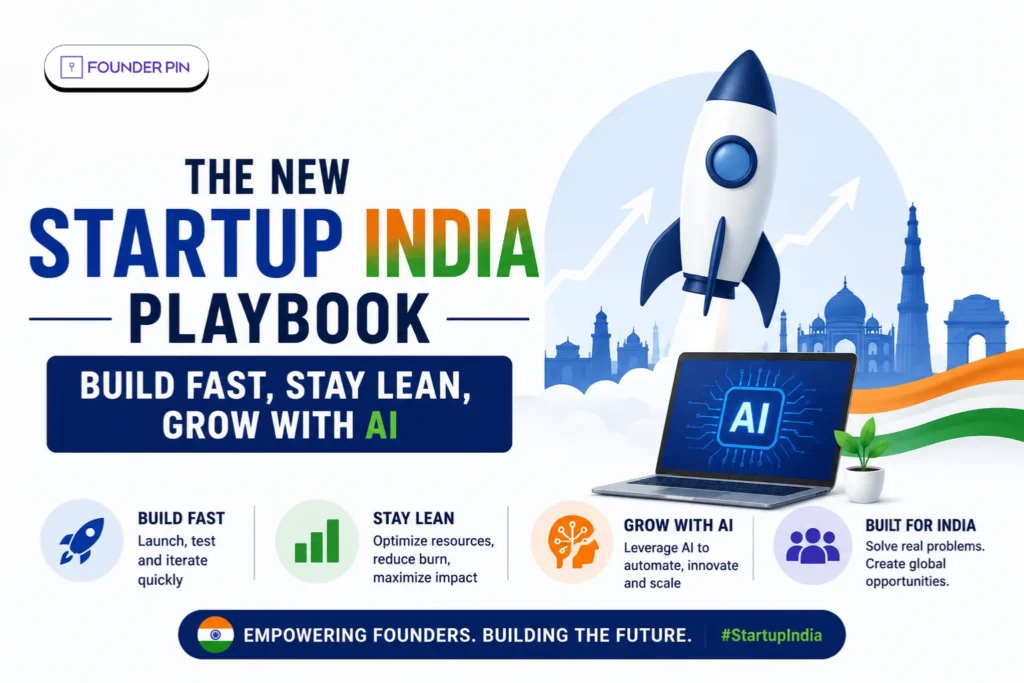
Key Takeaways
The Startup India Playbook for 2026 is built around speed, efficiency, and AI-powered growth. Founders who build fast, stay lean, and leverage AI can scale smarter while reducing costs and improving productivity.
- Build fast: Launch MVPs quickly and validate ideas before investing heavily.
- Stay lean: Focus on efficient operations, strategic hiring, and automation.
- Grow with AI: Use AI tools to improve marketing, customer support, and decision-making.
- Prioritize efficiency: Sustainable growth matters more than rapid spending.
- Accept the New Startup India Playbook: For contemporary companies, speed, creativity, and artificial intelligence are emerging as critical competitive advantages.
The Indian startup ecosystem has undergone a massive transformation over the last decade. Earlier, startups focused heavily on raising large amounts of capital, hiring aggressively, and prioritizing growth at all costs. But in 2026, the startup scene will be quite different. Investors are demanding efficiency, customers expect better experiences, and founders must achieve more with fewer resources.
This shift has given rise to a new Startup India Playbook—a modern approach centered around building quickly, staying lean, and leveraging artificial intelligence to scale efficiently. Instead of burning cash to chase growth, successful startups are using AI-driven tools, automation, and data-backed decision-making to create sustainable businesses.
At FounderPin, we’ve observed that the most successful founders today are not necessarily the ones with the largest budgets. They are the ones who move faster, validate ideas earlier, and use technology intelligently. This article explores the Startup India Playbook that is shaping the next generation of Indian startups.
Why the Startup India Playbook Is Changing
The startup ecosystem has matured significantly. Funding is no longer as easy to obtain as it was during previous startup booms.
Today, investors prioritize:
- Sustainable growth
- Capital efficiency
- Strong unit economics
- Product-market fit
- Scalability
As a result, founders are adopting leaner business models that focus on efficiency and execution rather than excessive spending.
How AI Is Changing the Way Indian Startups Launch and Scale
The startup landscape in India has changed significantly over the past few years. A more sustainable strategy focused on productivity, creativity, and wise use of technology has taken the place of the previous emphasis on rapid expansion and high spending. Today, founders can leverage AI-powered tools and India’s digital infrastructure to launch products faster, operate with smaller teams, and serve both local and global markets without requiring substantial upfront investment.
1. Build Fast: Leveraging AI for Rapid Innovation
Modern startups no longer need to spend months developing products before entering the market. AI-powered tools are helping founders accelerate product development and validate ideas more quickly.
Faster Product Development
AI coding assistants and no-code platforms allow startups to build websites, applications, and MVPs in a fraction of the time required through traditional development methods. This enables founders to launch products sooner and gather market feedback faster.
Smarter Customer Validation
Startups are using AI tools to collect, analyze, and interpret customer feedback more efficiently. This helps founders identify product improvements and make informed decisions based on real user insights.
Solutions for India’s Diverse Market
By integrating multilingual AI capabilities, startups can create products that cater to India’s vast non-English-speaking population. This opens opportunities to reach millions of users across different regions and languages.
2. Stay Lean: Building Efficient Teams
Today’s startups are focusing on productivity rather than headcount. Small, highly skilled teams are achieving more by combining technology with efficient operational practices.
Multi-Skilled Team Members
Instead of hiring large specialized teams, many startups prefer versatile professionals who can handle multiple responsibilities across product development, operations, and growth functions.
Cloud-Based Infrastructure
Scalable cloud platforms allow startups to launch and operate products without investing heavily in servers and hardware. This drastically lowers the initial infrastructure costs.
Automation-Driven Operations
AI tools are increasingly handling routine tasks such as lead generation, customer support, scheduling, and reporting. As a result, founders can focus more on strategy, product development, and business growth.
3. Grow With AI: Building Scalable Businesses
As India’s startup ecosystem matures, founders are exploring new opportunities powered by artificial intelligence and advanced technology.
Global SaaS Opportunities
Many Indian startups are building software products for international markets. AI-powered SaaS solutions, developer tools, and industry-specific software are gaining popularity among global customers.
Deep-Tech and Innovation-Led Growth
Government initiatives and technology-focused programs are encouraging startups to explore advanced sectors such as robotics, semiconductor technology, space technology, defense innovation, and industrial automation. These industries offer significant long-term growth opportunities for ambitious founders.
The modern Indian startup playbook is no longer about spending heavily to grow quickly. Instead, it focuses on building efficiently, operating leanly, and using AI to create scalable and sustainable businesses.
Also Read | Why AI Agents Trends Are Becoming the Biggest Startup Movement in India
Why AI Gives Indian Startups a Unique Advantage
India’s startup ecosystem is particularly well-positioned to benefit from AI adoption. Several factors make it easier for founders to build, scale, and compete using AI-powered technologies.
Large Talent Pool
India has a rapidly growing workforce with expertise in software development, data science, machine learning, and artificial intelligence. This enables startups to access skilled professionals and build innovative AI solutions more efficiently.
Cost Efficiency
Indian startups can develop and deploy AI-powered products at a lower cost compared to many global markets. This cost advantage helps founders optimize resources while remaining competitive internationally.
Massive Digital Adoption
India’s expanding digital economy has created a large online user base across sectors such as e-commerce, fintech, healthcare, and education. This provides startups with access to valuable data and market opportunities that can accelerate AI-driven innovation.
The New Founder Mindset
The Startup India Playbook is not just about technology. It’s also about mindset.
Modern founders understand that:
- Experimentation beats perfection
- Efficiency beats excessive spending
- Speed beats bureaucracy
- Data beats assumptions
- AI enhances productivity
The startups winning in 2026 are embracing adaptability and continuous learning.
Founders looking to explore government initiatives, startup resources, and ecosystem support programs can visit the Startup India Official Portal for the latest updates and opportunities.
Common Mistakes Founders Should Avoid
Scaling Too Early
- Many startups still attempt rapid expansion before validating their business models.
- This often leads to unnecessary expenses and operational challenges.
Ignoring Automation
- Manual processes slow growth and increase costs.
- Opportunities to automate monotonous operations should be constantly sought after by founders.
Treating AI as a Trend
- AI is not a temporary trend. It is becoming a core business capability.
- Delaying adoption puts startups at danger of slipping behind rivals.
Chasing Funding Instead of Customers
- The strongest startups focus on solving customer problems rather than constantly pursuing funding rounds.
- Customer value remains the foundation of sustainable growth.
What the Future Looks Like
The future of Indian startups will be defined by founders who can build quickly, operate efficiently, and leverage AI effectively.
Startups will have previously unheard-of ability to compete worldwide with smaller teams and fewer resources as AI tools become more widely available.
The Startup India Playbook of 2026 is fundamentally different from previous generations. Success is no longer about raising the most money—it is about creating the most value with the resources available.
Conclusion
The modern Startup India Playbook revolves around three principles: build fast, stay lean, and grow with AI. Founders who embrace these strategies can reduce risk, improve efficiency, and create scalable businesses in an increasingly competitive environment.
The combination of rapid execution, lean operations, and AI-powered growth gives Indian startups a unique opportunity to innovate and compete on a global stage.
Ready to Build a Smarter Startup?
At FounderPin, we help founders develop growth strategies, improve startup positioning, leverage AI effectively, and prepare for long-term success.
Contact us for a consultation and discover how to apply the Startup India Playbook to accelerate your startup’s growth.
Frequently Asked Questions (FAQs)
1. What is the Startup India Playbook?
The Startup India Playbook refers to a modern startup growth strategy focused on building products quickly, maintaining lean operations, and leveraging AI to scale efficiently. It helps founders grow sustainably while minimizing costs.
2. Why is AI important in the Startup India Playbook?
AI enables startups to automate repetitive tasks, improve customer experiences, optimize marketing campaigns, and make data-driven decisions. This allows founders to achieve more with smaller teams and limited resources.
3. How can startups stay lean while scaling?
Startups can stay lean by focusing on essential hires, automating workflows, validating ideas early, controlling expenses, and prioritizing revenue-generating activities over unnecessary spending.
4. What are the key principles of the Startup India Playbook?
The three core principles are build fast, stay lean, and grow with AI. These strategies help startups adapt quickly, improve efficiency, and compete effectively in a rapidly changing market.
5. Can early-stage startups benefit from the Startup India Playbook?
Yes. Early-stage startups can benefit significantly by launching MVPs faster, reducing operational costs, leveraging AI tools, and making smarter growth decisions without requiring large amounts of funding.
SHARE