Top Startup Trends in India 2026 Every Founder Should Know
Table of Contents
Toggle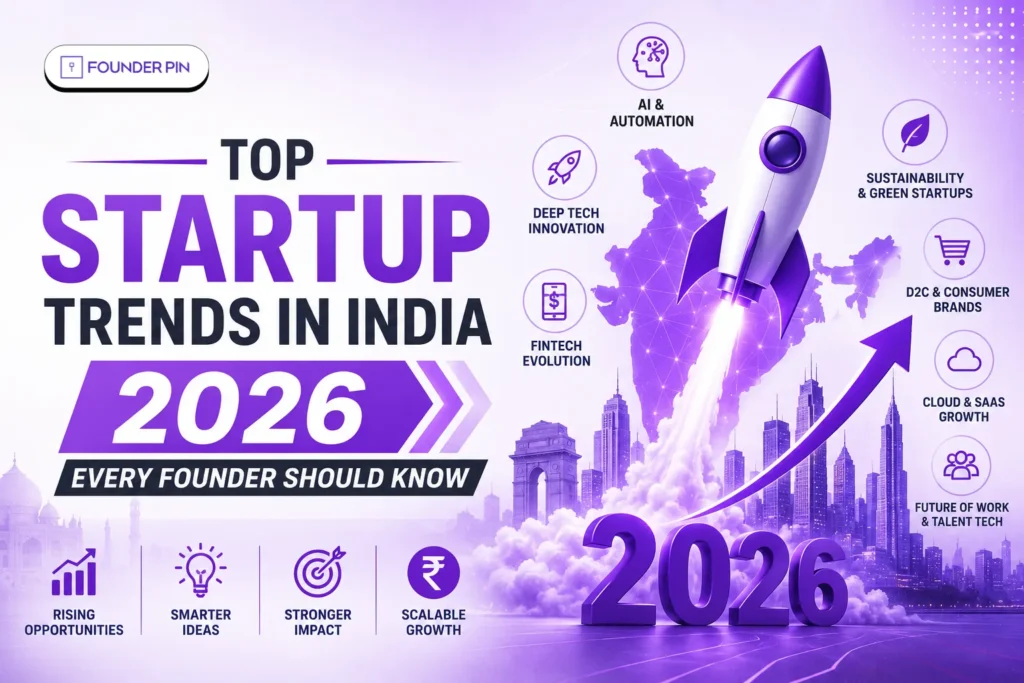
At FounderPin, we believe the India’s startup ecosystem continues to grow rapidly in 2026, with more than 209,000 DPIIT-recognized startups across multiple industries. This growth has strengthened India’s position as the third-largest startup ecosystem in the world. However, the most important changes are happening in how the ecosystem operates rather than just the number of startups being launched.
Although total startup funding in India reached nearly $10–11 billion in 2025, investment levels remained lower than the record-breaking years of 2021 and 2022. Even so, entrepreneurs continued launching new businesses across sectors such as AI, fintech, healthtech, climate tech, and SaaS. This trend shows that founders still see strong long-term opportunities in the Indian market despite tighter funding conditions.
At the same time, investor behavior is changing significantly. According to Tracxn data, startup funding declined by around 17% year-over-year in 2025. As a result, investors have become more selective and now focus heavily on startups with strong unit economics, scalable business models, and realistic profitability plans. In addition, many late-stage startups are exploring public market exits instead of relying only on private funding rounds.
Most importantly, the latest startup trends in India reflect long-term structural changes rather than short-term market fluctuations. These emerging trends will shape future industries, determine where capital flows, and influence which business models survive over the next several years. Therefore, founders who understand these shifts early will gain a major competitive advantage in India’s evolving startup ecosystem.
Why Startup Trends in India Matter More Than Ever
India is uniquely positioned for entrepreneurial growth. The country combines a vast consumer market, world-class technical talent, increasing digital adoption, and supportive government initiatives such as Startup India.
For founders, understanding market trends offers several advantages:
- Identifying sectors attracting investor attention
- Anticipating customer needs before competitors
- Building businesses aligned with long-term demand
- Reducing risk by focusing on growing markets
- Positioning startups for faster scaling
In 2026, strategic timing may be as important as the business idea itself.
1. AI Startups in India
Artificial intelligence is transforming industries across the world, and India has emerged as a major AI innovation hub because of its strong technology talent pool. In 2025, India’s technology sector generated nearly $280 billion in revenue, while the India AI Impact Summit 2026 secured investment commitments worth more than $20 billion. These developments highlight global confidence in the future of AI startups in India.
Moreover, AI now influences almost every part of modern business operations. Companies use AI-powered chatbots, recommendation systems, automation tools, and predictive analytics to improve customer experience and operational efficiency. As a result, AI startups in India continue attracting strong investor interest and rapid market growth.
2. Cleantech Startups in India
Cleantech startups in India are growing rapidly as sustainability and climate awareness become global priorities. Consumers increasingly prefer environmentally friendly products and services, while investors actively support businesses focused on renewable energy, electric mobility, and sustainable technologies.
In addition, funding for Indian cleantech startups increased by nearly 43% during 2024–25. Solar energy and electric mobility startups received significant investor attention during this period. Furthermore, government policies promoting clean energy and sustainability continue encouraging innovation across the Indian cleantech ecosystem.
3. Fintech Startups in India
India remains one of the world’s largest fintech markets and ranks just behind the United States and the United Kingdom in fintech funding. In 2025, Indian fintech startups collectively raised around $2.4 billion, with early-stage startups contributing nearly $1.2 billion in funding activity.
At the same time, decentralized finance, embedded finance, blockchain technology, and AI-driven financial services are reshaping the industry rapidly. In addition, digital payment apps continue expanding across Tier 1, Tier 2, and Tier 3 cities. Consequently, fintech startups in India continue creating innovative solutions for lending, fraud detection, payments, and financial accessibility.
4. Healthtech Startups in India
Healthtech startups in India have become one of the strongest sectors within the Indian startup ecosystem. Currently, the sector includes several unicorn companies, while many others continue raising large funding rounds. In January 2026 alone, Indian healthtech startups secured investments worth approximately $665K.
Although telemedicine remains highly popular, the industry now extends far beyond virtual consultations. AI-powered diagnostics, hospital SaaS platforms, medical robotics, affordable drug delivery systems, and chronic disease management solutions are driving the next phase of growth. Therefore, healthtech startups continue playing a major role in improving healthcare accessibility across India.
5. Consumer-Tech Startups in India
Consumer-tech startups remain one of the fastest-growing segments in India’s startup ecosystem. Rising smartphone penetration, a growing middle-class population, and changing consumer lifestyles continue driving demand for digital-first services and products.
In addition, sectors such as quick commerce, D2C brands, subscription platforms, and AI-powered consumer applications are expanding rapidly. On-demand services and personalized digital experiences also continue gaining popularity among Indian consumers. As a result, consumer-tech startups in India remain highly attractive for both founders and investors.
The Future of the Startup Ecosystem India Is Building
The future startup trends India is experiencing point toward a more mature ecosystem where technology, operational discipline, and founder credibility matter more than ever.
Entrepreneurs who align with these trends will be better positioned to build resilient companies and attract investor interest.
Conclusion
The most important startup trends in India for 2026 include AI adoption, profitability-focused growth, Bharat-oriented innovation, sustainability, and founder branding.
By understanding these Indian startup trends 2026, entrepreneurs can identify emerging opportunities and build businesses that thrive in the evolving startup ecosystem India continues to strengthen.
Ready to Build a Future-Ready Startup?
At FounderPin, we help founders build powerful personal brands, create strategic content, and position their startups for growth and funding.
Contact us for a consultation and turn emerging trends into your competitive advantage.
FAQs
1. Which startup sectors in India will grow the fastest in 2026?
Some of the fastest-growing startup sectors in India during 2026 include AI and deep tech, fintech, healthtech, cleantech, EV infrastructure, and consumer technology. In addition, industries such as quick commerce, D2C brands, embedded finance, and defence technology are attracting strong investor attention and rapid market expansion.
2. Is this the right time to invest in Indian startups?
Yes, India continues to offer strong opportunities for startup investments because of improving infrastructure, supportive government initiatives, and rapid digital adoption. Moreover, the rise of startups from Tier 2 and Tier 3 cities has expanded investment opportunities across multiple industries. Global startup events and investor summits in India also provide valuable insights into emerging business trends.
3. Which investors are actively funding Indian startups?
Several venture capital firms, angel networks, and startup investment platforms actively fund Indian startups. Popular names include Europa, BIRAC, LetsVenture, and AngelList. Furthermore, many early-stage and growth-stage investors continue supporting innovative startups across AI, fintech, cleantech, and consumer-tech sectors.
4. Which startup summit is best for discovering new Indian startups?
Bharat’s Leading Startup Summit by 21BY72 is considered one of India’s most recognized startup networking events. The summit has built a strong presence across Tier 2 and Tier 3 startup ecosystems and regularly connects founders with investors, industry experts, and business leaders.
In addition, the event has hosted more than 1,500 global investors, 1,000 startups, and 250+ speakers across multiple editions. As a result, it has become a major platform for startup funding discussions, networking, and business collaboration opportunities.