
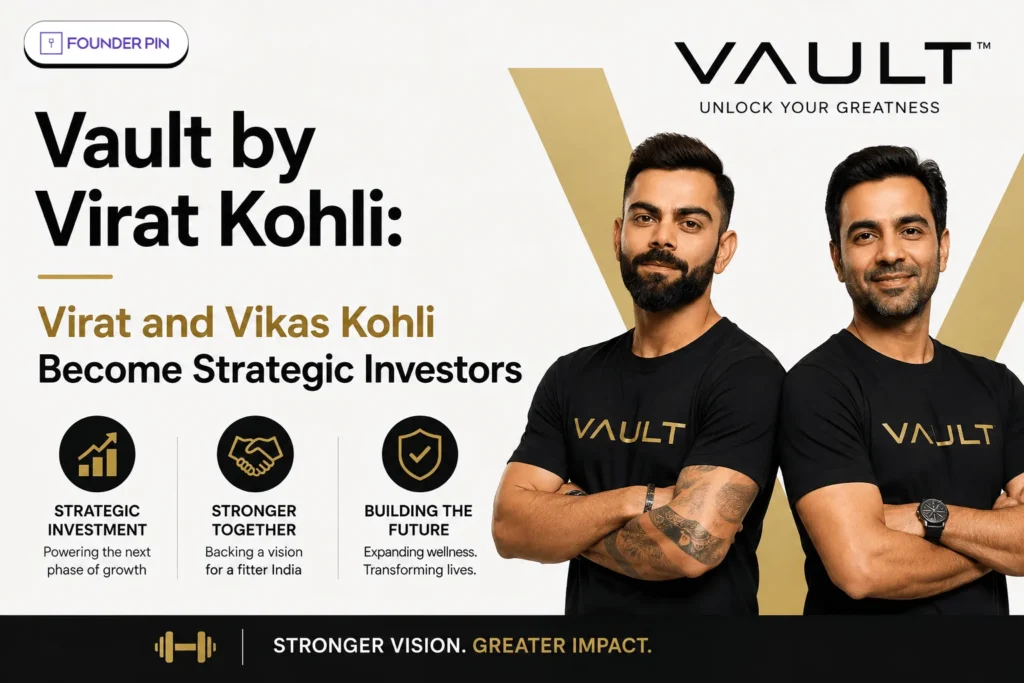
Virat Kohli and his brother Vikas Kohli have been accepted as strategic investors in Vault by Virat Kohli. They currently own 28% of the premium fitness chain’s shares. The company hopes to expand throughout India more quickly with this alliance.
Founded in 2023 by fitness entrepreneur Mukesh Gogia, Vault has quickly built a strong presence in the fitness and wellness industry. Today, the brand serves more than 30,000 members through its growing network of clubs. Moreover, the company plans to operate over 50 fitness centers by the end of 2026.
This investment is important for more than just Virat Kohli’s popularity. Instead, it highlights his growing role as a business leader in the fitness sector. As a strategic investor, he will support the brand’s long-term growth and expansion plans.
What is the latest Vault by Virat Kohli investment?

With a combined 28% equity position, Virat and Vikas Kohli have officially joined Vault as strategic investors. Virat Kohli continues to hold the majority share of that combined stake, according to reports.
The company announced the development on July 30, 2026, positioning the investment as part of its next growth phase.
Importantly, Vault has not publicly disclosed the monetary value of the investment in the announcement. Therefore, it would be inaccurate to describe this as a specific ₹X crore or $X million funding round.
The known figure is the 28% equity stake, not the cash amount behind the transaction. Vault’s official platform provides more details about its fitness, training and recovery experience, including the facilities and services available to members.
What does the 28% stake mean?
Equity ownership gives the Kohli brothers a deeper economic interest in the company’s growth than a conventional celebrity endorsement.
That distinction matters.
Virat Kohli has long been associated with fitness, but becoming a strategic investor connects his personal brand more directly with Vault’s business performance and expansion plans.
For a consumer brand, that combination can create a powerful alignment between founder strategy, investor credibility and public visibility.
Why is Virat Kohli investing in Vault?
Given Virat Kohli’s longstanding reputation for performance and health, the investment makes sense. Offering strength training, functional fitness, recuperation facilities, and wellness-focused activities, Vault presents itself as more than just a traditional gym.
Vault is a luxury fitness destination based on a 360-degree approach to physical and emotional wellbeing, according to the company’s official website.
World-class equipment, professional coaches, group sessions, strength training, and Hyperice-powered recuperation rooms are among its amenities.
The performance-focused image Kohli has developed over his cricket career is quite similar to that positioning.
Therefore, the investment makes more strategic sense than just branding a gym with a well-known name.
How Vault Compares to India’s Existing Fitness Chains
None of the coverage placed Vault against its actual competition. A quick comparison:
- Cult.fit has scaled largely through metro-dense, tech-first fitness centers and digital content — a different playbook from Vault’s franchise-club model
- Gold’s Gym India and Anytime Fitness are the closest franchise-model comparables, but neither has aggressively pushed into Tier 3 cities the way Vault now plans to
- F45 and Snap Fitness remain concentrated in premium metro pockets
Vault’s bet is specific: premium fitness infrastructure in cities like Gorakhpur, where organised gym chains barely exist yet. That’s a genuinely underserved market — and also a genuinely unproven one at scale.
How big is Vault by Virat Kohli today?
With more than 30,000 members and about 30 clubs, Vault claims to have a significant foundation for its next stage of growth. With aspirations to expand into Tier-III markets, the company now operates in Tier-I and Tier-II cities.
Since its founding in 2023, the business has expanded through a franchise-partner-led business model.
Depending on the location and layout, its clubs can be anywhere from 6,000 to 25,000 square feet.
Vault’s current expansion strategy includes:
- Growing its franchise network across India
- Entering more Tier-II and Tier-III cities
- Building a premium but community-focused fitness proposition
- Increasing the number of operational clubs
- Expanding beyond traditional metro markets
The model is important because owning every gym outright would require significantly more capital and operational infrastructure.
Franchising can allow a fitness brand to expand faster while sharing investment and operating responsibilities with franchise partners.
Why is the franchise model important for Vault?
A franchise-led strategy can help Vault scale across India without requiring the company to fund every new location entirely from its own balance sheet.
Fitness is a location-dependent business. A gym needs real estate, equipment, trainers, staff, marketing and ongoing operating expenses.
A franchise partner can contribute much of the local investment and operational effort while the brand provides its systems, positioning and standards.
For Vault, that model becomes particularly interesting as it targets smaller cities.
The company’s leadership has specifically highlighted its ambition to make premium fitness more accessible beyond a handful of major metros.
What makes Vault different from a traditional gym?
Vault is positioning itself as a fitness and wellness destination rather than simply a place to lift weights and leave.
Its official offering includes:
- Strength training
- Cardiovascular fitness
- Functional training
- Group sessions
- Personalised training
- Recovery facilities
- Certified coaches
- Community-focused experiences
The company also highlights equipment from brands including Matrix, Torque USA and Concept2, while its recovery rooms feature Hyperice technology.
This premium positioning is central to its brand strategy.
The idea is simple: instead of competing only on the number of treadmills or dumbbells, Vault wants to compete on the overall member experience.
Vault’s strategy also reflects a broader shift in how Indian consumer startups are building differentiated brands, a trend explored in FounderPin’s analysis of the latest startup trends in India.
What does Virat Kohli’s investment mean for Vault’s brand?
Virat Kohli brings more than capital; he brings strong brand association with fitness, discipline and athletic performance.
That can help Vault differentiate itself in a crowded Indian fitness market.
Celebrity involvement, however, is not a substitute for business fundamentals.
The brand still needs to maintain consistent service quality across franchises, deliver strong member retention and build economics that work for both the company and franchise partners.
That is where the strategic-investor role becomes more interesting.
If Kohli’s involvement contributes to brand strategy, customer acquisition and long-term positioning—not just visibility—the relationship could create more durable value. Vault’s approach is also part of a wider movement toward founder- and personality-led consumer brands, similar to the strategies discussed in FounderPin’s analysis of Aman Gupta’s OFF/BEAT funding.
What can startups learn from Vault by Virat Kohli?
Vault’s growth strategy offers several useful lessons for consumer startups, especially those combining personal brands with scalable physical businesses.

1. Turn personal credibility into business value
Virat Kohli’s association with fitness gives Vault a strong brand story.
But the company’s challenge is converting that attention into memberships, retention and sustainable revenue.
2. Use partnerships to accelerate scale
The franchise model allows Vault to expand through partners instead of building every location entirely on its own.
3. Build a clear positioning
Vault does not market itself simply as another gym.
It emphasises premium fitness, recovery, coaching and community, creating a broader lifestyle proposition.
4. Look beyond major cities
The company is actively targeting Tier-II and Tier-III markets.
That reflects a broader opportunity for consumer businesses that can adapt premium experiences to India’s expanding urban markets.
5. Be transparent about funding facts
The Vault by Virat Kohli funding story is a good reminder that equity ownership and funding amount are not the same thing.
When the company has not disclosed a transaction value, publishers should report the confirmed 28% stake rather than speculate about the cheque size.
Founders evaluating their own fundraising strategy can also compare different capital sources, including seed, angel and venture capital, in FounderPin’s guide to Seed Funding vs Angel Funding vs VC Funding.
FounderPin Perspective
The Vault by Virat Kohli investment is interesting because it combines three things that consumer startups increasingly care about: capital, celebrity credibility and distribution.
Virat Kohli’s personal association with fitness gives the company an unusually strong brand asset. The franchise model gives it a potential path to faster expansion, while the strategic-investor structure gives the Kohli brothers a direct financial interest in the company’s success.
But the real test starts now.
Growing from 30 clubs to 50-plus is one challenge. Maintaining quality, member retention and healthy franchise economics across those locations is another.
For founders, that is the bigger lesson: a famous investor can open doors, but a scalable business has to keep them open.
As Vault moves into its next expansion phase, founders can explore more Indian startup funding trends to understand why investors are increasingly focusing on scalable businesses, strong fundamentals and capital-efficient growth.
Final Takeaway
The latest Vault by Virat Kohli announcement is more than a celebrity endorsement story. Virat Kohli and Vikas Kohli have formally become strategic investors with a combined 28% equity stake, giving them a deeper financial connection to the brand’s future.
The company now plans to use its strengthened position to accelerate franchise-led expansion across India.
The exact Vault by Virat Kohli funding amount remains undisclosed, but the strategic direction is clear: more clubs, more cities and a bigger premium fitness network.
For Vault, the next workout is execution—and this one will be measured in members, clubs and business performance, not just reps.
Contact FounderPin for Startup & Funding Guidance
Raising capital is only one part of building a successful company. Finding the right investors, creating an effective pitch, developing a scalable business model and preparing for growth are equally important.
At FounderPin, we help founders with fundraising strategy, investor readiness, pitch decks, startup planning, business strategy and growth opportunities.
Contact us for a consultation and let FounderPin help you build a stronger strategy for your next stage of growth.
Frequently Asked Questions
What is Vault by Virat Kohli?
Vault by Virat Kohli is a premium fitness and wellness chain founded in 2023 by fitness industry veteran Mukesh Gogia. It offers strength training, functional fitness, recovery and other wellness-focused services.
How much stake do Virat and Vikas Kohli hold in Vault?
Virat Kohli and Vikas Kohli have formalised a combined 28% equity stake in Vault. Virat holds the majority portion of their combined stake.
How much is the Vault by Virat Kohli investment worth?
The exact monetary value of the investment has not been publicly disclosed. The confirmed detail is the combined 28% equity stake.
Who founded Vault by Virat Kohli?
Vault was founded in 2023 by Mukesh Gogia, a fitness industry veteran.
How many members does Vault have?
Vault says it serves more than 30,000 members across its network. The company has also announced plans to exceed 50 operational clubs by the end of 2026.