
Startup Equity Distribution: How Much Equity Should First-Time Founders Give Away?
Table of Contents
Toggle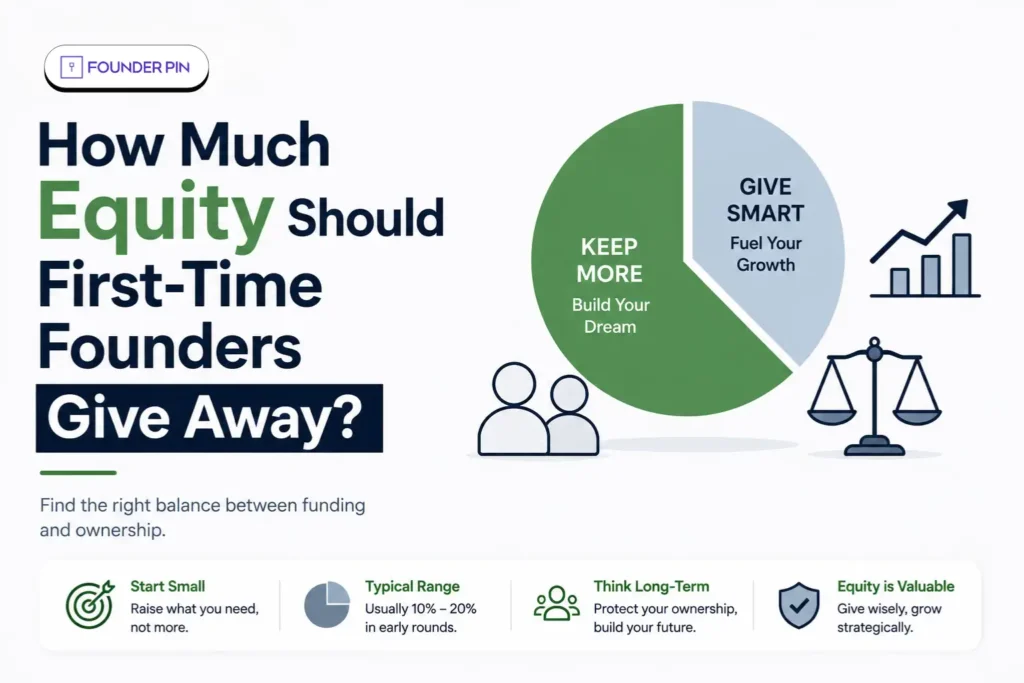
Key Takeaways
- Startup Equity Distribution directly impacts founder control, future fundraising flexibility, and long-term wealth creation.
- Founders should avoid giving away excessive equity in early funding rounds to prevent significant dilution later.
- A well-planned equity structure should balance the interests of founders, investors, employees, and advisors.
- ESOPs can help attract and retain top talent while aligning employee incentives with company growth.
- Strategic equity planning ensures startups can raise future funding while preserving meaningful founder ownership.
Introduction
One of the most important decisions a founder makes is determining how much ownership to give away while building and scaling a startup. Whether you’re bringing on co-founders, early employees, angel investors, or venture capital firms, every equity decision impacts the future of your company.
Many first-time founders focus primarily on raising capital without fully understanding the long-term effects of dilution. While funding can accelerate growth, giving away too much equity too early can reduce control, limit future fundraising flexibility, and create challenges during later investment rounds.
At FounderPin, we regularly advise founders on fundraising strategy and ownership planning. Understanding Startup Equity Distribution is essential for maintaining founder control while securing the resources needed to grow a successful business.
What Is Startup Equity?
Startup equity represents ownership in a startup and is usually expressed as a percentage of the company’s shares. Founders distribute equity to individuals who contribute to the company’s growth, such as co-founders, investors, employees, and advisors.
If you start a business alone, you initially own 100% of the company. However, as the business grows, maintaining complete ownership may limit your ability to scale. Expanding a startup often requires hiring talented employees, bringing in experienced advisors, and raising external funding—all of which typically involve sharing a portion of the company’s equity.
By allocating equity strategically, founders can attract skilled professionals, secure investment, and build a stronger team without relying solely on personal resources. A well-planned equity distribution helps align everyone’s interests and supports the long-term success of the business.
Interesting Fact: Even though Jeff Bezos founded Amazon, he owns less than 10% of the company today. Despite holding a relatively small ownership stake, he remains one of the wealthiest individuals in the world, demonstrating that building a larger company can often be more valuable than retaining complete ownership.
Why Equity Distribution Matters for First-Time Founders
Many startups fail to plan for future fundraising rounds.
Each investment round typically results in dilution, meaning founders own a smaller percentage of the company over time.
Poor equity planning can lead to:
- Reduced founder control
- Difficulty attracting future investors
- Misaligned incentives
- Co-founder disputes
- Lower long-term wealth creation
The goal is not to avoid dilution entirely but to manage it strategically.
Also Read | Bootstrapped Startup Funding: Can Startups Get Government Funding?
Factors to Consider When Splitting Startup Equity
Determining the right startup equity distribution is one of the most important decisions founders make. Since every startup has different goals, team structures, and growth plans, there is no one-size-fits-all approach. The following factors can help founders create a fair and balanced equity split.
1. Individual Contributions
Equity should reflect the value each person brings to the startup. Consider factors such as:
- Time and effort invested in the business
- Industry knowledge and technical expertise
- Intellectual property or innovative ideas contributed
- Financial investment made by the individual
Those who contribute more to the company’s growth may deserve a larger ownership stake.
2. Roles and Responsibilities
A person’s role within the company also plays a significant part in determining equity allocation. For example, founders or employees handling critical leadership, product development, or technical responsibilities may receive a higher equity percentage than those with limited involvement.
3. Long-Term Commitment
Founders should evaluate each team member’s future involvement in the business. Someone working full-time and driving daily operations may warrant more equity than a person who remains a passive investor or contributes only occasionally.
4. Market and Funding Requirements
The startup’s industry and fundraising strategy can also influence equity distribution. Businesses operating in competitive sectors or planning to raise venture capital may need to reserve additional equity for future investors, employees, or strategic partners.
5. Legal and Tax Considerations
Before finalizing an equity split, founders should understand the legal and tax implications of their decisions. Consulting experienced legal and financial professionals can help ensure the ownership structure complies with regulations and remains tax-efficient.
How Much Equity Should First-Time Founders Give Away?
For most venture-backed startups, first-time founders typically give up 10% to 20% equity during the Seed round and 15% to 25% during the Series A round. As a general rule, founders should aim to keep dilution below 25% in each funding round to maintain long-term ownership and decision-making control.
The ideal startup equity distribution depends on your fundraising strategy, business model, and growth plans. The recommendations below are intended for high-growth startups seeking venture capital rather than bootstrapped or lifestyle businesses.
“Equity is a startup’s most valuable currency. Spend it strategically, because every percentage point given away today could be worth millions tomorrow.”
1. Equity Allocation for Investors
Equity offered to investors usually varies depending on the funding stage.
Pre-Seed or Angel Round
Recommended Equity: 10%–15%
Early-stage funding is commonly raised through SAFE agreements or convertible notes. Since the startup is still in its initial stages, founders should avoid giving away excessive equity.
Seed Round
Recommended Equity: 15%–20%
This range is widely accepted as the industry benchmark. If investors request more than 25%, founders should carefully review their valuation and fundraising strategy before proceeding.
Series A Round
Recommended Equity: 15%–25%
Institutional investors typically expect dilution within this range, with the average falling between 18% and 20%.
2. Equity Distribution Among Co-Founders
Founders should determine equity based on each person’s contribution, commitment, and responsibilities instead of automatically choosing an equal split.
Equal Equity Split
Examples:
- 50/50
- 33/33/33
An equal split is often recommended when all founders join the company at the same time and contribute equally to building the business.
Unequal Equity Split
Examples:
- 60/40
- 70/30
Unequal ownership may be appropriate if one founder contributes significantly more through capital investment, product development, technical expertise, or industry experience.
3. Employee Stock Option Pool (ESOP)
Most startups establish an Employee Stock Option Plan (ESOP) before raising institutional funding to attract and retain top talent.
Total ESOP Pool
Recommended Allocation: 10%–15%
This pool is reserved for future employees during the startup’s early growth phase.
Typical ESOP Allocation
| Role | Recommended Equity |
|---|---|
| Founding CTO / First Technical Hire | 1%–5% (up to 5%–10% in exceptional early-stage cases) |
| Early Employees (First 10 Hires) | 0.5%–1.5% each |
| Senior Executives (VPs & C-Level) | 1%–2% |
4. Equity for Startup Advisors
Advisors can provide valuable support through fundraising, strategic guidance, customer introductions, and industry expertise.
Individual Advisor
Recommended Equity: 0.1%–0.25%
Advisor equity should be reserved for individuals making meaningful contributions to the startup’s growth.
Total Advisor Pool
Recommended Maximum: 2%
Keeping the overall advisor pool below 2% helps preserve founder ownership while rewarding valuable advisors.
Common Startup Equity Distribution Mistakes
Giving Away Too Much Equity Too Early
- Many first-time founders underestimate future capital requirements.
- If substantial ownership is given away during the first fundraising round, founders may lose significant control after subsequent rounds.
Ignoring Future Dilution
- Founders should model multiple funding rounds to understand how ownership percentages may change over time.
- Strategic planning prevents surprises.
Overcompensating Advisors
- Advisors can provide valuable guidance, but excessive equity grants may become costly as the company grows.
- Equity should be tied to measurable contributions.
Failing to Document Agreements
- Verbal agreements often lead to disputes.
- All equity allocations should be formally documented through legal agreements and shareholder records.
Best Practices for Startup Equity Distribution
Use a Four-Year Vesting Schedule
Never issue equity immediately. Instead, implement a 4-year vesting schedule with a 1-year cliff. This ensures that equity is earned over time and protects the company if a founder or employee leaves early.
Allocate Equity Strategically
Treat equity as one of your startup’s most valuable assets. Reserve larger ownership stakes for individuals who make significant long-term contributions to the company’s success.
Monitor Founder Dilution
Plan fundraising carefully to avoid excessive dilution across multiple investment rounds. Ideally, founders should retain meaningful ownership throughout the company’s growth journey, with many successful startups aiming for the founding team to collectively hold approximately 15%–30% ownership by the time of an IPO or major acquisition.
Also Read | How to Write a Winning Grant Proposal for Startups
Equity Distribution and Fundraising Strategy
Think Beyond the Current Round
Many founders negotiate based solely on immediate funding needs.
Instead, consider:
- Future fundraising rounds
- Hiring plans
- Expansion goals
- Exit scenarios
Long-term planning creates stronger outcomes.
Prioritize Smart Capital
The best investors bring more than money.
Strategic investors often provide:
- Industry expertise
- Customer introductions
- Hiring support
- Market access
Accepting slightly more dilution from the right investor may create greater long-term value.
Building a Founder-Friendly Equity Structure
Successful startups treat equity as a strategic asset rather than a fundraising tool.
An effective structure should:
- Reward contributors fairly
- Protect founder ownership
- Support employee growth
- Attract investors
- Enable future fundraising
Founders who understand equity dynamics make better decisions throughout the startup lifecycle.
Conclusion
Effective Startup Equity Distribution is one of the most critical factors in building a successful company. While fundraising, hiring, and strategic partnerships often require sharing ownership, founders must carefully balance short-term needs with long-term control and value creation.
The most successful startups approach equity strategically, ensuring that founders, employees, and investors remain aligned as the company grows. By planning early and understanding the impact of dilution, first-time founders can avoid costly mistakes and build a stronger foundation for future success.
Contact FounderPin for Expert Fundraising Guidance
Determining the right equity structure can be challenging, especially for first-time founders. At FounderPin, we help entrepreneurs navigate fundraising, investor negotiations, startup valuation, and equity planning.
Contact us for a consultation today and build a fundraising strategy that supports growth while protecting founder ownership.
Frequently Asked Questions (FAQs)
1. What is Startup Equity Distribution?
Startup Equity Distribution refers to how ownership shares are allocated among founders, co-founders, employees, advisors, and investors. A well-structured equity distribution plan helps maintain founder control, attract talent, and support future fundraising while ensuring all stakeholders are fairly incentivized.
2. How much equity should first-time founders give away to investors?
The amount of equity founders give away depends on factors such as valuation, funding requirements, growth stage, and market conditions. Founders should raise enough capital to achieve key milestones while preserving sufficient ownership for future funding rounds and long-term decision-making authority.
3. Why is equity dilution important for startup founders?
Equity dilution occurs when new shares are issued during fundraising, reducing existing ownership percentages. While dilution is a normal part of startup growth, excessive dilution can reduce founder control and future financial returns. Strategic planning helps founders manage dilution effectively.
4. What is an ESOP, and why is it important in startup equity distribution?
An Employee Stock Option Plan (ESOP) allows startups to offer equity incentives to employees. ESOPs help attract and retain top talent, align employee interests with company success, and reduce reliance on high cash compensation during the early stages of growth.
5. What are the most common startup equity distribution mistakes?
Common mistakes include splitting equity equally without considering contributions, giving away too much ownership too early, ignoring future dilution, overcompensating advisors, and failing to implement vesting schedules. Proper equity planning helps avoid conflicts and supports sustainable startup growth.