Introduction
One of the most important financial questions every founder must answer is: how much runway should a startup have? While product development, customer acquisition, and fundraising often dominate startup conversations, cash management is what ultimately determines whether a business survives long enough to succeed.
Many startups fail not because they lack a great product or market opportunity, but because they run out of cash before reaching key milestones. Understanding startup cash runway, monitoring your startup burn rate, and implementing effective startup financial planning can dramatically improve your chances of long-term success.
In today’s uncertain funding environment, founders must treat runway as a strategic asset rather than just a financial metric. This Guide helps you how much runway a startup should have, how to calculate startup cash runway, manage burn rate, and improve startup financial planning.
Understanding Startup Runway in 2026
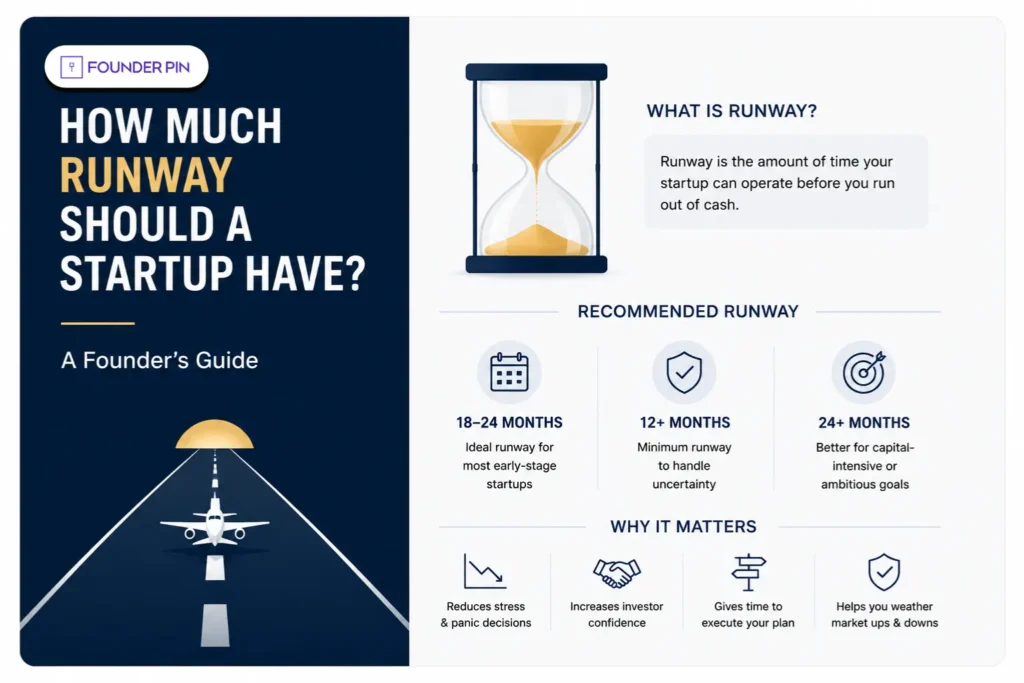
A startup runway measures how long your business can continue operating before its available cash is exhausted. As fundraising becomes more challenging in 2026, maintaining a healthy runway is more important than ever. Since cash shortages remain one of the leading causes of startup failure, founders should monitor this metric closely.
When estimating your ideal runway, consider the following factors:
- Current stage of your startup and future funding requirements.
- Monthly burn rate and expected revenue growth.
- Current fundraising environment and investor sentiment.
- Emergency cash reserves for unexpected challenges.
The fundraising landscape also plays a major role in determining how much runway you need. During favorable market conditions, startups can usually raise capital more quickly and secure larger funding rounds. However, in a slower investment climate, fundraising often takes longer and may result in smaller investments.
Because of these market changes, the traditional recommendation of maintaining 18–24 months of runway is no longer sufficient for many early-stage startups. In 2026, investors increasingly advise founders to secure 24–36 months of runway, providing additional financial stability while navigating longer fundraising cycles.
How to Calculate Startup Cash Runway
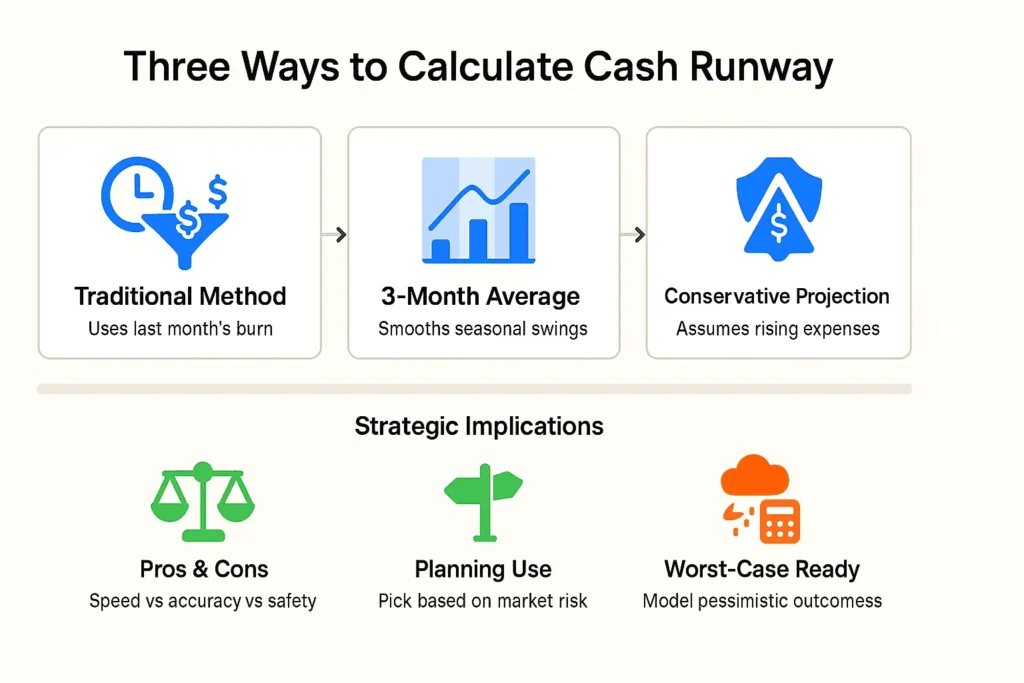
The basic runway formula is simple:
Runway = Available Cash ÷ Monthly Net Burn Rate
For example:
- Cash available: ₹1.2 crore
- Monthly burn: ₹10 lakh
Runway = 12 months
This means the startup can continue operating for approximately one year if spending and revenue remain unchanged.
Monitoring this metric regularly is essential for effective startup financial planning.
How Much Startup Runway Do You Need?
Most startups should aim for 18 to 24 months of cash runway to achieve key business milestones without rushing into another funding round. However, with fundraising becoming more competitive, many investors now recommend maintaining 24 to 36 months of runway to provide greater financial security.
The ideal runway depends on your startup’s stage of growth.
Recommended Runway by Startup Stage
- Pre-Seed: 12–18 months to build a Minimum Viable Product (MVP) and validate customer demand.
- Seed Stage: 18–24 months to achieve product-market fit and establish consistent revenue.
- Series A and Beyond: 24–36 months to expand operations, enter new markets, and accelerate business growth.
Why Is an 18–24 Month Runway Recommended?
Fundraising is rarely a quick process. From the first investor meeting to receiving funds, raising capital can take six months or more. If your startup has less than 12 months of runway, you may be forced to seek investment from a weaker negotiating position, which can lead to lower valuations and less favorable deal terms.
Maintaining a healthy runway allows you to approach investors while your business is performing well, giving you more leverage during fundraising discussions.
Best Practices for Managing Startup Runway
Monitor Your Burn Rate
Track your monthly expenses and cash burn with runway calculator regularly to understand how long your available capital will last.
Start Fundraising Early
Begin planning your next funding round while you still have at least six months of runway remaining. This provides enough time to negotiate with investors without financial pressure.
Review Your Financial Plan Regularly
Update your revenue forecasts, operating expenses, and growth projections frequently. Regular financial reviews help you identify potential cash flow issues early and make informed decisions to extend your runway if necessary.
Strategies to Extend Startup Runway
Improve Revenue Generation
Increasing revenue reduces net burn and extends runway naturally.
Focus on:
- Customer retention
- Upselling opportunities
- Pricing optimization
- New sales channels
Prioritize Essential Spending
Every expense should contribute directly to growth or operational efficiency.
Founders should regularly review spending categories and eliminate unnecessary costs.
Build Financial Forecasts
Strong startup financial planning requires accurate forecasting.
Track:
- Revenue projections
- Expense trends
- Hiring plans
- Cash flow scenarios
Forecasting helps identify risks before they become critical.
Raise Capital Before It Becomes Urgent
The best time to raise funding is when the company still has significant runway remaining.
This improves negotiation leverage and reduces investor concerns.
Conclusion
If you’re wondering how much runway should a startup have, the practical answer is typically between 12 and 18 months, with growth-stage companies often targeting even longer timelines. However, the ideal runway depends on your business model, revenue generation, market conditions, and fundraising strategy.
Understanding burn rate and runway is no longer optional for founders. It is one of the most important aspects of startup survival and long-term success. By monitoring cash carefully, improving financial planning, and maintaining disciplined spending habits, founders can create the flexibility needed to navigate uncertainty and achieve sustainable growth.
Contact FounderPin for Startup Funding and Financial Strategy Support
Managing startup runway requires more than tracking cash—it requires strategic planning and informed decision-making.
At FounderPin, we help founders improve fundraising readiness, optimize financial planning, and build sustainable growth strategies.
Contact us for a consultation today and ensure your startup has the runway needed to achieve its next milestone.