
Introduction
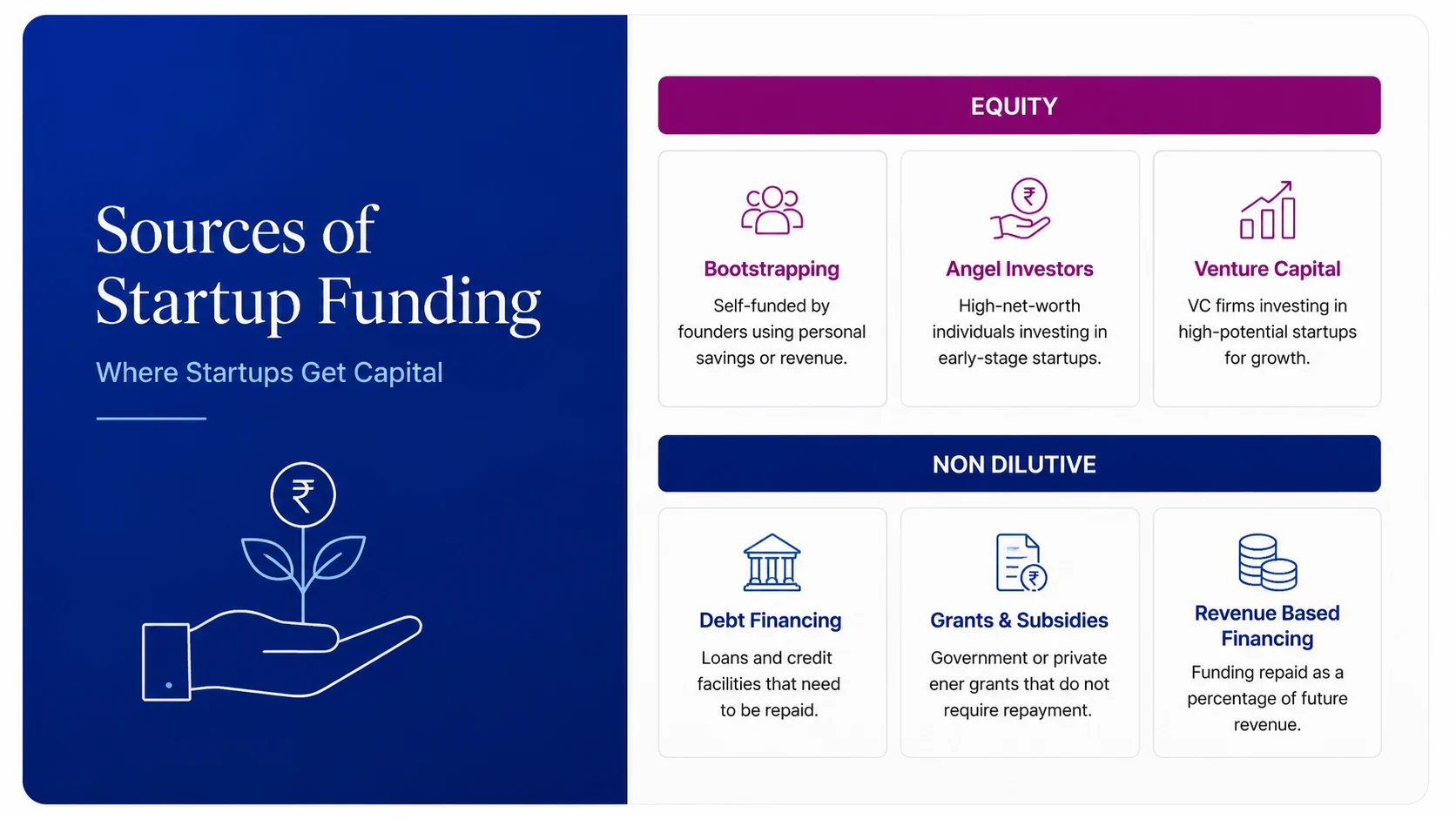
For decades, venture capital has been the default funding path for high-growth startups. However, many founders are beginning to question whether giving away equity is always the best way to finance growth. As startup ecosystems mature, entrepreneurs are exploring more flexible and founder-friendly funding models.
One of the fastest-growing startup financing options today is Revenue Based Financing (RBF). This model allows startups to raise growth capital without sacrificing ownership or control. As a result, many founders now view it as one of the most attractive VC funding alternatives available.
But is Revenue Based Financing right for every startup? Understanding how it works, its advantages, limitations, and ideal use cases can help founders make smarter funding decisions.
What Is Revenue-Based Financing (RBF)?
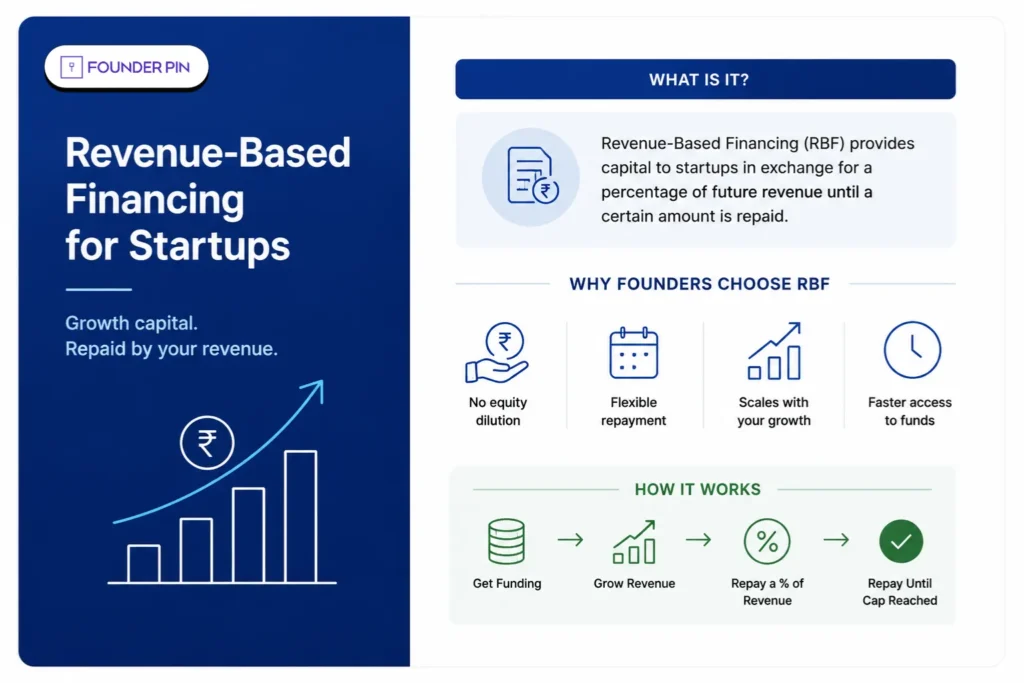
Revenue-Based Financing (RBF) is a funding option that allows startups to raise capital without giving up equity. Instead of selling ownership shares, founders repay investors by sharing a fixed percentage of their future monthly revenue. Unlike traditional loans, repayment amounts fluctuate based on business performance, making RBF a flexible financing solution for growing companies.
How Does Revenue-Based Financing Work?
Revenue-Based Financing follows a straightforward repayment model:
- Receive Upfront Capital: Startups receive funding that can range from $10,000 to several million dollars, depending on their revenue and growth potential.
- Repay Through Monthly Revenue: Instead of fixed EMIs, businesses repay a pre-agreed percentage of their monthly revenue, typically between 1% and 10%.
- Repayment Cap: Once the total repayment reaches the agreed limit—usually 1.3x to 2.5x the original investment—the repayment obligation ends.
Revenue-Based Financing vs. Venture Capital
Advantages of Revenue-Based Financing
Maintain Full Ownership
Since RBF does not require founders to sell equity, they retain complete control over the company and its long-term vision.
Flexible Repayment Structure
Repayments increase when revenue grows and decrease during slower months, helping businesses manage cash flow more effectively.
Faster Access to Capital
RBF providers primarily evaluate financial performance and revenue metrics, making the funding process faster than many traditional venture capital rounds.
Also Read | How to Find Angel Investors Without Warm Introductions
Things to Consider Before Choosing RBF
Not Suitable for Pre-Revenue Startups
Most RBF providers only fund businesses with consistent and predictable revenue. Early-stage startups without recurring income may not qualify.
Higher Overall Funding Cost
Although RBF avoids equity dilution, the total repayment amount can result in a higher effective financing cost compared to traditional bank loans.
Ongoing Revenue Sharing
Because repayments are tied to monthly revenue, a portion of your income goes toward servicing the investment until the agreed repayment cap is reached. This may temporarily reduce cash available for business expansion.
Who Should Choose Revenue-Based Financing?
Revenue-Based Financing is best suited for startups with predictable monthly revenue streams. It is especially popular among:
- SaaS (Software as a Service) companies
- Subscription-based businesses
- Direct-to-Consumer (D2C) brands
- E-commerce businesses
- Companies seeking working capital for marketing, hiring, or product development
Several fintech platforms, including GetVantage in India and Uncapped and Lighter Capital internationally, offer Revenue-Based Financing solutions to eligible startups.
Top Revenue-Based Financing (RBF) Platforms in India
If you’re looking for Revenue-Based Financing (RBF), these platforms offer flexible funding solutions for growing startups:
- Velocity – Provides revenue-based funding for D2C and SaaS startups looking to scale.
- GetVantage – Offers collateral-free growth capital with flexible repayment linked to your revenue.
- Recur Club – Specializes in SaaS and subscription-based businesses, helping unlock working capital quickly.
- KredX – Delivers customized financing solutions for inventory management and short-term business funding.
Potential Risks of Revenue-Based Financing
Although Revenue-Based Financing (RBF) is a flexible and non-dilutive funding option, it also comes with certain risks. Since RBF is a form of debt financing, founders should carefully evaluate their repayment capacity and growth projections before choosing this funding model.
1. Repayments Depend on Business Revenue
The success of Revenue-Based Financing relies on your startup’s ability to generate consistent revenue. If sales decline or business growth slows, meeting repayment obligations can become challenging. Poor financial performance may also reduce investor confidence and affect your company’s reputation.
2. Cash Flow Pressure
Because repayments are tied to monthly revenue, a portion of your income is continuously allocated toward loan repayment. As a result, there may be less operating cash available for marketing, employment, product development, and other expansion-related projects.
3. Exposure to Market Conditions
Economic downturns, changing consumer demand, or industry-specific challenges can directly impact your revenue. Since repayment amounts depend on business performance, market fluctuations may place additional financial pressure on your startup.
4. Limited Liquidity
Revenue-Based Financing agreements are generally less flexible than traditional funding options. Businesses may find it difficult to restructure or exit the agreement early, and investors may also face limited liquidity compared to more traditional investment vehicles.
5. Short Repayment Period
Most Revenue-Based Financing providers expect the investment to be repaid within six months to two years (0.5–2 years). This relatively short repayment timeline can create significant pressure on startups to maintain strong and consistent revenue growth throughout the financing period.
Conclusion
Revenue Based Financing is emerging as one of the most compelling VC funding alternatives available to modern startups. By offering growth capital without equity dilution, it provides founders with greater flexibility, control, and ownership.
For startups with predictable revenue and sustainable growth ambitions, Revenue Based Financing can serve as a powerful funding tool. As more entrepreneurs seek non-dilutive funding for startups, this model is expected to play an increasingly important role in the startup ecosystem.
The future of startup funding is no longer limited to venture capital—and Revenue Based Financing is leading that transformation.
Contact FounderPin for Startup Funding Guidance
Choosing the right funding strategy can significantly impact your startup’s future growth and ownership structure.
At FounderPin, we help founders evaluate funding options, improve fundraising readiness, and identify the best financing path for long-term success.
Contact us for a consultation today and discover the right funding strategy for your startup.
Frequently Asked Questions (FAQs)
1. What is Revenue Based Financing for startups?
Revenue Based Financing (RBF) is a funding model where startups receive capital in exchange for a percentage of future revenue. Unlike venture capital, founders do not give up equity, making it a popular non-dilutive funding option for growing businesses.
2. How does Revenue Based Financing differ from venture capital?
The main difference is ownership. Venture capital investors receive equity in exchange for funding, while Revenue Based Financing providers earn returns through a share of monthly revenue. This allows founders to retain control and avoid equity dilution.
3. Which startups are best suited for Revenue Based Financing?
Revenue Based Financing works best for startups with predictable revenue streams. SaaS companies, subscription-based businesses, e-commerce brands, and other revenue-generating startups are often strong candidates for this type of funding.
4. Is Revenue Based Financing a non-dilutive funding option?
Yes, Revenue Based Financing is considered non-dilutive funding because founders do not sell company shares to investors. This helps entrepreneurs maintain ownership while accessing capital to support growth and expansion.
5. Is Revenue Based Financing a good alternative to VC funding?
Revenue Based Financing can be an excellent alternative to VC funding for startups that want flexible capital without giving up equity. It is especially attractive for founders focused on sustainable growth, profitability, and long-term ownership retention.