
Why Founders Reject Shark Tank India Deals: The Real Reasons Behind the Decision
Table of Contents
Toggle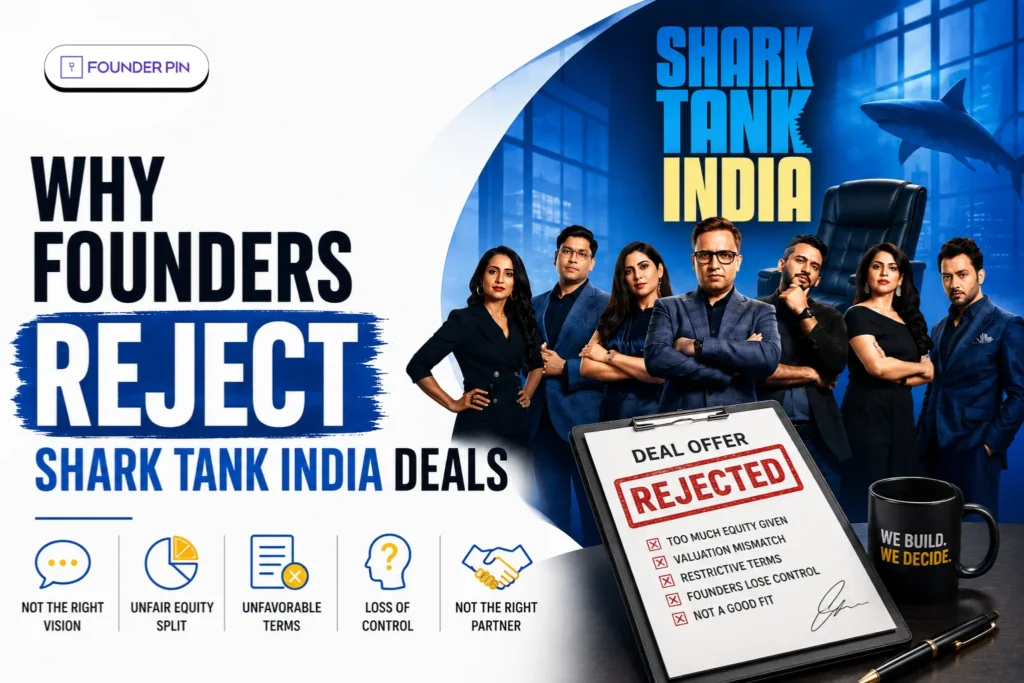
Key Takeaways
- Founders reject Shark Tank India deals when the investment terms do not align with their long-term business goals and vision.
- Concerns about excessive equity dilution often lead entrepreneurs to walk away from funding opportunities.
- Valuation disagreements are a common reason founders decline offers, especially when they believe their startup has greater growth potential.
- Investor-founder alignment is critical, as the right strategic partner can be more valuable than the funding itself.
- Successful fundraising is not about accepting every offer—it’s about choosing the right deal that supports sustainable growth and preserves founder value.
Introduction
For many entrepreneurs, receiving an investment offer on Shark Tank India appears to be a dream come true. Founders gain access to experienced investors, national visibility, and the possibility of accelerating business growth through funding and mentorship.
However, viewers are often surprised when entrepreneurs choose to reject offers from the Sharks. At first glance, turning down investment may seem irrational. Yet for many founders, declining a deal can be a strategic business decision.
Understanding why founders reject Shark Tank India deals provides valuable insights into startup fundraising, investor relationships, equity management, and long-term business planning. In many cases, rejecting a deal is not about refusing capital—it is about protecting the future of the company.
Why Some Founders Refuse Shark Tank India Deals
Not every handshake on Shark Tank India results in a completed investment. While many founders accept offers on the show, others choose to reject them or walk away during the post-show due diligence process. The most common reasons include concerns about equity dilution, company valuation, investor terms, and access to better funding opportunities after the episode airs.
Here are the main reasons why founders decide not to move forward with a Shark Tank India deal.
1. Better Funding Opportunities After the Show
Appearing on Shark Tank India gives startups nationwide exposure, often attracting interest from angel investors, venture capital firms, and strategic partners. As a result, many founders receive investment offers at higher valuations than those negotiated on television.
Why It Matters:
The increased visibility allows startups to explore funding options that better match their long-term growth plans.
2. High Equity Dilution
Some investment offers require founders to give up a significant ownership stake in exchange for funding and mentorship. Many entrepreneurs prefer to retain greater control of their business rather than dilute their equity too early.
Why It Matters:
Maintaining a larger ownership stake gives founders more decision-making authority and preserves long-term value.
3. Conflicts with Existing Investors
Many startups already have angel investors or venture capital firms on their cap table before appearing on the show. During post-show negotiations, certain deal terms—such as royalties, equity structures, or shareholder agreements—may conflict with existing investment contracts.
Why It Matters:
To avoid legal and financial complications, founders may decide not to proceed with the Shark Tank deal.
4. Marketing Benefits Without Investment
For some entrepreneurs, the primary objective of appearing on Shark Tank India is brand exposure rather than funding. The show often generates a substantial increase in website traffic, product sales, customer inquiries, and media attention.
Why It Matters:
After experiencing significant business growth from the publicity alone, some founders no longer require external investment and choose to continue independently.
5. Unfavorable Deal Terms
The investment discussed on television is only a preliminary agreement. During the due diligence process, founders may encounter contractual clauses related to equity transfers, royalty payments, governance, or operational control that do not align with their business goals.
Why It Matters:
If the final agreement does not support the company’s long-term vision, founders may decide to withdraw from the deal before it is officially completed.
Also Read | Biggest Negotiation Lessons From Shark Tank India Every Founder Should Learn
In a Shark Tank India episode, the founders of an insurance solutions startup sought ₹1 crore for 1% equity, reflecting their confidence in the company’s valuation. While Peyush Bansal showed interest, the valuation sparked debate among the Sharks. Ghazal Alagh ultimately opted out, stating that the company’s figures did not align with its current scale. The case highlights how valuation disagreements often influence investment decisions and why founders sometimes choose to stand firm on their business worth.
Conclusion
Understanding why founders reject Shark Tank India deals reveals an important truth about entrepreneurship: funding is only one part of building a successful business.
While Shark Tank offers tremendous exposure and access to experienced investors, entrepreneurs must carefully evaluate whether a deal aligns with their long-term goals. Concerns around equity dilution, valuation, investor fit, and business control often play a significant role in these decisions.
Ultimately, the strongest founders recognize that the right investment can accelerate growth, but the wrong investment can create long-term challenges. Knowing when to say yes—and when to say no—is one of the most valuable skills in startup fundraising.
Contact FounderPin for Startup Fundraising Guidance
Navigating investment offers, equity negotiations, and fundraising decisions can be challenging for any founder.
At FounderPin, we help startups evaluate funding opportunities, improve investor readiness, and build sustainable growth strategies.
Contact us for a consultation today and make smarter fundraising decisions for your startup’s future.
SHARE