
What Happens After Shark Tank India Deal? Success and Failure Stories
Table of Contents
Toggle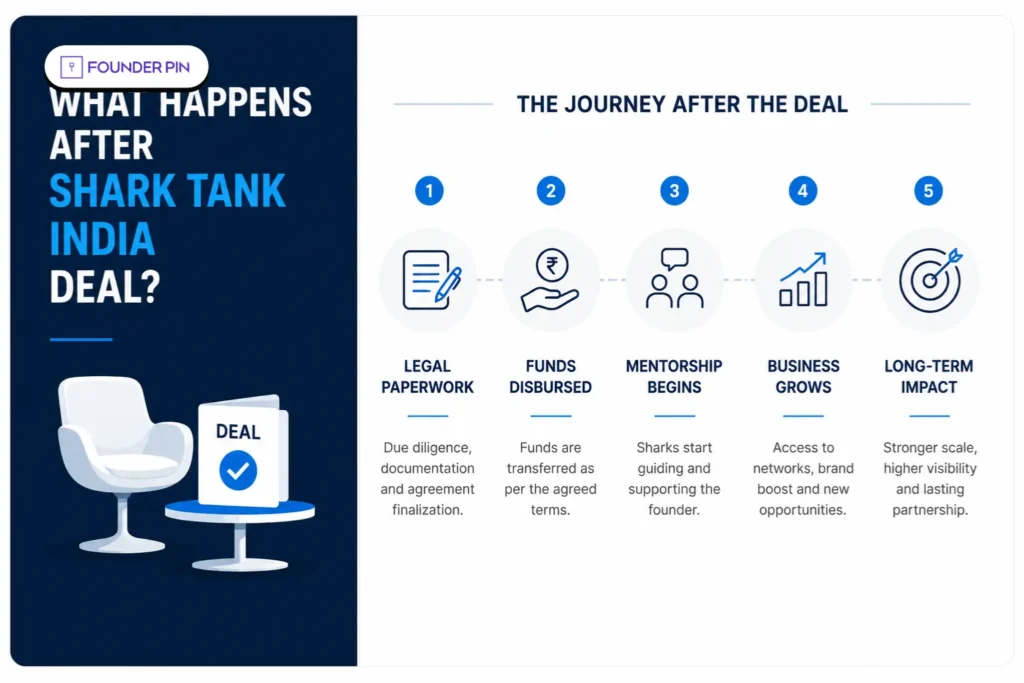
Key Takeaways
- Shark Tank exposure can boost brand awareness and sales, but long-term success still depends on strong business fundamentals and execution.
- Many successful Shark Tank startups use the platform as a growth accelerator, leveraging funding, mentorship, and increased visibility.
- Not all Shark Tank deals are finalized, as investors conduct due diligence after filming and may renegotiate or withdraw offers.
- Several startups struggle after the show due to operational challenges, poor scalability, or unsustainable business models.
- The biggest lesson from Shark Tank success and failure stories is that funding and publicity create opportunities, but consistent execution drives lasting business growth.
Introduction
For millions of viewers, Shark Tank India represents the ultimate startup dream. Entrepreneurs step onto a national stage, pitch their businesses to successful investors, and potentially walk away with funding that could change their future. What happens, though, when the cameras stop filming?
The reality is far more complex than a television episode. While some startups experience explosive growth after appearing on the show, others struggle despite securing investment. Understanding what happens after Shark Tank provides valuable lessons for founders, investors, and aspiring entrepreneurs alike.
The journey after Shark Tank typically includes the following stages:
1. Due Diligence and Deal Negotiation
Business Verification:
The Sharks and their investment teams thoroughly review the startup’s financial statements, legal documents, supply chain, and operational records. This process can take anywhere from 3 to 9 months.
Final Agreement:
The deal agreed upon during the TV show is only a preliminary agreement. During due diligence, terms such as valuation, equity ownership, or royalty arrangements may be revised based on the findings.
Deal Cancellation:
A considerable number of deals featured on the show do not reach completion because of financial inconsistencies, legal concerns, or changes in decision by either the entrepreneur or the investor.
2. The “Shark Tank Effect”
Boost in Sales:
After the episode is broadcast, many startups experience a substantial increase in website traffic, customer inquiries, and product sales. Businesses often need to expand operations quickly to meet the surge in demand.
Enhanced Brand Credibility:
Simply appearing on Shark Tank can significantly improve a company’s visibility and reputation. Even startups that do not secure an investment frequently benefit from increased customer trust, media attention, and new business opportunities.
3. Working with the Sharks
Operational Support:
For startups that complete their investment deals, the Sharks and their teams help improve various aspects of the business, including manufacturing, retail distribution, strategic partnerships, and business development.
| Shark | Typical Support |
|---|---|
| Aman Gupta | D2C growth, branding, marketing, influencer strategy |
| Peyush Bansal | Tech systems, hiring, logistics |
| Namita Thapar | Wellness industry growth, women-led mentorship |
| Anupam Mittal | Fundraising, brand positioning, PR |
| Vineeta Singh | Packaging, personal care, beauty D2C launches |
Expert Mentorship:
Founders receive ongoing guidance from the Sharks, their advisors, and investment teams, helping them make informed decisions on scaling, operations, and long-term business strategy.
Also Read | Why Some Startups Get Rejected on Shark Tank India Despite Good Ideas
4. Long-Term Business Growth
Scaling the Company:
After securing investment, the primary objective is to accelerate business growth through market expansion, stronger distribution channels, and increased revenue. Many startups work toward major milestones such as national retail expansion, acquisitions, or an Initial Public Offering (IPO) within 3 to 7 years.
“Risking nothing achieves nothing. Entrepreneurship involves stepping out of your comfort zone, challenging convention and seeking the right opportunities.”- Ritesh Agarwal (OYO Rooms)
Why Some Startups Succeed After Shark Tank
Increased Consumer Trust
- Consumers often view Shark Tank-backed businesses as more credible.
- A product endorsed by successful investors gains instant social proof, making customers more willing to purchase.
- This trust can dramatically improve conversion rates and customer acquisition.
- This trust can dramatically improve conversion rates and customer acquisition.
Stronger Brand Recognition
Startups that previously struggled with visibility suddenly gain nationwide recognition.
This often leads to:
- Organic marketing
- Social media growth
- Retail opportunities
- Distributor partnerships
Top Shark Tank India Success Stories
These startups successfully capitalized on the “Shark Tank Effect”, using the platform’s exposure and investment opportunities to become widely recognized brands.
Skippi Ice Pops
Skippi Ice Pops secured a rare all-Shark deal during Season 1. The national exposure helped the company rapidly expand its retail presence across India while also entering international markets.
Get A Whey
The healthy ice cream startup raised ₹1 crore in Season 1. Following its appearance, the company experienced significant growth, processing over 20,000 online orders before being acquired by Sky Gate Hospitality in a multimillion-dollar deal.
TagZ Foods
After securing ₹70 lakh in funding during Season 1, TagZ Foods expanded its direct-to-consumer snack business into more than 2,000 retail stores, while continuing to pursue ambitious revenue growth.
Why Some Startups Fail After Shark Tank
Exposure Cannot Fix Weak Fundamentals
One of the biggest lessons from various Shark Tank India failure stories is that visibility alone does not guarantee long-term success.
A startup may receive:
- Media attention
- Increased sales
- Investor interest
Yet still fail if core business fundamentals remain weak.
Operational Challenges
Rapid growth can create unexpected challenges.
Common problems include:
- Inventory shortages
- Supply chain issues
- Hiring difficulties
- Customer service failures
Many startups are unprepared for sudden demand spikes.
Unsustainable Unit Economics
Some businesses experience short-term growth after Shark Tank but struggle with profitability.
Without sustainable margins, increased sales can actually increase losses.
Shark Tank India Startups That Shut Down
While many startups achieve remarkable success after appearing on Shark Tank, others struggle with market competition, customer adoption, or operational challenges.
Sippline
Known for its viral drinking glass cover product in Season 1, Sippline failed to generate sustainable long-term demand and eventually shut down in 2023.
Peeschute
Despite receiving an investment on the show, the disposable pocket toilet startup faced challenges in achieving widespread adoption and ultimately ceased operations.
Meatyour
The egg-farming startup introduced an innovative business concept on Shark Tank, but intense competition within the poultry industry made it difficult to sustain operations, leading to its closure in 2023.
Watt Technovations
This startup developed innovative ventilation and mask-related products but was unable to maintain long-term market demand and eventually discontinued its business.
The Bigger Lesson for Startups
The true lesson behind what happens after Shark Tank is that funding and publicity are tools—not guarantees of success.
Whether a startup becomes one of the notable Shark Tank India success stories or joins the list of Shark Tank India failure stories depends largely on what founders do after the spotlight fades.
The businesses that succeed are those that combine visibility with strong execution, disciplined financial management, and a deep understanding of customer needs.
Conclusion
Shark Tank can open doors that might otherwise take years to unlock. It can provide funding, credibility, media exposure, and access to experienced investors. Yet these advantages alone do not determine success.
The most successful founders understand that the real work begins after the cameras stop rolling. Building a sustainable business requires consistent execution, operational excellence, and long-term vision.
Ultimately, what happens after Shark Tank depends less on the deal itself and more on how effectively founders capitalize on the opportunities it creates.
Contact FounderPin for Startup Growth and Fundraising Support
Whether you’re preparing for investors, scaling after funding, or improving fundraising readiness, having the right strategy matters.
At FounderPin, we help startups navigate fundraising, investor relations, and growth planning with confidence.
Contact us for a consultation today and take the next step in your startup journey.
Frequently Asked Questions (FAQs)
1. What happens to startups after appearing on Shark Tank?
After appearing on Shark Tank, startups often gain increased brand visibility, website traffic, customer interest, and media coverage. While some businesses experience rapid growth, long-term success depends on execution, operational efficiency, and the ability to scale sustainably.
2. Do all Shark Tank deals actually close after the show?
No, not all Shark Tank deals are finalized. After filming, investors conduct due diligence by reviewing financials, legal documents, and business operations. Some deals are renegotiated or canceled if concerns arise during this process.
3. What are some common reasons Shark Tank startups fail?
Common reasons include poor cash flow management, weak business fundamentals, operational challenges, lack of scalability, and unsustainable unit economics. Exposure and funding alone cannot guarantee success if the core business model is flawed.
4. Why are some Shark Tank India startups more successful than others?
Successful Shark Tank India startups typically have strong product-market fit, clear growth strategies, effective execution, and disciplined financial management. They use the platform’s visibility and investor support to accelerate growth rather than rely solely on funding.
5. Is appearing on Shark Tank enough to guarantee startup success?
No, appearing on Shark Tank is not a guarantee of success. The show provides exposure, credibility, and potential funding opportunities, but long-term growth depends on customer satisfaction, operational excellence, and the founders’ ability to execute their vision effectively.
SHARE